
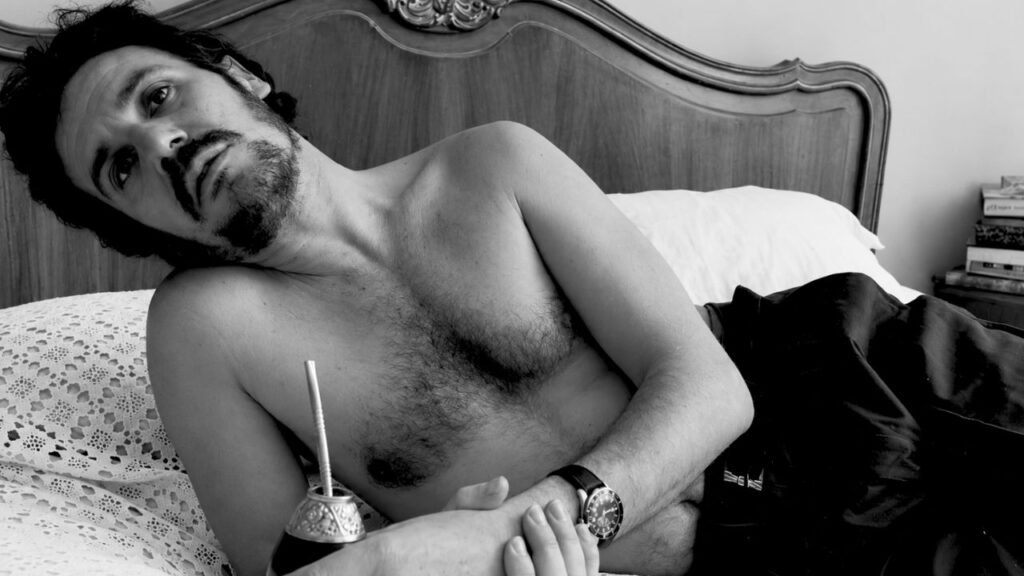
Latido Films has taken international sales on Vanesa Benítez’s documentary ‘200 Lives, Paco Rabal,’ bringing the life and career of Spanish screen legend Paco Rabal to worldwide buyers ahead of its 2026 San Sebastián International Film Festival premiere. The Spain-France-Mexico co-production will close the festival’s Made in Spain section, where its unusual archive-led approach gives Paco Rabal an intimate role in telling his own story through recordings he made during his lifetime.
At the heart of the documentary is Paco Rabal’s own voice. Vanesa Benítez draws on previously unpublished personal material, including cassette tapes on which the actor recorded his memoirs. Combined with images he filmed himself, the recordings allow Paco Rabal, who died in 2001, to reflect on his life, ambitions and contradictions from beyond the grave. Rather than relying only on conventional interviews or a retrospective account, the film builds its portrait around material left behind by the actor himself.
The visual archive is equally revealing. The documentary uses eight films made during Paco Rabal’s travels, film shoots and festival appearances, offering a personal view of the world surrounding one of Spain’s best-known actors. The archive also includes letters, writings and appearances in newspapers, radio and television. Together, these materials expand the film beyond a standard career biography and connect Paco Rabal’s private memories with the cinema history of his era.
That history covers more than 200 films and an international career that took Paco Rabal far beyond Spanish cinema. Spain’s Ministry of Culture notes his work with some of the most prominent filmmakers of his generation, including Luis Buñuel, Michelangelo Antonioni, Luchino Visconti, Glauber Rocha and Claude Chabrol. His connection with Carlos Saura was also significant, while his performance in ‘The Holy Innocents’ earned him the Best Actor award at Cannes in 1984.
The documentary arrives at San Sebastián with a particularly fitting connection to the festival. Paco Rabal received the Best Actor Award at the first San Sebastián Festival in 1953 and later received the Donostia Award in 2001. The festival’s official description says the documentary revisits his career and life through his cassette recordings and Super-8 films, making its closing position in Made in Spain part of a longer relationship between the actor and San Sebastián.
The film is produced through a collaboration between Spain, France and Mexico. Spain’s MLK Producciones and Horizon Media are joined by France’s Plan B et Compagnie and Mexico’s Monstro Films, while Latido Films is listed as the international sales company, with worldwide territories available. The documentary runs for 95 minutes and is presented as a 2026 production.
The timing also gives the project added significance. The Ministry of Culture identifies 2026 as the centenary of Paco Rabal’s birth and the 25th anniversary of his death, placing the documentary within a year devoted to revisiting his contribution to cinema. Its scope is not limited to Spain: the official film material traces a career that moved through major European and Latin American filmmaking circles, while the archive brings that international journey back to the actor’s own perspective. By combining professional milestones with recordings and home footage, Vanesa Benítez presents a portrait shaped by memory as much as by film history, allowing the documentary to explore the person behind the celebrated screen career and his lasting influence.
For Latido Films, the documentary offers an international sales title built around both a major Spanish film figure and an unusually direct archive. For audiences, the appeal lies in hearing Paco Rabal speak for himself while seeing fragments of the life he recorded. ‘200 Lives, Paco Rabal’ therefore connects a remarkable film career with the private images and words that remained after it, giving a familiar cinematic name a distinctly personal final chapter.