
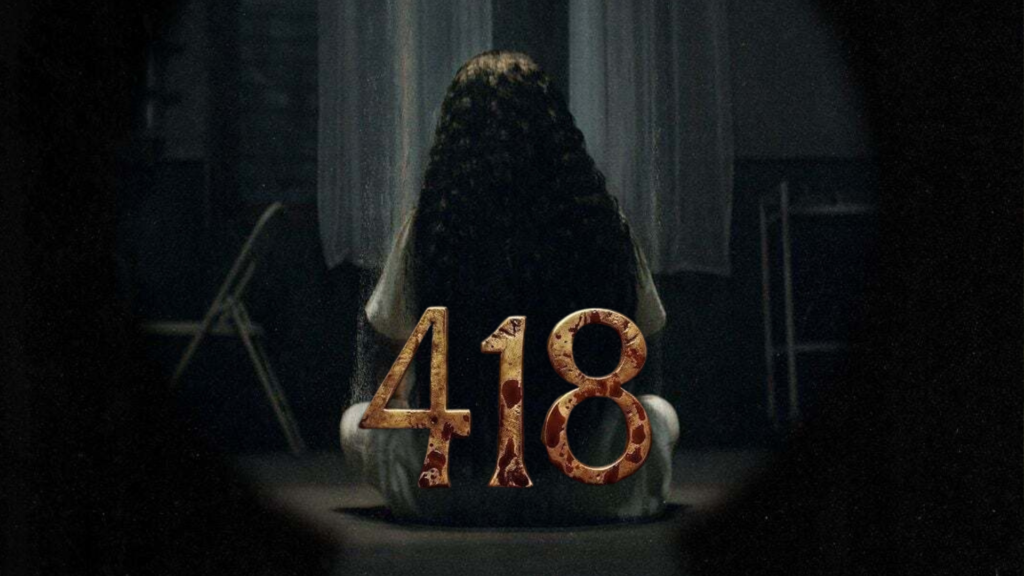
Kirtan Nadagouda’s 418, a horror film presented by Prashanth Neel, has received a mixed response from critics. While reviews acknowledge its eerie atmosphere, technical craftsmanship and Chaithra J. Achar’s performance, they also identify weaknesses in the screenplay, repetitive scares and a climax that falls short of the promise established by the film’s opening.
Released in theatres on October 23, 2026, the Telugu-Kannada horror film is set in a medical college hostel in coastal Karnataka, where students encounter the mystery surrounding a locked room. Drawing on Yakshagana, regional imagery and themes connected to women’s experiences, 418 attempts to give a familiar haunted-room premise a distinct cultural setting. However, critics differ in their assessment of how effectively these elements translate into sustained horror.
In The Hollywood Reporter India, Kairam Vaashi describes 418 as a routine horror film that uses its storytelling and visual treatment to keep audiences guessing. He highlights its non-linear structure, which moves between the present and the past, and the unsettling atmosphere created by the setting. The first half unfolds partly like a fever dream experienced by Vivek, a student haunted by the presence in the adjoining room.
Vaashi also praises the film’s visual and sound design, drawing attention to details such as the changing significance of anklet sounds and the use of lighting to build unease. However, he finds that the film’s ideas about motherhood and the pressures placed on women are not fully developed through its horror narrative. Despite the promise demonstrated by its technical craft, the film ultimately falls short of exploring its themes in sufficient depth.
Yashaswini Sri of The Indian Express is less convinced by the film’s ability to frighten audiences. Her review argues that 418 establishes an effective atmosphere but struggles to sustain it. The repeated use of similar scare techniques, extended stretches in which the characters do not appear to face genuine danger, and an unclear connection between the ghost’s tragic past and her frightening presence weaken the overall experience.
Sri identifies the middle section as the film’s strongest stretch, particularly because of the backstory surrounding Devika. She gives considerable credit to Chaithra J. Achar, whose performance brings emotional depth to a character the screenplay does not always develop adequately. However, the review concludes that the film’s length and convoluted climax undermine its potential.
Chaithra J. Achar’s performance emerges as one of the clearest strengths across the reviews. In The Hollywood Reporter India, Vaashi praises her portrayal of Devika, noting how effectively she communicates through expressions and physical performance, particularly when the writing leaves aspects of the character unexplored.
Sri similarly considers Achar central to the film’s emotional impact. The Yakshagana performance sequences and the flashback depicting Devika’s life give the story a more affecting dimension than the portions focused on the students. Devika’s experiences also introduce themes of motherhood and the expectations imposed on women, giving the film material to explore beyond a conventional supernatural mystery.
The Hindu, in its review titled “‘418’ movie review: Chaitra J Achar shines in a promising but half-hearted horror saga,” also highlights Achar’s performance and the film’s initial promise. The review points to the medical-college setting, Yakshagana imagery and early atmosphere as elements that distinguish the film before its momentum begins to fade.
The technical departments receive more consistent appreciation than the screenplay. Sri singles out the sound design and Venky GG’s background score, particularly their use of Yakshagana music to create unsettling moments. Dinesh Divakaran’s cinematography also makes effective use of the hostel’s narrow corridors, dim lighting and isolated surroundings.
The Hollywood Reporter India similarly notes that the film’s visual and aural treatment often carries scenes that the screenplay struggles to support. The Hindu praises the cinematography, editing and sound work, while observing that the film’s promising ideas eventually give way to familiar horror conventions.
The central criticism across the reviews is that 418 does not fully develop the ideas it introduces. Its exploration of trauma, superstition and the pressure on women to become mothers offers scope for a more layered horror story. However, the narrative repeatedly returns to familiar scares and leaves important questions about Devika’s motivations unresolved. The climax, in particular, is viewed as prolonged or ineffective rather than a satisfying resolution to the mystery.
Taken together, the reviews present 418 as a horror film with a distinctive setting, an affecting central performance and effective technical elements, but an uneven narrative. Critics recognise the potential in its use of Yakshagana and its exploration of women’s experiences, even as they question whether the writing and final act do justice to those ideas.
For The Hollywood Reporter India, the film’s craft offers more than its writing can sustain. The Indian Express finds that repetitive scares and a muddled climax prevent it from becoming an effective horror experience, while The Hindu similarly observes that a promising beginning loses momentum. 418 delivers moments of atmosphere and emotional depth, but the critical response suggests that its ambitions are not consistently matched by its execution.
Watch Trailer:

Film Details: #418
- Director: Kirtan Nadagouda
- Presenter: Prashanth Neel
- Cast: Chaithra J. Achar, Surya Raj Veerabathini, Charan Lakkaraju, Ramesh Indira, Preethi Pagadala and Shree Vaishnav
- Genre: Horror
- Languages: Telugu and Kannada
- Release date: October 23, 2026