
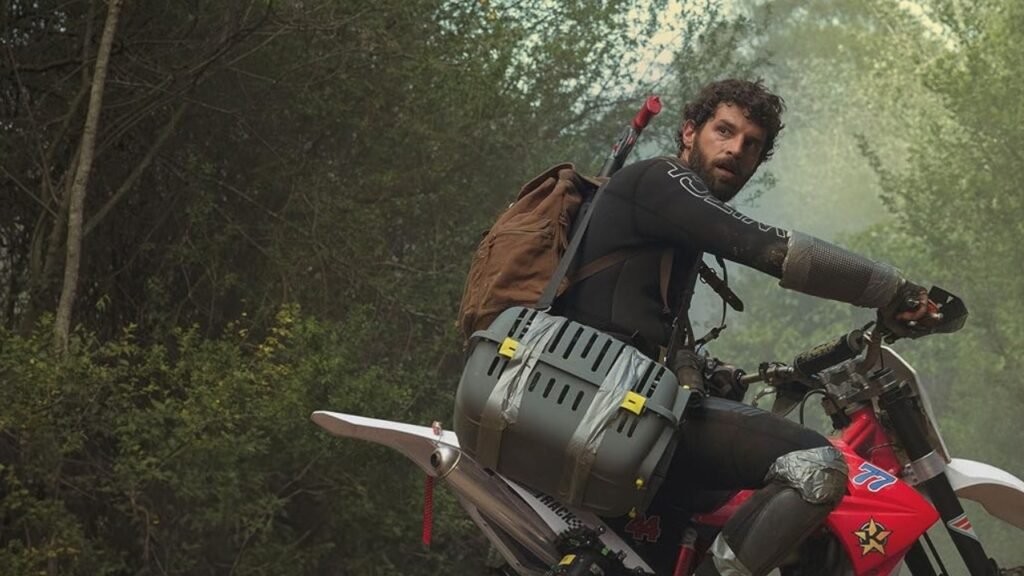
Amazon MGM Studios is expanding its Spanish-language genre slate with Apocalypse Z: New World, the sequel to 2024’s Apocalypse Z: The Beginning of the End, arriving worldwide on Prime Video on October 30, 2026. Directed again by Carles Torrens from a screenplay by Ángel Agudo, the film expands Manel Loureiro’s post-apocalyptic universe from a contained survival story into a larger ensemble action thriller.
The sequel also underlines Amazon MGM Studios’ growing interest in ambitious genre stories that can travel far beyond their language and country of origin. With Apocalypse Z: New World, the studio is continuing a franchise that began as a Spanish-language survival story and is now moving toward a larger-scale action narrative while retaining its Spanish identity.
That philosophy is neatly captured by Nicole Morganti, Amazon MGM Studios’ Head of International Originals for Southern Europe, who explained the decision to make a zombie movie in Spain by saying, “Zombies have no nationality. They don’t speak English either.” For Morganti, horror is a native Spanish genre, and the goal is to help “democratize” the genre globally.
The approach reflects a broader shift in international streaming, where high-energy dystopian stories are no longer dependent on Hollywood production or English-language dialogue to reach audiences worldwide. The Apocalypse Z franchise provides Amazon MGM with an opportunity to build on that idea through a story rooted in Spanish-language filmmaking while targeting an international audience.
Apocalypse Z: The Beginning of the End provided a strong case for that approach. Released in 2024, the Spanish-language film quickly became a major Prime Video international success, reaching No. 1 globally and ranking among the platform’s most-watched non-English International Original movies. Prime Video’s own 2024 international performance data placed the film second among its most-watched non-English International Originals of the year, based on viewing outside each title’s country of origin during the first four weeks. That performance helped establish the franchise as more than a local genre experiment.
The first film followed Manel, played by Francisco Ortiz, as he survived the outbreak and tried to reconnect with his family. Its personal scale made the catastrophe feel immediate, keeping the story focused on survival and the character’s attempt to reach his family. The sequel takes a different approach, with a mission structure that places a group inside a collapsing world. That contrast gives New World room to expand the franchise while maintaining its Spanish roots and survival-driven foundation.
The sequel arrives as part of a much larger Spanish export strategy. Amazon MGM has said Spain-produced Originals are its biggest non-English export, with the country generating titles that have built substantial audiences outside Spain. The Culpables franchise, based on Mercedes Ron’s novels, has surpassed 100 million viewers globally, further demonstrating the international reach of Spanish-language storytelling.
Apocalypse Z sits within that expanding pipeline while showing that the export potential of Spanish Originals is not limited to romance or young-adult stories. The franchise instead places Spanish-language storytelling within a post-apocalyptic genre framework, using the scale and conventions of zombie and survival cinema to build a story intended to travel internationally.
Apocalypse Z: New World pushes the franchise into considerably bigger territory. The story moves to the Canary Islands, which have become Europe’s last safe refuge after the spread of the devastating TSJ virus. From there, a special team must return to mainland Spain in search of vital supplies, taking the characters directly into a landscape overwhelmed by infected survivors and danger.
The mission becomes even more uncertain when Roberto joins the group with questionable intentions. His presence adds another layer of tension to an already dangerous journey, turning the expedition into a battle not only against the infected but also against divided loyalties and secrets within the team. The expanded setting and ensemble approach give the sequel a broader scale while retaining the survival-driven foundation of the first film.
The move from the more contained circumstances of the first film to a larger team-based mission also changes the scope of the story. Rather than following survival through a primarily personal journey, New World places its characters within a wider operation where the search for vital supplies brings them into direct contact with a world increasingly overwhelmed by the consequences of the virus. The addition of Roberto further complicates the group dynamic, creating uncertainty within the team alongside the external threat posed by the infected.
Carles Torrens returns behind the camera, with Ángel Agudo again handling the screenplay, while the story continues to draw from Manel Loureiro’s Apocalypse Z literary universe. The returning creative team keeps the sequel connected to the original while allowing the world to grow substantially. Torrens’ return also maintains continuity between the two films as the franchise moves from its initial survival setup toward a larger ensemble action thriller.
The combination of a returning director, returning screenwriter and the continuing literary universe gives Apocalypse Z: New World a direct connection to the first film, even as the sequel broadens its setting and mission. The Canary Islands and mainland Spain provide a larger geographical canvas for the story, while the special team structure allows the film to explore survival through a group rather than through Manel’s individual journey alone.
With Apocalypse Z: New World set for a worldwide Prime Video release on October 30, the franchise is heading into Halloween with a distinctly Spanish identity and a much larger canvas. Its journey from a local-language zombie story to an internationally successful franchise reflects Amazon MGM’s wider strategy: create stories rooted in specific cultures, then let audiences everywhere decide how far they can travel.