
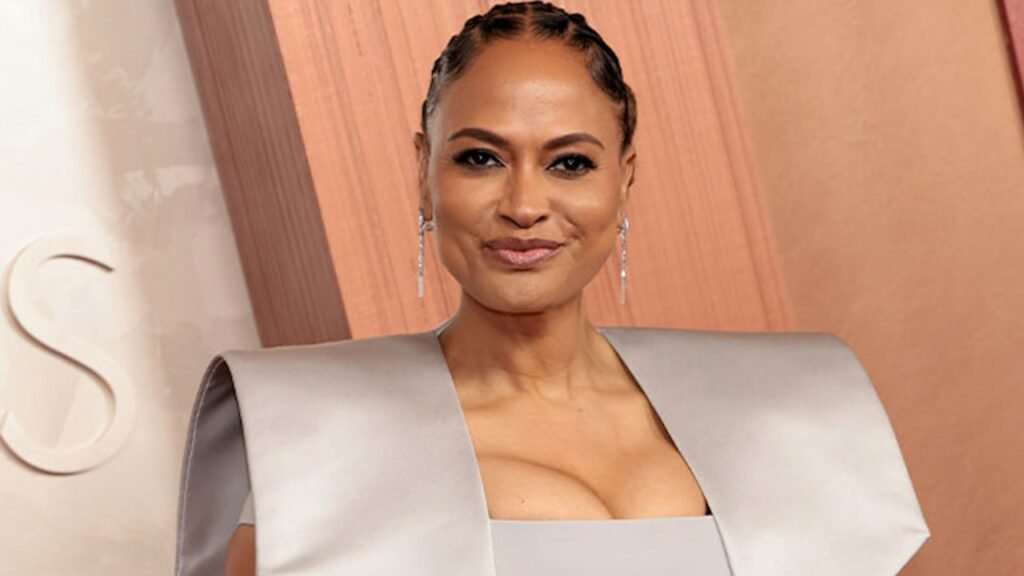
Ava DuVernay is returning to the documentary form with 14th, a sweeping companion to her Oscar-nominated and Emmy-winning 2016 film 13th, and the timing could hardly be more pointed. Premiering as the Closing Night selection of the 64th New York Film Festival on October 9, the Netflix documentary traces more than 150 years of conflict around the 14th Amendment, connecting its history to the present fight over citizenship, equality and belonging. Ten years after 13th opened the same festival, DuVernay is again using American history to examine a question that remains very much alive: who gets counted?
That question gives 14th its clearest link to 13th. Where 13th examined who gets caged through the history of the prison-industrial complex, 14th turns to identity and citizenship. DuVernay has described the distinction simply: if 13th asked “who gets caged,” 14th asks “who gets counted.” The film looks at the 14th Amendment, ratified in 1868 after the Civil War, and follows the long argument over what its promise of citizenship and equal protection actually means.
The subject becomes especially immediate when the documentary reaches the Trump administration. Donald Trump’s 2025 executive order sought to restrict birthright citizenship for certain children born in the United States. In June 2026, the Supreme Court rejected that effort in a 6-3 ruling, reaffirming the constitutional protection of birthright citizenship. Rather than treating that battle as an isolated political episode, 14th places it within a much longer history, showing how disputes over citizenship and constitutional rights have resurfaced across generations.
Just as important is who DuVernay invited into the conversation. The documentary includes more than 50 interviews, bringing together figures who do not all share the same political outlook. Representative Alexandria Ocasio-Cortez appears alongside Representative Anna Paulina Luna, former Senator Jeff Flake, Stacey Abrams, civil rights lawyer Sherrilyn Ifill, commentator Hasan Piker and Librarian of Congress Carla Hayden.
Luna is particularly notable because she agreed to defend Trump administration policies in the film after DuVernay’s team approached nearly 300 Republican officeholders. DuVernay has praised Luna for showing up when many others declined.
That range matters because DuVernay does not describe 14th as a straightforward Donald Trump takedown. For her, Trump is one part of a much older political story, a “small cog” in a wheel that has been turning for generations. The filmmaker instead sees the documentary as an essay and a record of an extraordinary decade, shaped while events were still unfolding around her. That approach gives the film a wider lens: the current political moment becomes the latest chapter in a constitutional argument that began more than a century and a half ago.
The film’s festival journey reinforces that sense of occasion. After its October 9 world premiere at the New York Film Festival, 14th will also screen at IDFA in the festival’s Signed section, which showcases filmmakers with distinctive artistic voices. Its New York appearance carries an especially neat piece of cinematic symmetry: 13th opened the festival in 2016, while 14th closes it exactly ten years later.
Produced through DuVernay’s independent media collective ARRAY, 14th will first reach select U.S. and U.K. theaters on November 27, 2026, in a limited qualifying run. One week later, on December 4, it will arrive globally on Netflix. The journey from festival screen to worldwide streaming suits a film built to connect history with the present.
With 14th, DuVernay is not simply revisiting an amendment; she is turning a 150-year argument into a cinematic question for an audience living through its latest chapter. Its most striking quality may be that it treats the Constitution not as a museum piece, but as something still being argued over in courtrooms, campaign speeches, classrooms and everyday American life.