
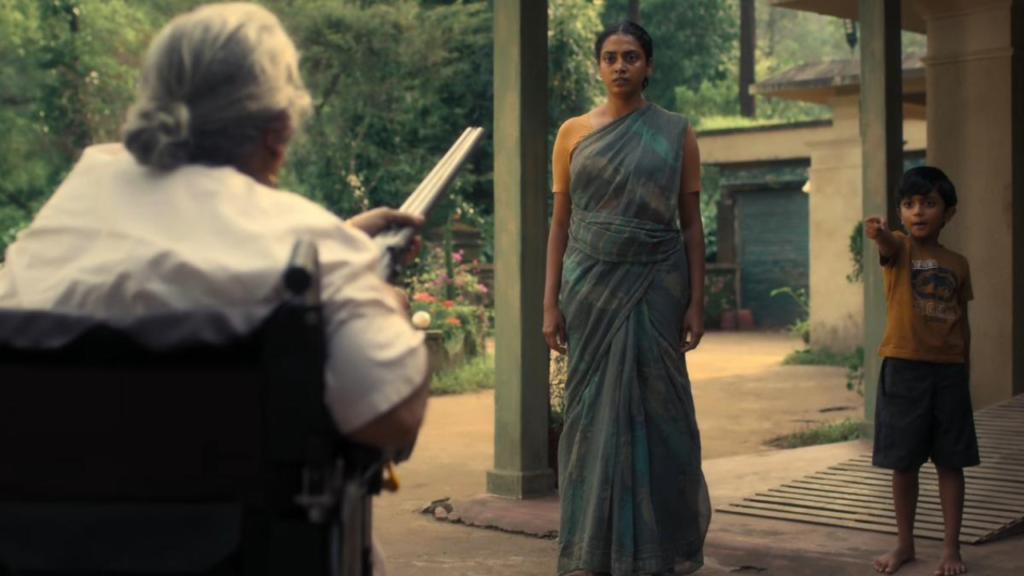
Balan: The Boy reviews are overwhelmingly positive, with critics praising Chidambaram’s emotionally powerful psychological drama about freedom, childhood, survival, and motherhood. Produced by KVN Productions on a reported budget of around ₹20 crore, the Malayalam film marks a dramatically smaller and more intimate follow-up to the director’s blockbuster Manjummel Boys. While Chidambaram’s previous film relied on large-scale survival spectacle, critics believe Balan: The Boy succeeds through emotional depth, grounded storytelling, and a deeply affecting central relationship that lingers long after the credits roll.
At the center of the film is Balan, a young boy navigating circumstances that force him to confront questions of freedom, belonging, and survival far earlier than he should. As the story unfolds, the film follows his struggle to escape limitations imposed by the world around him while simultaneously exploring the emotional bond he shares with his mother. What begins as a tense survival drama gradually evolves into a deeply personal story about childhood, sacrifice, and the longing to live life on one’s own terms. Critics repeatedly note that the film’s greatest achievement lies in how it balances suspense with emotional intimacy.
One of the strongest points of agreement among reviewers is that Balan: The Boy is not really a thriller at all. While the film employs the mechanics of suspense and survival, many critics argue that its true subject is far more emotional. Beneath the tension lies a story about love, protection, dependency, and the painful transition from innocence to experience. The survival elements may drive the plot, but critics believe the emotional relationship at the film’s core is what gives it lasting power.
Writing for India Today, T. Maruthi Acharya describes the film as one of the year’s most moving mother-son stories disguised as a thriller. The review praises Chidambaram for crafting a film that operates on multiple levels simultaneously. According to Acharya, the film’s emotional impact comes not from dramatic twists or shocking revelations but from the authenticity of the relationship at its center. The review highlights how motherhood becomes the emotional foundation upon which the entire narrative rests.
A similar observation appears in Nandini Ramnath’s review for Scroll, where she calls the film a gripping study of freedom at any cost. Ramnath focuses on Balan’s desire for agency and independence, arguing that the film explores freedom not as an abstract concept but as something intensely personal and deeply emotional. Her review suggests that every major decision in the film ultimately circles back to the question of what people are willing to sacrifice in order to live life on their own terms.
For Vishal Menon of Hollywood Reporter India, Balan: The Boy is a painful ode to lost innocence and a childhood that never fully existed. Menon’s review explores how the film captures the emotional consequences of growing up too quickly. Rather than romanticizing childhood, the film examines what happens when innocence is interrupted by circumstances beyond a child’s control. The review praises Chidambaram’s restraint, noting that the filmmaker avoids manipulating the audience through excessive sentimentality and instead allows the emotional weight of the story to emerge naturally.
The film has also prompted critics to reconsider Chidambaram’s growth as a filmmaker. In his review for The Hindu, S. R. Praveen highlights how dramatically different Balan: The Boy feels from Manjummel Boys. Instead of relying on scale, spectacle, or large ensemble dynamics, Chidambaram focuses on a smaller, character-driven narrative. Produced on a relatively modest budget and built around grounded locations and intimate storytelling, the film demonstrates a different side of the director’s filmmaking abilities. Several critics view the project as proof that Chidambaram is capable of thriving outside the formula that made him a household name.
A recurring source of praise across reviews is the young actor playing Balan. Critics repeatedly point to the performance as one of the film’s greatest strengths. Whether conveying fear, hope, confusion, or resilience, the child actor brings remarkable authenticity to the role. Many reviewers suggest that the film’s emotional impact would not have been possible without such a natural and restrained performance. Rather than relying on exaggerated expressions or overt emotional cues, the actor allows audiences to experience Balan’s struggles in a deeply personal way.
If there is one theme that dominates the critical conversation, it is motherhood. Critics from India Today, Hollywood Reporter India, New Indian Express, and several other publications repeatedly return to the relationship between Balan and his mother. What could have easily become a conventional survival story instead transforms into a meditation on sacrifice, protection, and unconditional love. Many reviewers argue that the film’s most powerful moments are not its suspense sequences but its quieter emotional exchanges. Through these moments, Chidambaram creates a portrait of motherhood that feels both deeply specific and universally relatable.
Beyond its performances and themes, critics have also praised the film’s atmosphere. Reviews frequently highlight the tension Chidambaram creates without relying on large action sequences or elaborate set pieces. Through careful visual storytelling, sound design, and pacing, the film maintains a sense of unease that keeps viewers emotionally invested. Several reviewers describe the experience as immersive, noting how effectively the director places audiences inside Balan’s emotional and psychological world.
Not every critic was completely convinced. Writing for Indian Express, Anandu Suresh argues that while the film’s first half is exceptionally strong, the second half struggles to maintain the same level of momentum. Similar concerns appear in Outlook India’s review, which suggests that some themes become repetitive as the narrative progresses. A few critics also felt that the ending does not fully capitalize on the emotional groundwork laid earlier in the film. However, these criticisms remain relatively minor compared to the overwhelmingly positive response the film has received elsewhere.
What makes the reception to Balan: The Boy particularly noteworthy is how many critics see it as proof that small-scale storytelling can leave an impact equal to, or even greater than, larger productions. At a time when discussions around cinema are often dominated by budgets, visual spectacle, and franchise potential, Chidambaram’s film has reminded critics of the power of intimate human stories. By focusing on freedom, innocence, survival, and motherhood, the film taps into emotions that transcend language and geography.
Following the enormous success of Manjummel Boys, Chidambaram could easily have chosen to pursue a larger and more commercially ambitious project. Instead, he has delivered something far smaller, more intimate, and arguably more personal. Critics largely agree that Balan: The Boy succeeds because it transforms a survival story into a deeply human exploration of freedom, motherhood, and lost innocence. While a few reviewers feel the film loses momentum in its later stages, the overwhelming consensus suggests that Chidambaram has once again delivered one of the most memorable Malayalam films of the year.

Film Details – Balan: The Boy
Genre: Psychological Drama, Survival Thriller
Director: Chidambaram
Production: KVN Productions
Language: Malayalam
Release Date: June 19, 2026
Read More Review Roundups on POF