
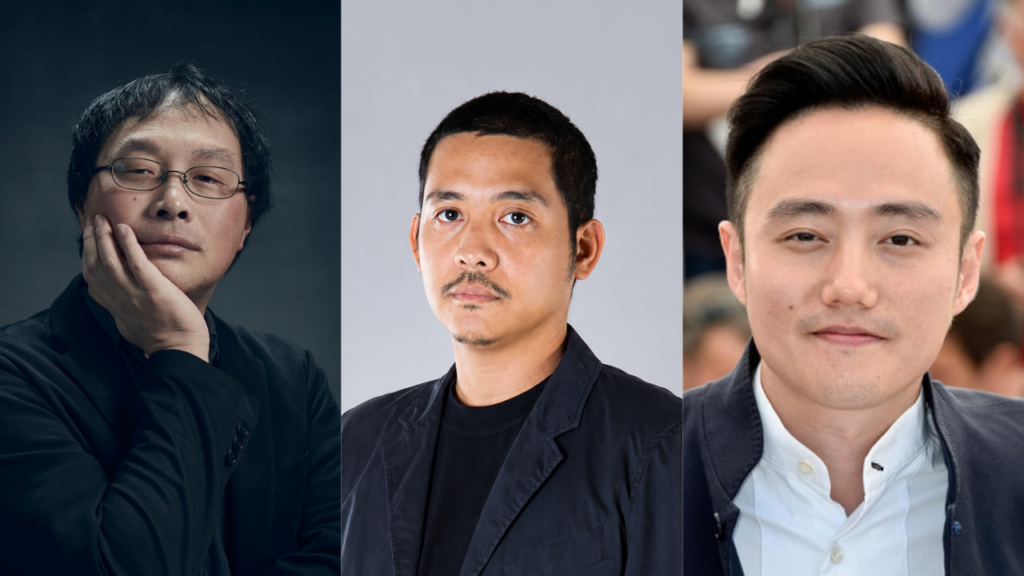
The Busan International Film Festival’s Asian Cinema Fund has selected three international projects for its 2026 Co-Production Support Fund, awarding a combined KRW 140 million (approximately $100,000) to films from filmmakers Fukada Koji, Jakrawal Nilthamrong and Boo Junfeng. The 2026 selection marks a significant expansion for the fund, which supported only one project in its inaugural year in 2025.
Busan co production fund.docx
The three projects were selected from 15 submissions following a two-stage evaluation process involving project materials and interviews. Together, they bring production partners from 13 countries, including South Korea, highlighting the increasingly international structure of independent film financing and co-production.
Busan co production fund.docx
Established in 2025, the Busan Co-Production Support Fund is designed to encourage international filmmaking partnerships involving Korean producers. It supports long-form narrative features and animated theatrical projects that are structured as formal co-productions with Korea. An important requirement is that participating projects must already have confirmed financing covering at least 60% of their total net production costs.
Busan co production fund.docx
The structure places the fund at a later stage of the financing process than conventional development support. The selected projects have already secured a substantial portion of their budgets, while Busan’s backing can help close remaining financing gaps and bring additional international partners into the production process.
Japanese filmmaker Fukada Koji, whose previous films include Harmonium and Love Life, will direct Grateful, a Korea-Japan co-production. Korea will serve as the majority production partner, with Japan participating as the minority partner. Song Dae-chan and Kameda Yuko are producing the project.
Grateful receives the largest award of the three projects, with KRW 60 million (approximately $42,900). According to the fund, the strength and track record of the Korean production team was among the factors considered in its selection.
Busan co production fund.docx
The second selected project, Rhizome, will be directed by Thai filmmaker Jakrawal Nilthamrong, whose Vanishing Point won the Tiger Award at the Rotterdam International Film Festival in 2015 and whose Anatomy of Time premiered at Venice in 2021.
Thailand is the majority production partner on Rhizome, with Korea, France, Laos and Singapore participating as minority partners. The producing team includes Chatchai Chaiyon, Samavee Pummuang, Kim Hyejin, Yohann Cornu, Mattie Do and Panuksmi Hardjowirogo.
Busan co production fund.docx
The film centres on a Lao-American woman who returns to Laos and joins a team clearing unexploded ordnance left behind by the “Secret War” of the 1960s and 1970s. The project receives KRW 40 million (approximately $28,600) from the fund.
Busan co production fund.docx
Singaporean filmmaker Boo Junfeng is behind the third selected project, Trinity. His previous work includes Sandcastle, the first Singaporean film selected for Cannes Critics’ Week, and Apprentice, which screened in the festival’s Un Certain Regard section.
Trinity has one of the most extensive co-production structures among the three projects. Taiwan, France and Singapore serve as majority partners, while Poland, Greece, Germany, Japan, Brazil, Korea, Indonesia and the Philippines participate as minority partners. The project has an international producing team and explores a theme rooted in religion. It receives KRW 40 million (approximately $28,600).
Busan co production fund.docx
The geographical spread of these projects illustrates the growing role of international co-production in independent filmmaking. Instead of relying on a single national production base, the three films bring together producers and financing partners from multiple territories, potentially allowing them to access different sources of funding, talent, locations and production infrastructure while distributing financial risk across several partners.
Busan co production fund.docx
For Busan, the model also strengthens South Korea’s position as a link between filmmakers and production partners across Asia, Europe and other international territories. The fund’s Korean co-production requirement means its role extends beyond supporting films at the festival stage and into the production and financing process itself.
Busan co production fund.docx
However, the selection should not be interpreted as confirmation that any of the three films is nearing release. The projects remain in production or pre-production, with further financing, casting and shooting decisions still to be completed. What the Busan fund provides at this stage is additional financing and institutional support as the filmmakers work toward completing their international production structures.
Busan co production fund.docx
With the 2026 selections, the Busan Co-Production Support Fund is expanding both in scale and international reach. Grateful, Rhizome and Trinity now join its growing portfolio of projects, offering three distinct examples of how Korean partnerships can help connect filmmakers from Asia and beyond with the financing and production networks required to bring ambitious independent films to the screen.
Read More: