
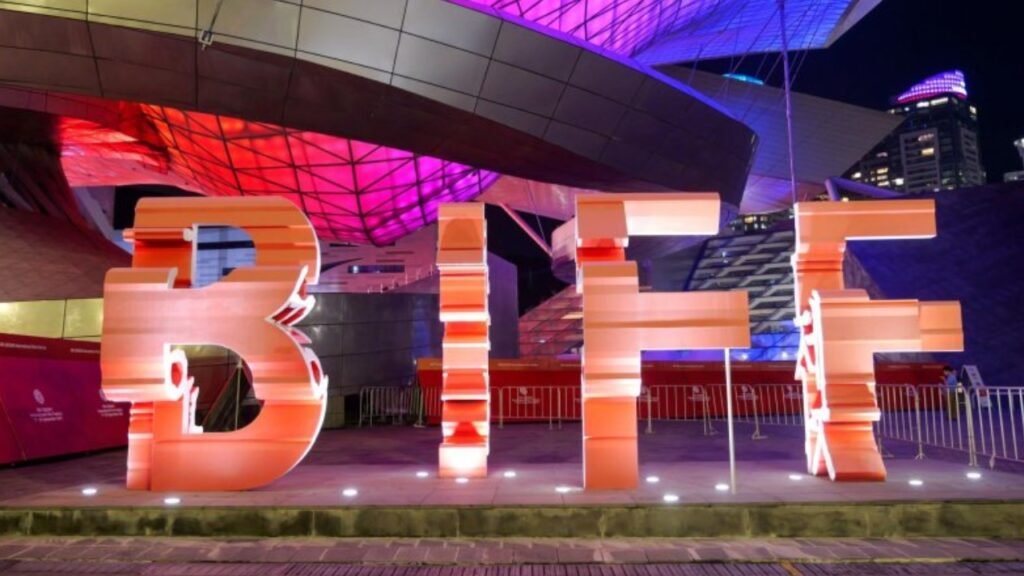
There is a new reason to watch the Busan Film Festival this year, and it goes beyond the red carpets, premieres and major Asian filmmakers arriving in South Korea.
The 31st Busan International Film Festival (BIFF) opens today, October 6, with its first edition as an FIAPF “A Festival” and, more importantly, with a new connection to the Academy Awards. Under the rules for the 99th Oscars, the winner of BIFF’s Busan Award for Best Film can qualify for submission in the International Feature Film category. Suddenly, a festival that has spent three decades discovering and supporting Asian cinema has a direct place in the Oscar conversation.
The change is significant because the Academy has created only six festival routes for this new system. Alongside Busan are Berlin, Cannes, Sundance, Toronto and Venice. Winning one of these festival awards does not automatically result in an Oscar nomination, but it means a film no longer has to depend solely on its country’s official selection process to enter the race. For filmmakers whose films might otherwise be overlooked at home, that difference could be enormous.
The development is not simply about receiving new recognition from Hollywood or the Academy. The festival has been building its international position since 1996, when it became Korea’s first international film festival. Over the years, BIFF has developed into one of Asia’s most important platforms for new filmmakers and films, while creating connections between Asian cinema and the international film industry.
This year makes that growth particularly difficult to miss. BIFF is presenting 247 films from 59 countries, including 95 world premieres, in its biggest lineup since 2019. It is also the first edition after FIAPF placed Busan among 17 A-list festivals worldwide, alongside established festivals such as Cannes, Berlin and Venice. That recognition matters because it confirms something the festival has been working toward for years: Busan is no longer simply an Asian festival with international guests.
One of the festival’s most important strengths sits outside its main screening programme. The Asian Contents & Film Market brings filmmakers together with sales agents, distributors, producers and investors. That business side can determine whether a film discovered in Busan remains a local discovery or travels into other markets, where festival attention can develop into wider industry and awards interest.
The Asian Project Market begins that process even earlier. It gives unfinished projects an opportunity to meet potential partners and financiers before the films are completed. As a result, Busan’s influence can begin before a film has even premiered, continue through its festival run and potentially extend into the awards season. The festival therefore operates across several stages of a film’s journey, from development and financing to international exposure and, now, a possible route toward Oscar consideration.
There is another significant Busan connection to the Oscars. The Busan International Short Film Festival became South Korea’s first Academy-qualifying film festival in 2018, giving eligible short-film winners a route toward Oscar consideration. The feature festival’s new status therefore feels less like a sudden breakthrough and more like the next chapter of a relationship with the Academy that has been developing over several years.
Busan also has the filmmaking history to make this new connection meaningful. Directors such as Park Chan-wook, Bong Joon Ho, Hirokazu Kore-eda and Apichatpong Weerasethakul have all been part of the festival’s story, reflecting its long-standing interest in filmmakers who went on to become major names in world cinema. Their presence in the festival’s history reinforces the idea that Busan has long functioned as a platform for filmmakers whose work can eventually reach audiences well beyond Asia.
The new Oscar connection could also change how distributors, filmmakers and awards voters view a Busan premiere. A film arriving at BIFF may no longer be seen simply as participating in an important festival programme. It can potentially be viewed as beginning an international journey, with the festival becoming an important early stage in a film’s path toward wider recognition.
For filmmakers, that distinction could be particularly meaningful. A strong festival run has always had the potential to create visibility, attract distributors and connect films with international audiences. The new Academy pathway adds another layer to that process. A film that wins the Busan Award for Best Film can now potentially use that recognition as a route into the International Feature Film Oscar race, giving the festival’s top prize a significance that extends beyond Busan itself.
For audiences watching BIFF from today, the most exciting question is therefore no longer simply which film will win the Busan Award. It is what happens after the winner leaves Busan. A film could now arrive on the Asian coast, win the festival’s top prize and begin an Oscar journey from there. That does not guarantee a golden statuette, but it gives Busan something it never had before: a seat much closer to the Academy’s table.