
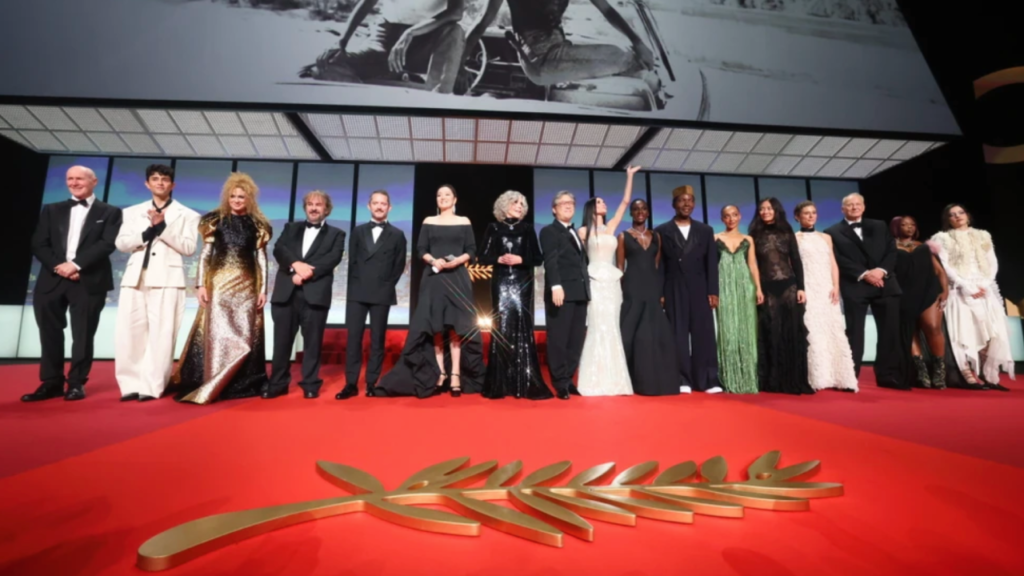
The 79th edition of the Cannes Film Festival opened on Tuesday night with a noticeably different energy. There were fewer big studio movies, fewer Hollywood stars dominating the red carpet, and less of the spectacle that often defines the festival’s opening stretch. But Cannes still found its cinematic moment through Peter Jackson, the filmmaker behind The Lord of the Rings trilogy, who arrived in the South of France to receive an honorary Palme d’Or.
Jackson’s presence gave the opening night a rare Middle-earth connection at a festival otherwise being discussed for its lighter Hollywood footprint. The honorary Palme d’Or recognized his contribution to cinema, particularly his role in transforming fantasy filmmaking into a global theatrical force. For a festival that often balances auteur prestige with popular cinema, honoring Jackson was a reminder that Cannes’ idea of cinema can still stretch from intimate arthouse dramas to world-building epics.
The award was presented ahead of the opening night film, The Electric Kiss, a French romantic comedy set in the 1920s. The choice of a French-language opener also reflected the tone of this year’s festival: more European, more auteur-driven, and less dependent on Hollywood studio machinery. In a year where the Croisette is not being led by a major American blockbuster, Cannes appears to be leaning more strongly into its identity as a global cinema platform rather than a studio launchpad.
Peter Jackson Gives Cannes Its Opening-Night Moment
Peter Jackson’s honorary Palme d’Or became the emotional centre of the opening ceremony. Best known for directing The Lord of the Rings and The Hobbit films, Jackson has had one of the most unusual careers among modern blockbuster filmmakers. He moved from low-budget genre cinema to one of the most ambitious fantasy franchises ever made, helping redefine what large-scale cinematic world-building could look like.
His appearance also carried symbolic weight because The Lord of the Rings has its own history with Cannes. Jackson had brought early footage from the trilogy to the festival years before the films became global landmarks. At the time, it was a risky presentation of an enormous fantasy project that still had to prove itself. In hindsight, it became part of the journey of a franchise that changed the commercial and technical possibilities of fantasy cinema.
The presence of Elijah Wood, who played Frodo Baggins in the trilogy, added an emotional layer to the ceremony. Their reunion on the Cannes stage gave the night a nostalgic pull and offered the kind of pop-cultural memory that Cannes can still create even without a heavy Hollywood studio slate.
A Quieter Festival Opening
The broader opening night, however, was notably quieter than some previous Cannes editions. The festival launched without the kind of studio-backed Hollywood spectacle that has often brought global media attention in recent years. Instead, the mood was more restrained, with the opening film The Electric Kiss setting a lighter French tone for the festival.
This does not mean Cannes has lost its star power. Rather, the festival side of Cannes 2026 appears to be operating differently. Instead of being anchored by a major studio tentpole, the lineup is being shaped more by international auteurs, competition titles and global cinema voices. The main competition includes 22 films, with South Korean filmmaker Park Chan-wook leading the jury.
The jury itself reflects the international character of this year’s edition. Alongside Park, the panel includes names such as Demi Moore, Ruth Negga, Chloé Zhao, Stellan Skarsgård, Paul Laverty, Isaach de Bankolé, Laura Wandel and Diego Céspedes. That mix reinforces Cannes’ continuing effort to position itself as a global conversation around cinema rather than a purely European or Hollywood-facing event.
Hollywood Is Light on the Red Carpet, Not in the Market
The key distinction this year is that Hollywood may be lighter on the red carpet, but it is not absent from Cannes. The official festival lineup may not be dominated by major American studio films, yet the Cannes Film Market remains packed with star-driven projects and commercial packages aimed at international buyers.
That is where Hollywood’s presence is still strongly felt. Cannes is not only a festival; it is also one of the most important film markets in the world. Even when studios do not bring their biggest titles to premiere, actors, producers, financiers, sales agents and distributors still use Cannes to launch projects, sell rights and build momentum around films that may define future release calendars.
This year’s market includes several promising packages across action thrillers, war dramas, emotional dramas and prestige titles. Many of them are built around recognizable names, including Rami Malek, Alicia Vikander, Jeremy Strong, Matthew McConaughey and Jason Statham. These are the kinds of projects that may not be part of the official competition, but they still shape the business conversation around Cannes.
Hot Cannes Market Titles Drawing Buyer Interest
Among the titles being watched closely is The Man I Love, a project with Rami Malek attached. The film has drawn attention because of its prestige positioning and strong talent package, making it one of the titles buyers are expected to track during the market.
John Doe is another commercially attractive project, especially because of Jason Statham’s involvement. Statham remains one of the most reliable names in international action cinema, and action-driven packages often travel well across territories. For buyers looking for a recognizable star and a clear genre hook, a Statham-led project can be a strong market proposition.
Last Dance and The Passenger are also among the titles generating interest, while The Brigands of Rattlecreek stands out because of its scale and talent. The project has been discussed as one of the major market packages, with its Western-thriller setup and high-profile names giving it strong international sales potential.
Another title being tracked is The Last Day, which fits into the kind of emotionally charged, star-driven drama that Cannes buyers often respond to when the package has both prestige and commercial reach. Together, these films show that Cannes remains a marketplace where projects do not need to be finished or premiered to become major industry talking points.
Why the Market Matters More This Year
The lighter Hollywood presence on the festival side may actually make the market more important this year. Without a dominant studio premiere controlling the conversation, attention shifts toward what buyers are chasing, what packages are gaining traction, and which projects can survive in a cautious global film economy.
Independent and mid-budget films are operating in a difficult environment. Theatrical audiences are selective, streaming buyers are more disciplined, and international distributors are careful about what they acquire. That makes Cannes a high-pressure marketplace. A project needs more than a famous name; it needs a clear identity, a sellable genre, emotional urgency or awards potential.
The market titles gaining attention this year reflect that reality. Action thrillers offer commercial clarity. War dramas bring scale and seriousness. Tearjerkers and prestige dramas offer emotional hooks. Star-driven packages help reduce risk for buyers who need recognizable names to market films across territories.
Cannes Still Sets the Direction
Cannes 2026 may have opened without the loud Hollywood studio noise that sometimes defines the festival, but that does not make it less important. If anything, this year’s opening shows the two sides of Cannes more clearly. On one side, the festival is leaning into international cinema, auteur voices and a more restrained red-carpet identity. On the other, the market remains full of Hollywood-linked projects, star packages and commercial ambition.
Peter Jackson’s honorary Palme d’Or gave the opening night its emotional and cinematic headline. The Electric Kiss gave the festival a French opening identity. Park Chan-wook’s jury signalled a serious global competition ahead. And behind the scenes, buyers are already watching the market for the next films that could travel worldwide.
That is the real story of Cannes this year. Hollywood may not be dominating the red carpet, but it is still very much present in the business rooms. The festival may look quieter from the outside, but the market remains active, competitive and commercially significant.
In 2026, Cannes is not only asking which film will win the Palme d’Or. It is also asking which projects will find buyers, which stars still move the international market, and which stories can survive in a changing global cinema landscape.
Read More: