
China Labour Day box office on the holidays of 1st to 5th May delivered modest year-on-year growth this year, but the overall performance continued to underline the fragile state of the world’s second-largest theatrical market. Over the five-day May 1–5 holiday frame, Chinese cinemas generated around 759 million yuan ($111 million), slightly ahead of last year’s 748 million yuan total. However, the figure remains dramatically below the billion-yuan holiday weekends that defined both the pre-pandemic era and the stronger 2024 market.
What makes the result more revealing is that the holiday arrived with a significantly larger slate of new releases. Around 12 films entered the market during the frame compared with nine titles during the same period last year, yet audience turnout remained relatively muted. The numbers suggest that Chinese moviegoers are becoming increasingly selective, with strong marketing and large-scale releases no longer guaranteeing breakout theatrical business.
According to reports from Global Times and other news media, the holiday period ultimately became a story of audience-driven momentum rather than pre-release hype. Local crime thrillers and grounded Chinese-language dramas outperformed higher-profile competition, reinforcing a growing trend in the market where word of mouth is now becoming more important than opening-day scale.
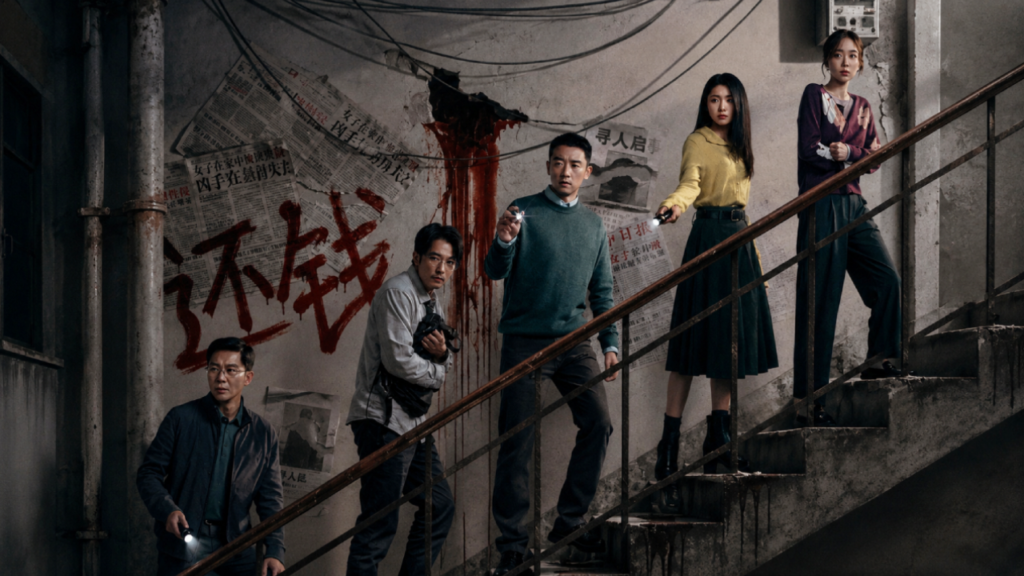
The clearest example of that shift was Vanishing Point, which emerged as the biggest winner of the holiday frame with approximately 262 million yuan in total earnings. Directed by Cheng Wei-Hao, the suspense thriller did not begin the weekend as the frontrunner. In fact, industry expectations for the film were relatively modest before release.
At the start of the holiday, Cold War 1994 appeared positioned to dominate the market. Backed by an established franchise, premium screen access and a cast led by Chow Yun-fat and Tony Leung Ka-fai, the Hong Kong crime thriller controlled nearly 30% of pre-release screenings and opened strongly on day one. By comparison, Vanishing Point reportedly entered the frame with only around 13%–18% screen allocation, limited prime-time slots and softer advance bookings.
But the situation changed rapidly once audiences began reacting to the film. Positive reviews and strong audience scores helped Vanishing Point gain momentum almost immediately. The film reportedly scored around 7.7 on Douban, 9.5 on Maoyan and over 97% positive reactions on Taopiaopiao, with viewers praising its tense screenplay, realism and unpredictable twists.
That response translated directly into theatrical growth. Occupancy levels surged, cinemas expanded the film’s screen count and the thriller quickly overtook Cold War 1994 during the holiday period. Its screen share reportedly climbed to nearly 28% as exhibitors responded to audience demand in real time. The turnaround became one of the clearest demonstrations yet of how quickly theatrical momentum can now shift inside the Chinese market.
The holiday frame also exposed the increasingly difficult position of Hollywood titles in China. The Devil Wears Prada 2 entered the market with strong international momentum and ranked highly in pre-release anticipation polls. Yet the film ultimately earned around 58 million yuan, finishing behind local competitors despite its global success.
Part of the film’s slowdown appears linked to online backlash surrounding the portrayal of a minor Asian character. Discussions across Chinese social media criticized aspects of the characterization and naming choices, with some users arguing that the portrayal reinforced outdated stereotypes. The controversy reportedly affected audience enthusiasm during the holiday frame.
Beyond individual titles, the larger industry picture remains concerning. Reports indicate that China’s total yearly box office before the holiday stood at around 12.85 billion yuan, nearly 50% lower than the same period last year. Even with holiday growth, the market remains far from its peak theatrical years.
Still, analysts remain cautiously optimistic about the upcoming summer season. Several major imported tentpoles are expected to arrive in the coming months, including The Odyssey, a new Spider-Man installment and multiple animated sequels. Industry observers believe these releases could help stabilize audience turnout if consumer confidence improves.
At the same time, China’s theatrical ecosystem is also entering a new technological phase, with reports suggesting that some of the country’s first AI-generated feature films may debut later this year.
But the Labour Day holiday revealed something more fundamental than just box office numbers. The Chinese market is increasingly becoming audience-led rather than marketing-led. Large franchises and aggressive release strategies can still create strong openings, but sustained success now depends far more on audience reaction, occupancy and social conversation after release.
The success of Vanishing Point ultimately became the defining story of the holiday — not because it shattered records, but because it showed how quickly high audience approval can overpower scale, pre-sales and even franchise advantage in today’s evolving Chinese box office landscape.
Read More: