
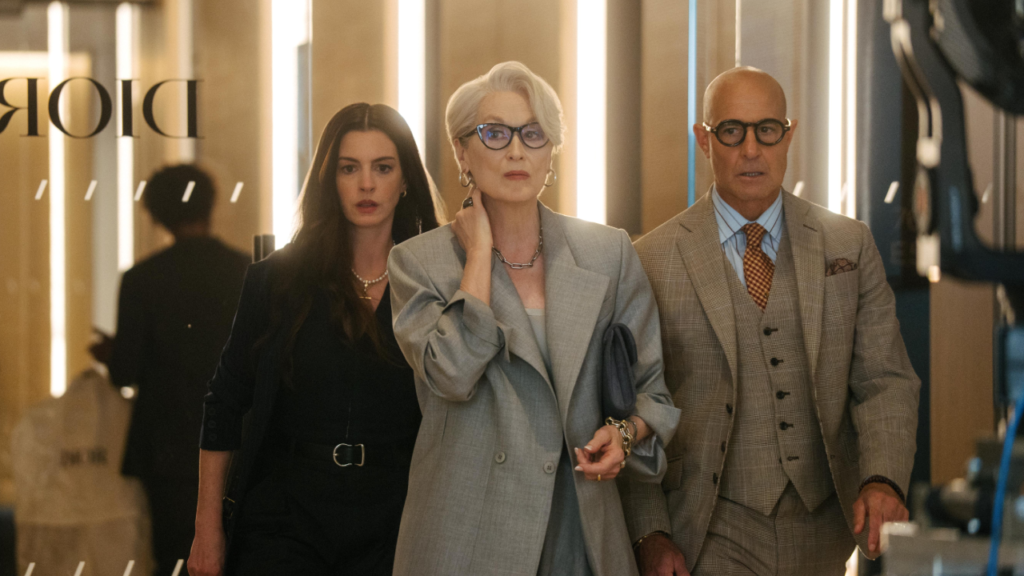
The first reactions to The Devil Wears Prada 2 are in, and the early consensus suggests that the long-awaited sequel has delivered exactly what fans hoped for — a return that feels both nostalgic and sharply relevant. Following a series of press screenings ahead of its global release, critics and journalists have taken to social media to share their initial impressions, with many calling it a “charming,” “fun,” and surprisingly thoughtful continuation of the beloved 2006 film.
Marking the return of Meryl Streep as Miranda Priestly, alongside Anne Hathaway, Emily Blunt and Stanley Tucci, the sequel reunites its core cast while expanding the world of Runway magazine for a new era. Directed once again by David Frankel and written by Aline Brosh McKenna, the film builds on the legacy of the original, which grossed over $320 million worldwide and has only grown in cultural relevance over the years.
Early reactions highlight the film’s ability to balance familiarity with evolution. Several critics noted that the sequel retains the spirit of the original while updating its themes to reflect the modern media landscape. One early viewer described it as a “fun and fierce sequel” that feels “familiar in the best way” while also being “timely in the right ways.” Others praised the film’s sharp writing and emotional undercurrent, suggesting that it goes beyond nostalgia to offer a more layered narrative.
Lady Gaga, Meryl Streep, Anne Hathaway and Emily Blunt at the N.Y. premiere of THE DEVIL WEARS PRADA 2. Review coming next week.
That’s all. pic.twitter.com/jn7amPPW1D— David Rooney (@DavidCRooney1) April 21, 2026
Went to an early screening for #DevilWearsPrada2 … the sequel hits home for journalists with its commentary on media. it’s also filled with callbacks and a total treat to see them all return. That’s all pic.twitter.com/K2d1yZeTkQ
— Jackie Strause (@jackiedstrause) April 28, 2026
Industry voices have particularly responded to the film’s commentary on journalism and the changing media ecosystem. The sequel reportedly explores the struggle of traditional publishing in the digital age, with Miranda Priestly and Andy Sachs navigating a rapidly evolving industry. This thematic shift has resonated with journalists, many of whom described the film as a “biting media parody wrapped in high fashion,” capturing anxieties within the profession while maintaining its signature wit.
Performance-wise, the returning cast has been widely praised. Streep’s Miranda continues to anchor the film with her commanding presence, while Hathaway’s Andy Sachs is said to return with a more defined arc, reflecting her growth since the original. Emily Blunt and Stanley Tucci also reprise their roles with ease, contributing to what many describe as a seamless reunion of characters that audiences have remained attached to for nearly two decades.
Critics have also pointed to the film’s technical and stylistic strengths. From its costume design to its soundtrack, the sequel appears to embrace the visual identity that made the original iconic, while elevating it for a contemporary audience. Some early reactions suggest that the film leans into its fashion world more confidently, delivering a visually rich experience that complements its narrative ambitions.
At the same time, not all reactions have been universally positive. A smaller section of early viewers noted that while the film excels in moments and performances, parts of the narrative feel episodic or less cohesive. However, even among more mixed responses, there is acknowledgment of the film’s charm and its ability to engage audiences, particularly fans of the original.
The scale of anticipation surrounding the film is reflected not just in reactions, but also in its promotional rollout. The sequel premiered at Lincoln Center in New York, followed by international premieres in London, Tokyo, Seoul, Shanghai and Milan — underscoring its global appeal. The marketing campaign has been extensive, positioning the film as a major summer release.
Adding to the buzz is the expansion of the cast, with new additions including Kenneth Branagh, Simone Ashley, Lucy Liu and Justin Theroux. The film also features cameo appearances from notable figures in fashion and pop culture, reinforcing its connection to the industry it portrays.
Narratively, the sequel brings Andy Sachs back to Runway magazine, now in a more senior editorial role, as she and Miranda attempt to restore the publication’s relevance in a digital-first world. Emily Charlton’s evolution into a power player within the fashion industry further adds to the dynamic, setting up a story that intersects ambition, reinvention and legacy.
The original The Devil Wears Prada, based on the novel by Lauren Weisberger, became a defining film of its time, blending workplace drama with fashion and humor. Its sequel arrives nearly two decades later, carrying both the weight of expectation and the advantage of a built-in audience that has remained invested in its characters.
With full reviews currently under embargo and set to drop shortly before release, the early reactions position The Devil Wears Prada 2 as a strong contender for the summer box office. Whether it translates its initial buzz into long-term success will depend on broader audience reception, but for now, the film appears to have achieved a key objective — bringing its world back with confidence, relevance and a touch of nostalgia that still resonates.

Read More: