
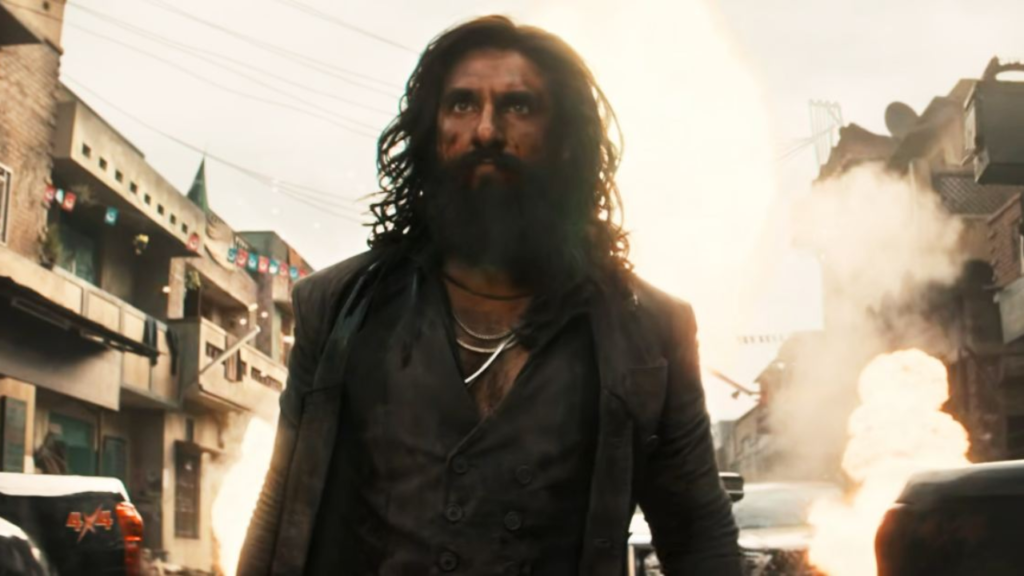
In an industry where perception often shapes performance, Dhurandhar 2: The Revenge has emerged as one of the most fascinating case studies of recent times. Even before its full-fledged theatrical rollout, the film found itself at the center of a heated debate — with sections of audiences and online discourse labeling it a “propaganda-driven spectacle.”
Yet, in sharp contrast, the same film is now rewriting box office history.
What initially began as a strong pre-release surge has translated into a record-shattering opening, placing Dhurandhar 2 among the biggest Day 1 performers in Indian cinema.
This collision of controversy and unprecedented commercial momentum has turned the film into more than just a release — it has become a cultural flashpoint, where debate, curiosity and mass appeal are unfolding simultaneously.
If numbers are the most reliable indicator of audience interest, Dhurandhar 2 is operating at an extraordinary scale. The film’s paid previews generated a massive ₹43.00 crore net across 12,735 shows with 51% occupancy — already signaling explosive demand. But what followed on Day 1 has taken that momentum to another level entirely.
On its first full day in theatres, Dhurandhar 2 collected a staggering ₹102.55 crore net in India, playing across 21,728 shows with an impressive 71.3% occupancy. This brings the film’s total to ₹145.55 crore net and ₹172.63 crore gross within just two days, firmly establishing it as one of the fastest-starting Hindi films ever.
The scale of this opening is not just significant — it is historic. The film has surged from an already massive ₹43 crore preview start to a ₹100 crore-plus Day 1, placing it in a rare league of record-setting openers in Indian cinema.
A closer look at the language-wise breakdown further reinforces the dominance of its core market. The Hindi version alone contributed a massive ₹99.10 crore on Day 1, with a strong 73.6% occupancy across 19,500 shows. While the dubbed versions added smaller numbers — Telugu at ₹2.12 crore, Tamil at ₹1.16 crore, and minimal contributions from Malayalam and Kannada — they still reflect the film’s expanding national footprint.
But running parallel to this box office explosion is an equally strong narrative — one of polarization.
Even before audiences entered theatres, Dhurandhar 2 was being discussed across social platforms as a film with overt ideological undertones. Following the preview shows, that conversation only intensified. Some viewers have described the film as heavy-handed in its messaging, pointing to its strong nationalist tone and heightened dramatic framing as elements that lean into a specific narrative stance.
For this section of the audience, the film operates less as pure storytelling and more as a statement-driven spectacle.
However, the counter-view is equally significant.
Many industry observers argue that such criticism needs to be contextualized within the framework of mainstream Hindi cinema. Patriotism, stylized conflict, and heightened emotional beats have long been central to the commercial format. From this perspective, Dhurandhar 2 is not necessarily an outlier, but rather an extension of a storytelling tradition that has historically resonated with large sections of the audience.
This divide is precisely what makes the film’s reception so compelling. The conversation is no longer limited to whether the film carries political undertones, but whether that perception meaningfully impacts audience turnout — something the current box office numbers strongly challenge.
If the debate suggests polarization, audience response reflects a more familiar Bollywood dynamic — one where mass approval and critical skepticism coexist.
On the ground, there is clear enthusiasm for the film’s scale and spectacle. The high-octane action, expansive set pieces and “whistle-worthy” moments have found strong resonance among theatre-going audiences. This is a film designed for the big screen, and its occupancy trends indicate that audiences are showing up in large numbers across key markets.
At the center of this reception is Ranveer Singh, whose performance has been widely highlighted as one of the film’s major strengths. His portrayal carries the intensity and emotional weight needed to anchor a narrative built on scale and conflict, reinforcing his position as a key driver of the film’s theatrical pull.
Critical reception, however, has been more measured. While acknowledging the film’s ambition and scale, several responses point toward issues of pacing and narrative density. The extended runtime, combined with a relentless focus on spectacle, has led some critics to argue that emotional depth and subtlety take a backseat.
This creates a classic divergence — one where the film succeeds as a mass entertainer while inviting more mixed responses from a critical standpoint.
The inevitable comparison with the first Dhurandhar further sharpens this conversation. The original film was widely appreciated not just for its scale but for the freshness it brought to the genre. The sequel, by contrast, is undeniably bigger — in scale, ambition and now historic opening numbers — but faces scrutiny over whether it captures the same creative spark.
What is no longer up for debate, however, is its commercial impact.
With ₹145 crore-plus already secured within two days, Dhurandhar 2 has not just expanded the franchise’s ceiling — it has reset expectations for what a Bollywood opening can look like in the current theatrical landscape.
Perhaps the most defining aspect of this release is how seamlessly controversy has translated into visibility.
The ongoing “propaganda” debate — regardless of where one stands on it — has amplified the film’s presence across platforms. Social media discourse, divided opinions and viral conversations have ensured that Dhurandhar 2 remains at the center of public attention.
In many ways, this has functioned as organic marketing.
Curiosity becomes the catalyst. Audiences are drawn not just by the scale of the film, but by the conversation surrounding it. The need to “see it for themselves” becomes a powerful driver of footfall.
This reflects a broader shift in the box office ecosystem, where conversation — even contentious — plays a crucial role in shaping performance. In this landscape, debate and demand are no longer opposing forces; they often feed into each other.
As Dhurandhar 2 moves into its opening weekend, the next phase will be defined by sustainability. But its opening is already historic.
Dhurandhar 2 isn’t just making noise at the box office.
It is redefining scale, conversation, and the very nature of a blockbuster opening in modern Indian cinema.
Read More:
- Beyond Hype: The 10 Indian Films Defining Anticipation in 2026
- Hollywood Box Office Failures 2025 Explained — What The Year’s Biggest Misses Taught Us
- Why James Cameron’s Films Refuse to Fade — Even When the Box Office Is Done
- Best Santa Claus Movies of All Time, Ranked by Impact and Legacy
- 35 Years Later: From Traps to Triumphs: Where Are the Stars of ‘Home Alone’ Now?