
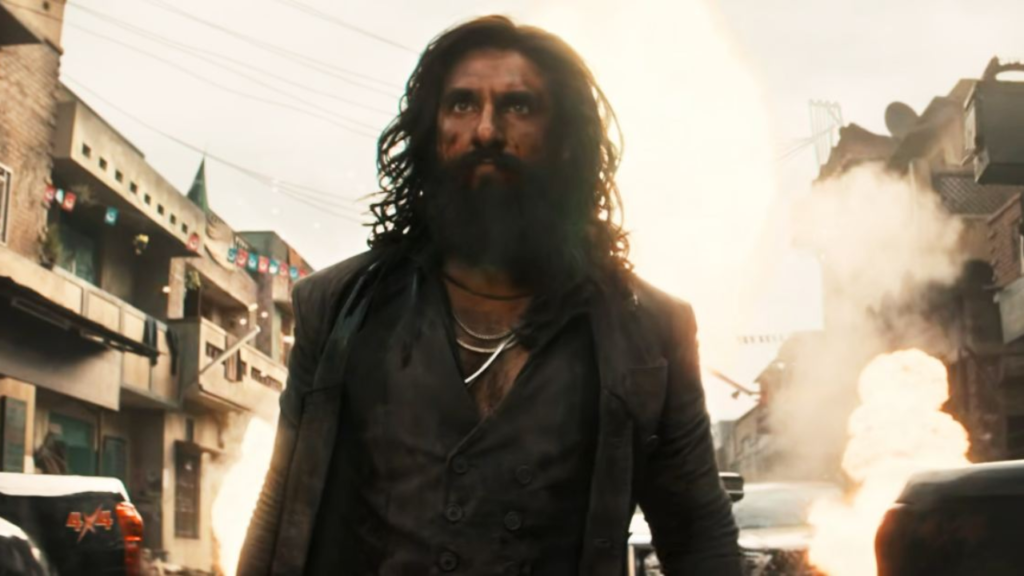
In an industry where perception often shapes performance, Dhurandhar 2: The Revenge has emerged as one of the most fascinating case studies of recent times. Even before its full-fledged theatrical rollout, the film found itself at the center of a heated debate — with sections of audiences and online discourse labeling it a “propaganda-driven spectacle.”
Yet, in sharp contrast, the same film is also rewriting box office expectations, delivering one of the strongest paid preview performances for a Bollywood film in recent memory.
This collision of controversy and commercial momentum has turned Dhurandhar 2 into more than just a release — it has become a cultural flashpoint, where debate, curiosity and mass appeal are unfolding simultaneously.
If numbers are the most reliable indicator of audience interest, Dhurandhar 2 is already operating at a formidable scale. The film’s paid previews, held a day ahead of release, generated approximately ₹12.29 crore at the Indian box office, selling over 2 lakh tickets across formats. This not only places it among the top preview performers for a Hindi film but also comfortably surpasses the benchmark set by Stree 2, which had previously set the tone with around ₹10 crore in previews.
The momentum doesn’t stop there. Early tracking had already indicated strong pre-release demand, with ticket sales crossing 1.5 lakh within 48 hours of advance bookings opening. The Tamil dubbed version, while contributing a smaller share, has also shown encouraging traction, reflecting the film’s expanding regional reach.
These numbers, while not inflated to speculative extremes, still point toward a robust opening trajectory. Trade projections suggest a strong Day 1, with the potential to comfortably outpace the opening of the first Dhurandhar, which had debuted at approximately ₹28 crore in India before going on to become a major commercial success globally.
But running parallel to this box office surge is an equally strong narrative — one of polarization.
Even before audiences entered theatres, Dhurandhar 2 was being discussed across social platforms as a film with overt ideological undertones. Following the preview shows, that conversation only intensified. Some viewers have described the film as heavy-handed in its messaging, pointing to its strong nationalist tone and heightened dramatic framing as elements that lean into a specific narrative stance.
For this section of the audience, the film operates less as pure storytelling and more as a statement-driven spectacle.
However, the counter-view is equally significant.
Many industry observers argue that such criticism needs to be contextualized within the framework of mainstream Hindi cinema. Patriotism, stylized conflict, and heightened emotional beats have long been central to the commercial format. From this perspective, Dhurandhar 2 is not necessarily an outlier, but rather an extension of a storytelling tradition that has historically resonated with large sections of the audience.
This divide is precisely what makes the film’s reception so compelling. The conversation is no longer limited to whether the film carries political undertones, but whether that perception meaningfully impacts audience turnout — something the current box office trends seem to challenge.
If the debate suggests polarization, audience response reflects a more familiar Bollywood dynamic — one where mass approval and critical skepticism coexist.
On the ground, there is clear enthusiasm for the film’s scale and spectacle. The high-octane action, expansive set pieces and “whistle-worthy” moments have found strong resonance among theatre-going audiences. This is a film designed for the big screen, and early reactions suggest that aspect is working decisively in its favor.
At the center of this reception is Ranveer Singh, whose performance has been widely highlighted as one of the film’s major strengths. His portrayal carries the intensity and emotional weight needed to anchor a narrative built on scale and conflict, reinforcing his position as a key driver of the film’s theatrical pull.
Critical reception, however, has been more measured. While acknowledging the film’s ambition and scale, several responses point toward issues of pacing and narrative density. The extended runtime, combined with a relentless focus on spectacle, has led some critics to argue that emotional depth and subtlety take a backseat.
This creates a classic divergence — one where the film succeeds as a mass entertainer while inviting more mixed responses from a critical standpoint.
The inevitable comparison with the first Dhurandhar further sharpens this conversation. The original film was widely appreciated not just for its scale but for the freshness it brought to the genre. The sequel, by contrast, is undeniably bigger — in scale, ambition and opening numbers — but faces scrutiny over whether it captures the same creative spark.
What is clear, however, is that Dhurandhar 2 has expanded the franchise’s commercial ceiling. Its preview performance alone signals a significantly higher opening trajectory, and if sustained, the film is well-positioned to emerge as one of the biggest box office performers of the year.
Perhaps the most defining aspect of this release is how seamlessly controversy has translated into visibility.
The ongoing “propaganda” debate — regardless of where one stands on it — has amplified the film’s presence across platforms. Social media discourse, divided opinions and viral conversations have ensured that Dhurandhar 2 remains at the center of public attention.
In many ways, this has functioned as organic marketing.
Curiosity becomes the catalyst. Audiences are drawn not just by the scale of the film, but by the conversation surrounding it. The need to “see it for themselves” becomes a powerful driver of footfall.
This reflects a broader shift in the box office ecosystem, where conversation — even contentious — plays a crucial role in shaping performance. In this landscape, debate and demand are no longer opposing forces; they often feed into each other.
As Dhurandhar 2 enters its full theatrical run, its trajectory will ultimately be determined by sustained word-of-mouth. But its opening phase already signals something larger.
It represents a moment where Bollywood’s evolving dynamics are clearly visible — where films are not just watched, but debated; where perception travels as fast as performance; and where success is defined not just by numbers, but by the scale of conversation they generate.
Dhurandhar 2 isn’t just making noise at the box office.
It is redefining how controversy and commerce coexist in modern Indian cinema.
Read More:
- Beyond Hype: The 10 Indian Films Defining Anticipation in 2026
- Hollywood Box Office Failures 2025 Explained — What The Year’s Biggest Misses Taught Us
- Why James Cameron’s Films Refuse to Fade — Even When the Box Office Is Done
- Best Santa Claus Movies of All Time, Ranked by Impact and Legacy
- 35 Years Later: From Traps to Triumphs: Where Are the Stars of ‘Home Alone’ Now?