
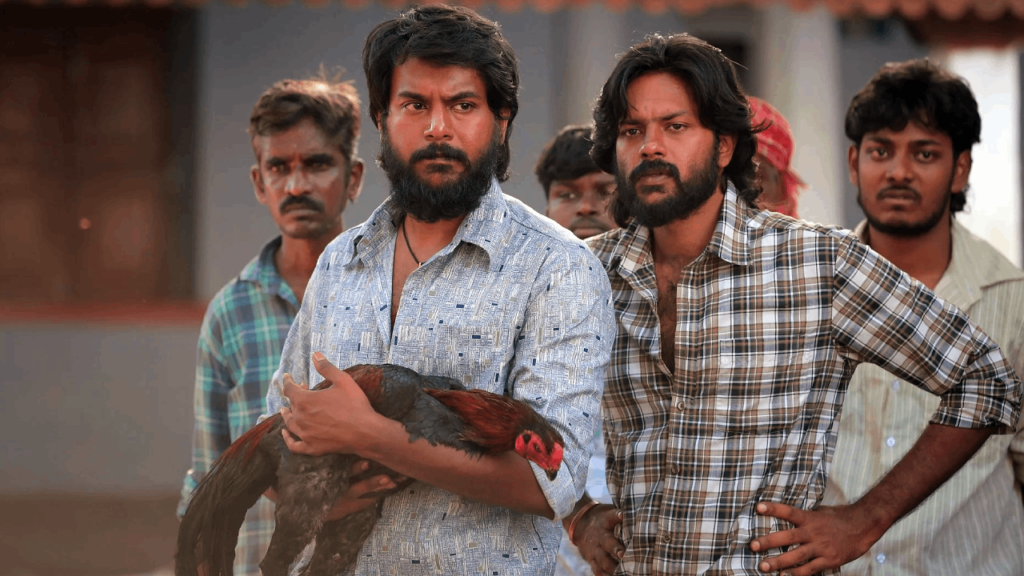
Karthik Subbaraj’s Dorothy has moved from a standing ovation at the Toronto International Film Festival to a much more complicated conversation among audiences. Released in theatres on September 25, the Tamil drama has faced #BoycottDorothy calls and criticism over its portrayal of transgender identity, even as several viewers and critics have praised its performances and its willingness to take a difficult subject into mainstream cinema. Starring Keerthy Suresh, Sananth and Rishikanth, the film is set in a 1990s village in Madurai, where caste, family honour and rigid ideas of masculinity shape almost every relationship.
At first, Dorothy appears to be a story about two childhood friends. Subbu, played by Sananth, is the son of powerful moneylender Veeraiya, while Karthi, played by Rishikanth, comes from a lower-caste family. Their friendship survives the social divide around them, but they grow up learning the same harsh lesson about masculinity: a man should be fearless, aggressive and never show weakness. As adults, however, their paths begin to change. Karthi becomes increasingly shaped by that violent world, while Subbu begins questioning the identity and expectations imposed on him.
The arrival of Dorothy, played by Keerthy Suresh, changes the direction of the story. What initially looks like a familiar relationship inside a rural family drama gradually becomes something much more personal. Subbu’s buried struggle with his gender identity comes to the surface, forcing the film to move beyond friendship and romance into questions of identity, acceptance and survival. The twist is important not simply because it changes the plot, but because it changes the way the audience understands Subbu and the friendship at the centre of the film.
That is where Karthik Subbaraj’s treatment of masculinity becomes particularly interesting. The person who once taught Karthi how to behave like a “man” eventually becomes the person who makes him question what that definition actually means. Karthi’s conflict is therefore not just about accepting his friend. It is about confronting the values he has spent his entire life absorbing. When he is eventually forced to choose between those values and his friendship with Subbu, the film turns a personal relationship into its biggest emotional conflict.
The film also refuses to separate gender from caste and power. Veeraiya’s household operates through fear, hierarchy and family pride, while the village itself is divided by caste. Karthik Subbaraj places Subbu’s struggle inside that world rather than giving it a separate, safer setting. The result is a film in which masculinity, caste and family honour constantly reinforce one another.
This connection between the different social pressures gives the friendship at the centre of Dorothy greater significance. Subbu and Karthi do not simply have to navigate a personal disagreement as adults. Their relationship has been shaped by the social environment in which they grew up, where ideas about caste, masculinity and family reputation determine how people are expected to behave. Subbu’s struggle consequently challenges not only his own identity but also the assumptions that have governed his friendship with Karthi.
Visually, Dorothy carries the same ambition. Cinematographer Tirru contrasts the colour of the flashback portions with the monochrome present, giving the friendship’s earlier years a different emotional texture. The visual shift separates different periods of the story while reinforcing the contrast between the warmth of the characters’ earlier relationship and the more difficult reality they face later.
Ilaiyaraaja’s music becomes another major part of the film’s identity, marking his first collaboration with Karthik Subbaraj and giving the rural drama a scale beyond its setting. The music works alongside Tirru’s cinematography to establish the emotional atmosphere of the film while keeping the focus on its characters and the world they inhabit.
Yet the film’s ambition has also created its biggest criticism. Some reviewers have argued that Dorothy sometimes relies on the stereotypes it is attempting to challenge, particularly in its treatment of transgender characters and violence. Others have questioned why Dorothy herself receives comparatively little interiority despite being central to the film’s transformation. The writing has also been described as heavy-handed in places, suggesting that the film’s message occasionally becomes more prominent than its characters.
That criticism sits alongside the social-media backlash that followed the theatrical release. Certain dialogues and scenes were circulated without their wider context, including a line suggesting that transgender people could one day become the “norm”. The response grew into boycott calls and accusations that the film was pushing LGBTQ+ ideas. At the same time, other viewers defended Dorothy, arguing that the film was confronting prejudice rather than attacking heterosexual people.
The controversy has therefore become closely tied to the film’s larger themes. Because Dorothy places questions of gender identity within a world already defined by caste, family honour and rigid expectations of masculinity, different viewers have interpreted its intentions in sharply different ways. For some, the film’s willingness to address those subjects directly is part of its value. For others, the way it approaches transgender representation raises concerns about whether it fully escapes the stereotypes it seeks to question.
Karthik Subbaraj has remained firm about the film. He has dismissed the online backlash as coming from a small section of people and asked those questioning the portrayal to actually watch the film before judging it. More recently, he described Dorothy as a mirror to realities that society often refuses to acknowledge and said he hopes it can encourage greater dignity and acceptance towards transgender people.
That makes Dorothy more interesting than a simple controversy story. The film is certainly imperfect, and its approach to representation can be debated. But its real cinematic gamble lies in putting friendship, masculinity, caste and transgender identity inside the same rural world and refusing to make the subject comfortable.
The film’s central conflict is therefore larger than Subbu and Karthi’s friendship. It is also about the values they inherited and the possibility of questioning those values. Subbu’s struggle forces Karthi to reconsider a definition of masculinity that once seemed unquestionable, while the surrounding caste and family structures make that process more difficult.
The controversy surrounding Dorothy has also ensured that its discussion extends beyond its narrative. The film has become a point of debate over how mainstream Tamil cinema approaches transgender identity and whether stories attempting to challenge social prejudice can do so without reproducing some of the assumptions they are examining.
Whether audiences agree with all of Karthik Subbaraj’s choices or not, Dorothy has succeeded in making a conversation that mainstream Tamil cinema rarely places this directly on screen. That conversation is now as much a part of the film as the story itself, particularly because its themes of identity, masculinity, caste and acceptance continue to generate sharply different responses.