
Blerta Basholli’s Dua is drawing international attention following its world premiere in the 2026 Cannes Critics’ Week competition, where the Kosovo, Switzerland and France production received the SACD Award. The achievement gives the coming-of-age drama a strong international platform and makes it an important new title from Kosovo’s cinema. The film is now in distribution, giving audiences and industry observers a reason to follow its journey beyond Cannes.
Directed by Blerta Basholli, Dua places a 13-year-old girl at the center of a story about growing up in Pristina in the late 1990s, when ethnic tensions were rising and the Kosovo War was approaching. Rather than presenting the period only through large political events, the film looks at how the changing situation affects an ordinary teenager dealing with friendships, social pressure, adolescence and expectations surrounding womanhood.
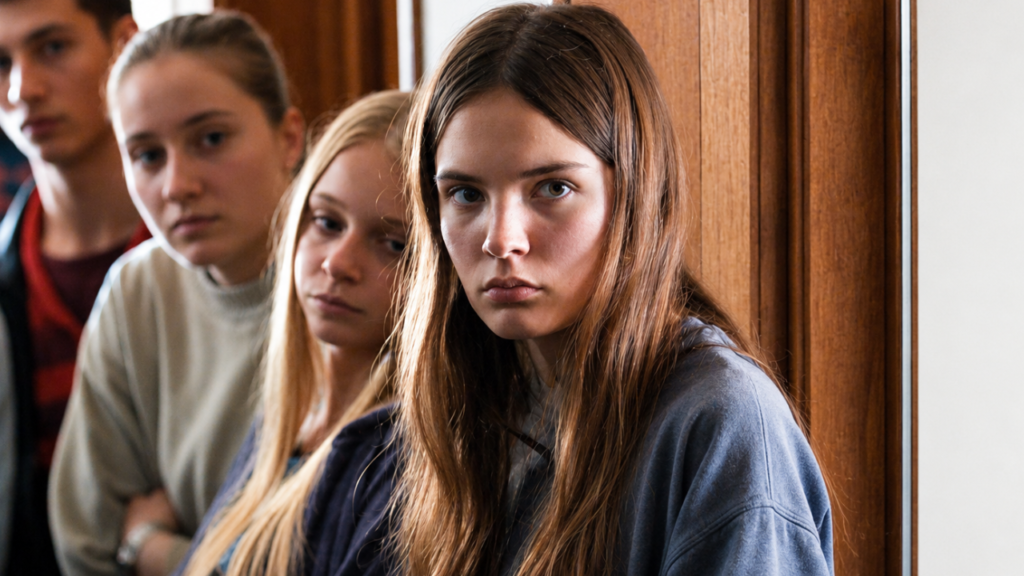
Pinea Matoshi plays Dua, who is trying to understand herself while the world around her becomes increasingly uncertain. Her teenage concerns continue even as fear and political tension enter everyday life. The story also introduces Maki, a fearless girl who becomes close to Dua and encourages her to see resistance and confidence in a different way.
This contrast between ordinary teenage experiences and a dangerous social environment is central to Basholli’s approach. The filmmaker wanted to explore the Kosovo War through the perspective of a young girl, showing that teenagers living through conflict still have friendships, dreams, fears and hopes. The war does not simply replace their everyday lives; instead, it becomes part of those lives.
The perspective is also personal for Basholli. She grew up in Kosovo during the conflict, and her own memories helped shape the film’s focus on ordinary moments. That personal connection allows Dua to explore the period through relationships and experiences rather than treating the war simply as a historical backdrop.
Pinea Matoshi’s casting was another important part of the production. According to the material surrounding the film, Basholli and her team spent nine months visiting schools in Pristina while looking for the right young performers. Matoshi was suggested by her mother, and Basholli believed she had the ability to communicate emotions through subtle reactions.
The film’s Cannes achievement is particularly significant for Basholli because Dua is her second feature after Hive. Her 2021 debut became an international breakthrough, winning the World Cinema Dramatic Grand Jury Prize, Directing Award and Audience Award at Sundance. Dua now gives her another opportunity to bring a Kosovo-set story to a major international audience.
With its recognition and distribution status, Dua has moved beyond being simply another new film from an emerging filmmaker. Basholli uses one teenager’s experience to connect Kosovo’s recent history with the universal uncertainty of growing up. Its festival success now gives that story a wider international audience and places Basholli’s latest work firmly on the global cinema radar.
Read More: