
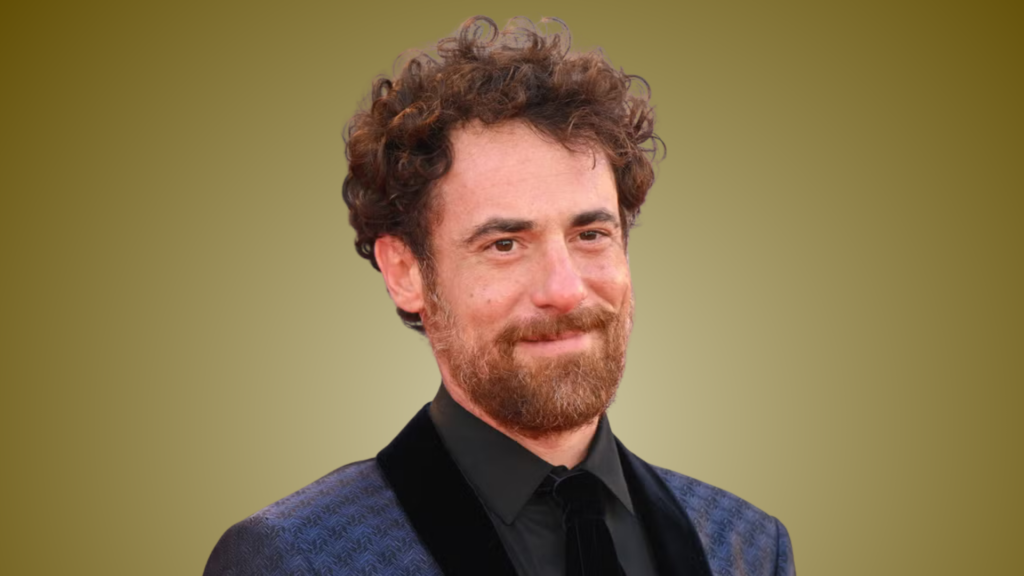
A scientist defends his discoveries, a powerful institution challenges his conclusions, and a debate about the universe threatens to change the course of his life. This conflict lies at the heart of Galileo, an upcoming Italian film starring Elio Germano as astronomer Galileo Galilei. Written and directed by Roan Johnson, the €8 million production combines drama and comedy to revisit the scientist’s confrontation with the Roman Inquisition. Produced by Bibi Film with Rai Cinema and the participation of HBO Max, the film has entered the international market, with Fandango Sales acquiring its international rights and presenting the project to buyers at Rome’s MIA market. Filming began in late September 2026 and is scheduled to continue through November.
Galileo’s story extends beyond the scientific debate over whether the Earth or the Sun occupies the centre of the universe. It also raises questions about what happens when new evidence challenges ideas that have been accepted for generations.
At the time, the prevailing understanding placed Earth at the centre of the universe, with the Sun and other celestial bodies moving around it. Galileo’s astronomical observations challenged this view. Using a telescope to study the night sky, he discovered four moons orbiting Jupiter, demonstrating that not every celestial body revolved around Earth. His findings supported the Sun-centred model associated with Nicolaus Copernicus, offering a different explanation of the structure of the universe.
Galileo presented arguments for this model in Dialogue Concerning the Two Chief World Systems, published in 1632. The book brought him into conflict with Church authorities and led to his trial before the Roman Inquisition in 1633. He was convicted of vehement suspicion of heresy and spent the remaining years of his life under house arrest.
Galileo focuses on the confrontation between the scientist and his inquisitor before the trial. Rather than treating the dispute solely as a scientific debate, the film places its human conflict at the centre: a man defending his understanding of the world against an institution challenging his conclusions. Although the argument has far-reaching implications, its consequences are deeply personal for Galileo.
The film also explores other periods of the scientist’s life, beginning with his religious education as a boy and following his scientific achievements at the University of Padua. His relationship with Marina Gamba, with whom he had three children, also forms part of the narrative.
These elements offer a perspective beyond Galileo’s familiar image as a scientist who challenged the Church. He was also a father whose personal relationships developed alongside his scientific work. By bringing these aspects together, the film looks at the life behind the discoveries rather than reducing its central character to a figure in a history book.
The decision to combine drama and comedy gives the project another distinctive element. Galileo’s confrontation with the Inquisition could lend itself to a conventional historical drama, but Johnson’s approach leaves room for humour alongside the serious consequences of the scientist’s choices. The combination offers a different way to approach a familiar historical episode while retaining the conflict that shaped Galileo’s later life.
Germano takes on the lead role, bringing to the production a career that includes major recognition at the Cannes Film Festival. He won the festival’s Best Actor award in 2010 for his performance in Daniele Luchetti’s Our Life. In Galileo, he portrays a historical figure whose scientific convictions, personal relationships and confrontation with authority are closely connected. The role places him at the centre of a story driven both by the scientist’s discoveries and by the consequences of defending them.
Behind the camera, Johnson brings experience in comedy and drama. His earlier films include So Far So Good, which won the audience award at the 2014 Rome Film Festival, and Piuma, which competed at the Venice Film Festival in 2016. His 2026 film Rider also premiered in Venice. Johnson has written the screenplay for Galileo as well as directing it.
The film’s international sales launch marks a significant development while production continues. Fandango Sales has acquired the international rights and will also distribute the film in Italy. Its presentation at Rome’s MIA market introduces the €8 million project to buyers across different territories. A theatrical release date has not yet been announced.
Galileo’s story has endured because his discoveries helped change humanity’s understanding of the universe. His confrontation with established authority also illustrates the personal consequences that can follow when new ideas challenge accepted beliefs. By combining his scientific achievements, family life and trial, Galileo brings a defining chapter of history to the screen through the experiences of the man at its centre.