
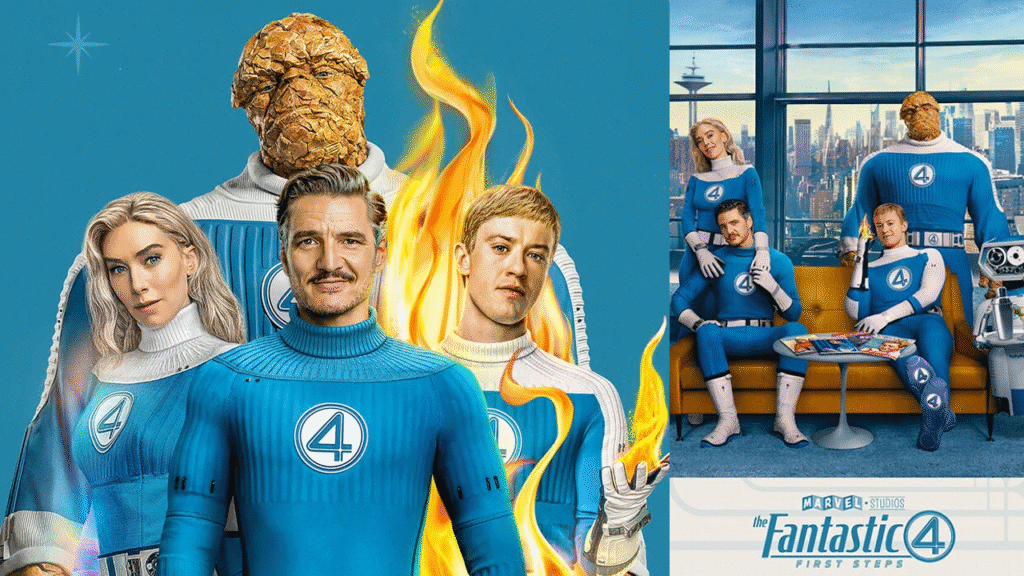
Marvel’s latest reboot Fantastic Four 2025 brings the beloved superhero quartet back in a 1960s-inspired world. Critics are split—some see it as a bold new direction, others as another missed opportunity.
Fantastic Four: First Steps arrives as Marvel Studios’ latest attempt to reintroduce its first family of superheroes—and the response has been anything but unanimous. Directed by WandaVision helmer Matt Shakman and featuring an all-new ensemble cast, the film had its special premiere on July 21, 2025 at the Dorothy Chandler Pavilion, ahead of its wider U.S. release on July 25, 2025. With a tone that leans retro, emotional, and family-first, critics are divided on whether this film marks a true rebirth or just another stylish placeholder.
From its bold visual worldbuilding to mixed reviews on pacing and emotional stakes, here’s what major publications are saying about Fantastic Four: First Steps.
Aesthetics and Worldbuilding: Retro Vibes Done Right?
One of the film’s most universally praised elements is its retro-futuristic aesthetic. Set in a stylized version of the 1960s, the film brings Jack Kirby’s original comic book panels to life with flying cars, analog tech, and Art Deco-infused set pieces.
Rotten Tomatoes’ editorial calls the Baxter Building and surrounding world “a beautifully immersive space-age playground.” Dexerto echoes the sentiment, noting that the visual direction “makes the film stand out from every other recent MCU entry.”
Yet not all reactions are glowing. Polygon warns that “nostalgia is doing a lot of heavy lifting here,” while AZ Daily Sun feels the film looks more like an expensive television episode than a big-screen epic.
Chemistry at the Core: A Fantastic Four That Finally Clicks?
Casting has often been a hurdle for previous Fantastic Four films—but not this time, according to many critics.
Vanessa Kirby as Sue Storm is being widely hailed as the emotional center of the team, while Joseph Quinn surprises with a grounded, vulnerable take on Johnny Storm. Pedro Pascal brings gravitas to Reed Richards, although some reviews suggest his genius feels more scripted than shown. Ebon Moss-Bachrach adds warmth to Ben Grimm but is underused as the film progresses.
IGN praised the ensemble for “selling the family dynamic,” while BBC Culture lauded Kirby’s performance as “layered and quietly commanding.” However, New York Post dismissed the cast chemistry as “awkward and flat,” arguing that the emotional stakes don’t land as strongly as they should.
Cosmic Villains: Galactus and Surfer Steal the Spotlight
Though the film focuses heavily on the Fantastic Four’s bond, many critics believe the real standouts are the antagonists.
Julia Garner’s Silver Surfer earns praise for bringing a stoic moral complexity to the role. Ralph Ineson’s Galactus—portrayed as a godlike being making an unthinkable demand—adds a genuine sense of cosmic dread.
According to IndieWire, “the villains are more compelling than the heroes this time,” while AP noted that Galactus “upends the story with a threat both mythic and personal.”
Yet some reviewers wanted more screen time and development for these characters. Vulture lamented that the film “only scratches the surface” of the Surfer’s internal conflict and Galactus’s philosophy.
Plot and Pacing: Lighthearted or Lightweight?
The central narrative—Galactus demanding Sue and Reed’s unborn child as the price for sparing Earth—sets up an emotionally charged premise. But critics are split on whether the execution lives up to its potential.
Entertainment Weekly appreciated the film’s brisk pace and emotional sincerity, giving it a grade of B and calling it “a colorful and compact adventure.” Decider called it “Marvel’s most sincere film since Spider-Man: No Way Home.”
Others were less convinced. Polygon and Cinemablend criticized the film for skipping over character development and layering emotional moments without proper setup. AZ Daily Sun argued the film “feels like a two-part TV pilot,” with unresolved arcs and minimal escalation.
Score and Visual Effects: Giacchino’s Music Shines
The film’s technical strengths go beyond just production design. Michael Giacchino’s score is a standout, adding an operatic touch that underscores the film’s emotional highs and sci-fi scale.
Critics also pointed out that while most of the visual effects blend well with practical sets, some moments—particularly involving early transformations and the CGI-rendered Franklin—appear less polished.
Still, most outlets agreed that the technical direction adds to the film’s charm, with The Nerds of Color describing it as “a beautiful tribute to the Marvel Age of Comics.”
Divided Reactions: Is This the Fresh Start Marvel Needed?
There’s no clear consensus. Here’s how some of the major voices rank it:
Decider and IGN see it as a solid, emotional return for the franchise.
BBC Culture and IndieWire appreciate the tone but flag the script’s limitations.
NY Post and AZ Daily Sun remain skeptical, calling it narratively safe and emotionally unearned.
Rotten Tomatoes‘ roundup shows a generally mixed-to-positive trend, with audiences slightly more favorable than critics.
About the Film: Cast, Crew, and Franchise Legacy
Fantastic Four: First Steps is the fourth major attempt to adapt Marvel’s original superhero team for the big screen. This 2025 reboot is directed by Matt Shakman, best known for WandaVision, and written by Josh Friedman and Cam Squires.
Main Cast:
Pedro Pascal as Reed Richards / Mr. Fantastic
Vanessa Kirby as Sue Storm / Invisible Woman
Joseph Quinn as Johnny Storm / Human Torch
Ebon Moss-Bachrach as Ben Grimm / The Thing
Julia Garner as the Silver Surfer
Ralph Ineson as Galactus
The film premiered on July 21, 2025, and released theatrically across the U.S. on July 25, 2025. It is part of Marvel Studios’ Phase 5, with further implications for the MCU’s cosmic storyline.
A Stylized Reboot with Room to Grow
Fantastic Four: First Steps isn’t flawless, but it’s undoubtedly Marvel’s most thoughtful take on the iconic team to date. The film embraces sincerity, nostalgia, and visual boldness, even as it struggles with pacing and deeper emotional payoff. Whether seen as a fresh start or a cautious experiment, it opens new doors for Marvel’s future—and finally gives the Fantastic Four a world they can truly call home.