
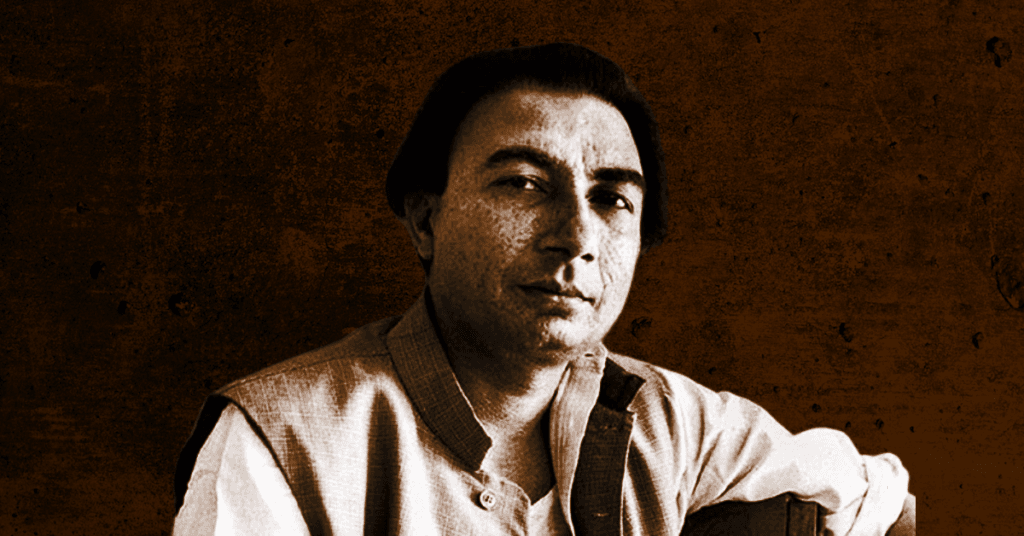
“Le de ke apne paas faqat ek nazar to hai,
Kyun dekhe zindagi ko kisi ki nazar se hum”
Sahir Ludhianvi was not just a poet of words but of emotions; raw, untamed, and deeply personal. Sahir Ludhianvi poetry carried both fire and melancholy, passion and rebellion. Unlike those who sought comfort in tradition, Sahir questioned it. Unlike those who wrote merely to entertain, he wrote to stir, to provoke, to challenge. His words were weapons, his verses a mirror held up to society.
Hindi cinema was fortunate to have him. At a time when film lyrics often glorified escapism, Sahir Ludhianvi lyrics introduced realism. He did not merely compose songs; he infused films with literary depth, transforming Hindi film music into an art form that resonated beyond the screen. His songs were not just melodies; they were stories, philosophies, and sometimes, revolutions in themselves.
A Poet Who Shaped Cinema: The Influence of Sahir Ludhianvi Poetry
If Hindi cinema is a river, Sahir was one of its fiercest currents, altering its course with every song he penned. His works did not merely accompany a film’s narrative; they often became its voice.
“Jinhe naaz hai Hind par woh kahan hain?”
Guru Dutt’s Pyaasa is more than just a film—it is a lament, a protest, and a mirror held up to society. At its core is Sahir, whose lyrics transform Vijay, the protagonist, into a reflection of himself.
This piercing question from “Jinhe Naaz Hai Hind Par” is not just a song; it is an indictment of a world that worships wealth and discards idealism. Sahir Ludhianvi poetry in Pyaasa is filled with such moments—”Jaane Woh Kaise Log The Jinke Pyar Ko Pyar Mila”, a cry of heartbreak that feels almost autobiographical, and “Yeh Duniya Agar Mil Bhi Jaaye To Kya Hai”, a song so drenched in disillusionment that it lingers long after the decades.
Sahir’s poetry does not merely comment on the film’s themes, it defines them. His words make Vijay’s despair palpable, elevating Pyaasa from a film about a struggling poet to an existential statement on love, loss, and artistic alienation.
While Pyaasa made Sahir the voice of the outcast, Kabhi Kabhie turned him into the poet of nostalgia. The film, directed by Yash Chopra, revolves around love lost and found again, and Sahir’s title song, “Kabhi Kabhie Mere Dil Mein”, is its emotional core.
“Kabhi kabhi mere dil mein khayal aata hai
Ki zindagi teri zulfon ki narm chhaon mein; guzarne paati, toh shaadaab ho bhi sakti thi.”
This is not just a song, it is a poem wrapped in longing, a meditation on what could have been. Sahir Ludhianvi lyrics carry a quiet acceptance of love’s impermanence, making the song resonate across generations.
Few lyricists have the power to turn a song into a movement. Sahir did it with “Woh Subah Kabhi Toh Aayegi”. Inspired by Dostoevsky’s Crime and Punishment, Phir Subah Hogi (1958) was a film about struggle and redemption, and Sahir’s words made it soar. His poetry in this film carries both sorrow and defiance, urging the oppressed to dream despite their suffering.

Sahir’s songwriting often carried the weight of his own experiences, and nowhere is this more evident than in “Main Zindagi Ka Saath Nibhata Chala Gaya”.
“Gham aur khushi mein farq na mehsoos ho jahan
Main dil ko us maqaam pe laata chala gaya.”
Set to Jaidev’s gentle melody, this song is not just an ode to resilience, it is a personal philosophy. The lyrics, free from melodrama, present life as a journey best traveled without attachment to joy or sorrow. It is Sahir’s version of stoicism, wrapped in deceptively simple words that make it one of Hindi Cinema’s best songs. Gulzar in an interview with Times said “No other poet expressed separation in the same manner as Sahir Ludhianvi.”
Sahir’s Political and Social Commentary in Hindi Cinema
Sahir Ludhianvi social commentary was more than poetic, he was a voice of resistance. His poetry in cinema often addressed social injustice, inequality, and the failures of post-independence India. He did not shy away from uncomfortable truths, making his film songs powerful tools of change.
- “Aurat ne janam diya mardon ko, mardon ne usse bazaar diya…” (Sadhana, 1958), a searing critique of patriarchy, this song questioned society’s treatment of women with lines that remain as relevant today as they were then.
- “Tu Hindu Banega Na Musalman Banega” (Dhool Ka Phool, 1959), One of Hindi cinema’s most profound calls for secularism, this song rejected religious divisions in favor of a shared human identity.
- “Jinhe Naaz Hai Hind Par” (Pyaasa, 1957), A song that questioned the hypocrisy of a newly independent nation, challenging those in power to answer for the struggles of the common man. Sahir Ludhianvi influence on Bollywood is undeniable through his socially conscious lyrics. His ability to blend poetry with political consciousness made his songs enduring anthems of change.
Why Sahir Ludhianvi Poetry Still Matters

Unlike traditional Bollywood lyricists who painted love in pastel hues, Sahir Ludhianvi poetry introduced shades of gray. Songs like “Chalo Ek Baar Phir Se Ajnabi Ban Jayen Hum Dono” (Gumrah) spoke of the bittersweet reality of relationships, making them feel profoundly real. Analyzing the poetry of Sahir Ludhianvi, one sees that he was never afraid to question or challenge. Whether it was “Yeh Mahalon Yeh Takhton Yeh Taajon Ki Duniya” (Pyaasa) condemning capitalism or his feminist verses in Sadhana, his lyrics carried an urgency that made them unforgettable.
While many lyricists wrote for music, Sahir wrote for history. His songs are recited as poetry, his verses discussed as literature. Even today, his words retain their power, resonating with those who believe that true art transcends time.
Read more related articles:
- The Evolution of Indian Cinema
- The Curious Case of Fantasy Films in India
- Why Indian Horror Films Struggle to Gain Respect
The Poet Who Refused to Fade
He did not just write songs; he wrote truths. Sahir Ludhianvi poetry, whether speaking of love or injustice, was a reflection of the world around him; a world that, in many ways, remains unchanged. Even as Hindi cinema moves toward an era of commercialized music, his words remind us of a time when lyrics had meaning, when songs carried weight, when poetry and cinema were one.
And so, as his immortal lines echo through the corridors of time—
“Ik shehanshaah ne Daulat ka sahara lekar,
Hum gharibon ki muhabbat ka udaya hai mazaaq”
his legacy endures, not just in the films he enriched, but in the hearts of those who still find solace in his words.