
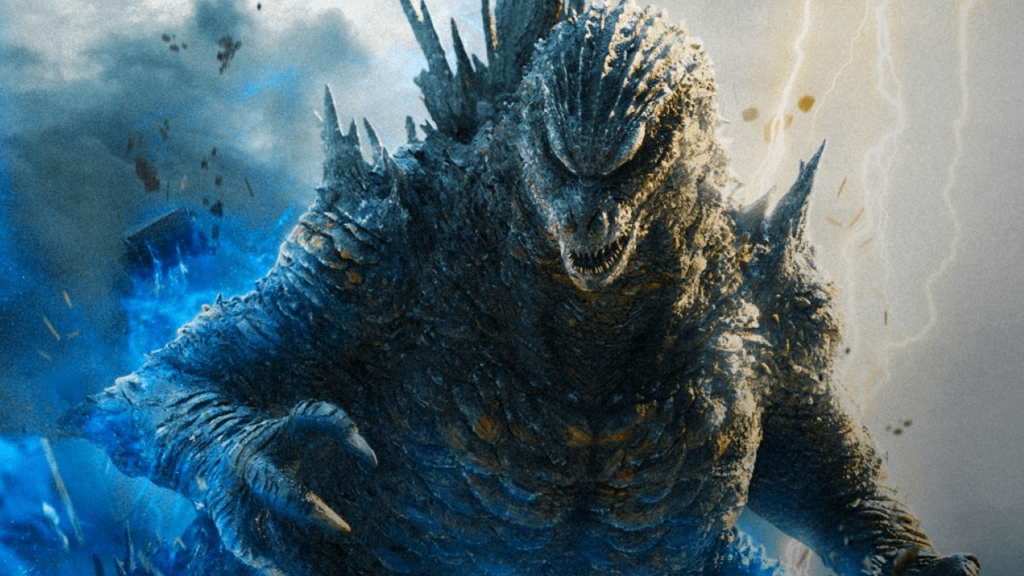
Godzilla Minus Zero, the direct sequel to 2023’s Oscar-winning Godzilla Minus One, had its world premiere as a Spotlight Gala selection at the 64th New York Film Festival on September 26. Written and directed once again by Takashi Yamazaki, the film reunites stars Ryunosuke Kamiki, Minami Hamabe and Sae Nagatani, and will be released in U.S. theaters on November 6 through GKIDS.
The critical response out of NYFF has been overwhelmingly enthusiastic, with reviews largely agreeing that Takashi Yamazaki has pulled off the rare feat of making a sequel that expands on a beloved original without losing what made it work, even as a smaller number of critics found some of its emotional beats treading familiar ground.
Picking up roughly two years after the events of Godzilla Minus One, the film follows former kamikaze pilot Koichi Shikishima, played by Kamiki, who has finally settled into a quiet family life with his wife Noriko, played by Hamabe, and their now seven-year-old adopted daughter Akiko, played by Nagatani.
That peace is threatened when a newly unearthed, dragon-like kaiju wreaks havoc on the city of Matsumoto. Dr. Hoda, played by Hidetaka Yoshioka, now leads a specialized crisis response bureau and calls on a reluctant Koichi to help advise the team, while meteorologist Dr. Aoyama, played by Masami Nagasawa, works to predict the creature’s movements using weather patterns.
As the new threat escalates, the team’s only viable solution may be turning to Godzilla himself, their greatest enemy, to help stop an even greater one.
Variety’s chief film critic Owen Gleiberman was among the film’s strongest champions, praising the return of “the humanistic heroes of the first film” alongside Yamazaki’s “awesome sense of monster action paintings in motion.”
Gleiberman singled out the film’s Godzilla-versus-King Ghidorah showdown as something beyond a simple monster brawl, writing that Yamazaki “works with a quality that none of the filmmakers of recent decades has summoned: a fairy-tale innocence,” turning citywide destruction into “a spectacle out of a dream.” He also highlighted a sequence imagining Godzilla approaching Manhattan the way he once approached Tokyo, comparing its unsettling power to Oppenheimer.
The Hollywood Reporter’s review was similarly glowing, calling the film “an equally thrilling jolt of marauding monster action anchored by tender themes of family” and praising Yamazaki for trusting “his audience to know the value of time spent observing human relationships, ennobling the horror with tangible emotional stakes.”
The review noted that while the story is set in 1949, the postwar reckoning at its core “is no less acutely felt here,” pointing to the film’s continued interest in Japan’s complicated relationship with America and the long shadow of its military-industrial history.
The returning cast remains central to the film’s emotional foundation, with Ryunosuke Kamiki, Minami Hamabe and Sae Nagatani reprising their roles from Godzilla Minus One. The sequel also expands its ensemble with Hidetaka Yoshioka as Dr. Hoda and Masami Nagasawa as meteorologist Dr. Aoyama.
Reviews broadly praised Yamazaki for maintaining the human dimension of the franchise alongside the larger-scale monster action. The Hollywood Reporter specifically highlighted the film’s tender family themes and the value of spending time with its human characters.
However, Roger Ebert offered the roundup’s most measured take. Critic Clint Worthington wrote that “Minus Zero doesn’t quite reach the miraculous highs of its predecessor, but the old boy still has plenty of bite,” praising a “daring mid-film dogfight” as a fresh setting for the franchise’s trademark tension.
Worthington’s central critique was that “much of Minus Zero feels like a rehash of similar thematic material from Minus One.” He argued that the new characters introduced to fill the emotional gap left by Koichi and Noriko’s newfound stability, including Dr. Aoyama and weapons scientist Dr. Murakami, are “rendered in anything finer than broad strokes,” even if the cast commits fully to their roles.
Even so, he credited the film’s newer creature-based imagery, including a terrifying sequence in which the new kaiju lifts buildings into the air and slams them back down, as “a legitimately terrifying image” that pushes the franchise’s visual language forward.
One of the sequel’s notable departures is its R-rating, the first in the franchise. Yamazaki addressed the decision directly with Variety at the premiere, saying that “logically, as a studio, and even as a director, you want as many people from the general public to be able to see your film,” but that securing the rating was “essential to the film” regardless of the wider commercial reach it might cost.
Reviews broadly agreed that the harder edge paid off, with Roger Ebert’s review specifically noting that Yamazaki “lingers longer on bodies charred from nuclear hellfire,” language that multiple reviews connected back to the series’ long-running use of Godzilla as a metaphor for Japan’s nuclear-age trauma.
Beyond the trade press, early social reactions from the premiere skewed almost uniformly rapturous. One critic called it “the BEST followup G film to date,” comparing the leap in quality to The Godfather Part II, while another described the experience as “an overwhelming achievement of kaiju filmmaking” that delivered “an emotional wallop.”
The central critical debate is not whether Godzilla Minus Zero succeeds as a spectacle, but how closely it matches the emotional impact of Godzilla Minus One.
The strongest reviews see the sequel as an expansion of Yamazaki’s approach, combining larger monster action with the family and postwar themes that defined its predecessor. More measured criticism suggests that some of the sequel’s emotional material feels familiar, particularly in the treatment of its newer human characters.
Taken together, the reviews describe a sequel that has largely cleared an unusually high bar, following up one of the most acclaimed monster movies in recent memory without diminishing it. Whether framed as an equal to its Oscar-winning predecessor or a slightly more familiar retread elevated by bigger spectacle, Godzilla Minus Zero has emerged from its New York Film Festival premiere as one of the most talked-about genre films of the year, arriving in U.S. theaters on November 6.
Godzilla Minus Zero appears to be pursuing the same balance that made Godzilla Minus One stand out: treating Godzilla as both a major-scale cinematic spectacle and a vehicle for human and historical themes. The critical response suggests that Takashi Yamazaki has expanded the scale without abandoning that foundation.
The main point of debate is whether the sequel’s larger action sequences and new kaiju imagery are matched by equally fresh character development. While some critics see familiar emotional territory, the overall response remains strongly positive, particularly toward the film’s monster action, visual ambition and continued human focus.
Watch Trailer:

Film Details: Godzilla Minus Zero
Film: Godzilla Minus Zero
Director/Writer: Takashi Yamazaki
Cast: Ryunosuke Kamiki, Minami Hamabe, Sae Nagatani, Hidetaka Yoshioka, Masami Nagasawa, Min Tanaka, Yuki Yamada, Kuranosuke Sasaki, Jun Kunimura, Sakura Ando
Genre: Kaiju / War Drama
Rating: R
Runtime: 2 hours 15 minutes
Production Company: Toho Studios
Distributor: GKIDS
Festival: New York Film Festival 2026 — Spotlight Gala
Release Date: November 6, 2026
Read More Review Roundups on POF