
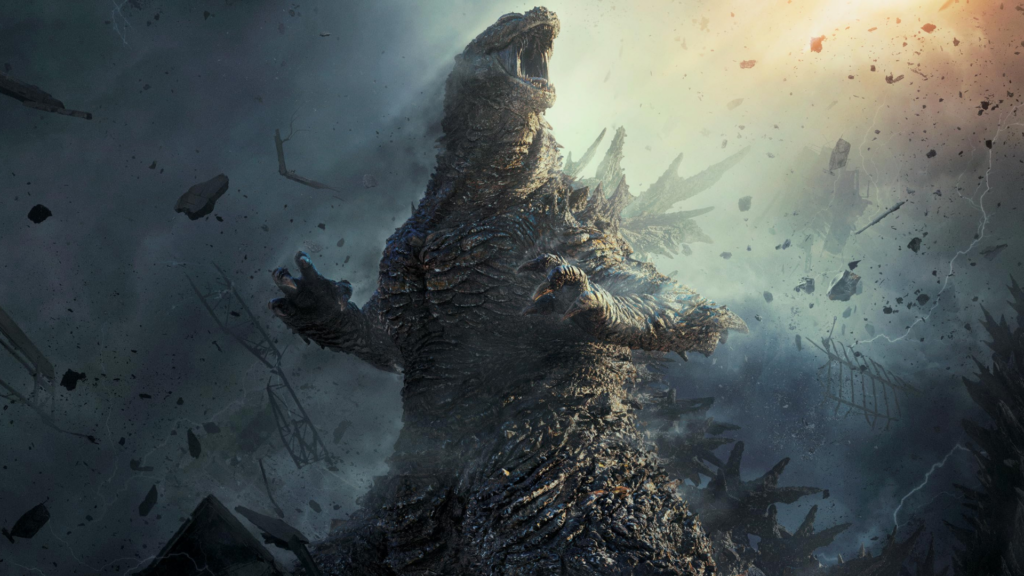
With its Japanese theatrical release just one day away, Godzilla Minus Zero has already given Tokyo audiences a taste of the excitement surrounding its arrival. The sequel to the Oscar-winning Godzilla Minus One played to two sold-out audiences at the 39th Tokyo International Film Festival on November 1, drawing fans who arrived in monster-themed outfits and carrying Godzilla figures. Directed by Takashi Yamazaki, the film opens in Japan on November 3 before reaching North American theatres on November 6. The festival screenings have given the film’s final days before its domestic release a burst of audience enthusiasm.
Both screenings took place at Hulic Hall Tokyo in Ginza, a district that also features prominently in the film’s destruction scenes. The location added an interesting connection between the festival event and the world of the movie, with audiences gathering in an area that Godzilla himself puts in the monster’s path. Selected as the festival’s centerpiece, Godzilla Minus Zero attracted considerable attention, and the two packed screenings offered a high-profile welcome for a sequel arriving with substantial expectations.
The excitement extended beyond ticket sales. Reports from the screenings described fans wearing Godzilla-themed costumes and carrying figurines of the iconic monster. Applause following the second screening was also reportedly unusually loud for a Japanese festival audience. The response offered an early indication of the anticipation surrounding the sequel, although its wider theatrical performance will become clearer after its release.
The festival appearance also brought the film’s principal cast before audiences. Ryunosuke Kamiki and Minami Hamabe attended alongside child actor Sae Nagatani, who returns as Akiko. Their appearance gave audiences an opportunity to hear from the performers at the centre of the story, including Nagatani, whose character has a more substantial role in the sequel. The cast’s participation added a personal dimension to an event otherwise dominated by the return of one of cinema’s most recognisable monsters.
Godzilla Minus Zero is a direct sequel to Godzilla Minus One, which won the Academy Award for Best Visual Effects. Set in 1949, two years after the events depicted in the 2023 film, the new story follows Japan as the country continues its efforts to rebuild after the Second World War and Godzilla’s devastating attack. The sequel therefore returns to a period in which the consequences of the earlier destruction remain central to the lives of its characters.
The film is the 39th entry in Toho’s long-running Godzilla franchise and the sixth Godzilla film of the Reiwa era. Its story brings the regenerating Godzilla back from the ocean, once again placing Japan in the path of a formidable threat. The sequel also introduces the legendary three-headed monster King Ghidorah as a major presence in the post-war narrative. The return of Godzilla, alongside the arrival of another established monster from the franchise, gives the film a new threat to build its story around while continuing the narrative established in Godzilla Minus One.
The sequel also carries a technical milestone for Japanese cinema. It is the first Japanese-produced Godzilla film, as well as the first Japanese production overall, shot specifically for IMAX. Made in Japan using IMAX-certified digital cameras, the film has been prepared with the large-format theatrical experience in mind. The production’s use of the format adds another point of distinction for audiences, particularly those looking to experience the scale of Godzilla’s destruction on the biggest available screens.
Another franchise first comes from the film’s North American classification. Godzilla Minus Zero has received an R rating from the Motion Picture Association for violent content and bloody images. It is the first Godzilla film to receive that rating from the organisation, setting it apart from Godzilla Minus One. The classification marks a notable distinction for the sequel as it prepares to reach audiences in North America.
One of the more personal stories to emerge from the Tokyo festival screenings concerns Sae Nagatani and the development of her character. In Godzilla Minus One, Akiko’s role relied largely on crying and brief lines of dialogue. For the sequel, however, Yamazaki gave the young actor fuller and more complex dialogue, expanding the character’s presence in the story.
Ryunosuke Kamiki and Minami Hamabe were reportedly surprised by the confidence with which Nagatani handled the expanded part. She memorised her lines and delivered them smoothly on set, demonstrating how the character and her performance have developed between the two films. The change also reflects the passage of time within the story, which moves forward two years after the events of Godzilla Minus One.
With the Tokyo International Film Festival screenings complete, attention now shifts from festival halls to cinemas. Japanese audiences will be able to watch Godzilla Minus Zero from November 3, followed by its wide North American release on November 6. The two sold-out screenings have provided the sequel with a strong festival welcome just ahead of its theatrical debut. The next stage will be its performance in cinemas, where the response from a much wider audience will determine how the film builds on the success and recognition of its predecessor.