
We often talk about “good films” as if goodness and enjoyment are the same thing. They aren’t. Some of the most respected films leave you drained, unsettled, or silent. You don’t come out of them feeling satisfied, you come out carrying something you didn’t have before.
There is a difference between a film that pleases you and a film that stays with you. The first gives you comfort. The second takes it away.

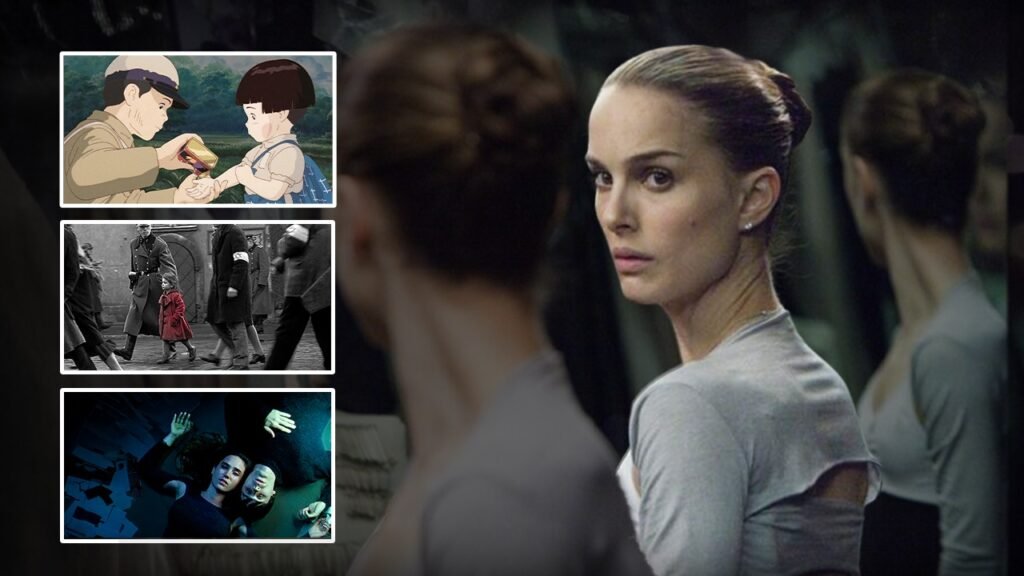
Steven Spielberg’s masterpiece Schindler’s List is not something you watch for enjoyment. It demands attention, but more than that, it demands endurance. It places you inside a reality that doesn’t soften itself for the sake of storytelling. There are moments that feel almost unbearable not because they are exaggerated, but because they are presented without escape. You don’t leave the film thinking about how well it was made. You leave thinking about what it showed you and how little distance there is between you and it.

Another slow burning tragedy, Grave of the Fireflies works differently, but arrives at the same place. It is quieter, smaller, more intimate. There is no spectacle, no attempt to overwhelm through scale. Instead, it reduces everything to two lives and lets their world collapse slowly. What makes it difficult is not intensity, but helplessness. Nothing intervenes. Nothing resolves. You watch not because you expect change, but because you cannot look away. These are not films you revisit easily. Not because they fail, but because they succeed too completely. They leave behind a weight that doesn’t invite repetition.

But not all difficult films work through history or tragedy. Some turn inward. Black Swan is not about external suffering, it is about internal collapse. The discomfort here comes from being trapped inside a mind that is breaking apart. There is no safe distance, no wider context to step back into. The film closes in on you, scene by scene, until the experience becomes claustrophobic. You admire the precision of it, the control, the performance, but that admiration sits alongside unease. It is not a film you enjoy. It is a film you endure from the inside.
There is another kind of discomfort that is less visible but no less heavy. Manchester by the Sea does not overwhelm you. It does not try to disturb you through intensity. Instead, it removes the idea that pain must resolve. The film moves quietly, almost casually, but what it carries is constant. There is no dramatic release, no moment designed to cleanse what has been built up. It simply stays. And when the film ends, that feeling remains intact. You don’t feel shaken, you feel altered in a way that is harder to define.
This is where the idea of a “bad experience” becomes clearer. These films are not designed to be pleasant. They are not concerned with making the time you spend with them easy. They ask for attention, patience, and often a willingness to sit with discomfort without expecting reward.

Even more aggressive examples push this further. Requiem for a Dream doesn’t just unsettle, it overwhelms. Its rhythm, its editing, its repetition, they build pressure rather than release it. Watching it feels less like following a story and more like being pulled into a downward spiral that never pauses long enough for you to recover.
What connects all these films is not their subject, or their style, or even their tone. It is their refusal to prioritize comfort. They are not trying to be liked in the moment. They are trying to be remembered after it.
This is also why they are often not revisited. Rewatchability is usually linked to ease, the ability to return without resistance. But these films resist you. They stay complete in one viewing. Not because they have nothing more to offer, but because they have already taken enough.
On the other hand, many films that are easy to watch, easy to enjoy, and easy to revisit often leave very little behind. They satisfy you in the moment, but they don’t stay with you. They resolve everything they introduce. They close themselves completely. And because of that, they rarely ask anything from you beyond your attention.
The films we call “great” often do the opposite. They remain open, unresolved, or heavy. They extend beyond their runtime. They continue in your thoughts, in fragments, in moments you return to without rewatching the film itself.
So maybe the question is not whether a film feels good while watching it. Maybe the question is what it leaves behind when it ends. Because some films don’t exist to be enjoyed. They exist to be carried.
Read More: