
Indian cinema has never lacked the courage to confront reality. From political satire to social critique, it has consistently pushed boundaries, questioned authority, and reflected uncomfortable truths. Yet, just as consistently, those very efforts have found themselves restricted — not always by law, but by a system that increasingly appears to decide which stories are allowed to be seen.
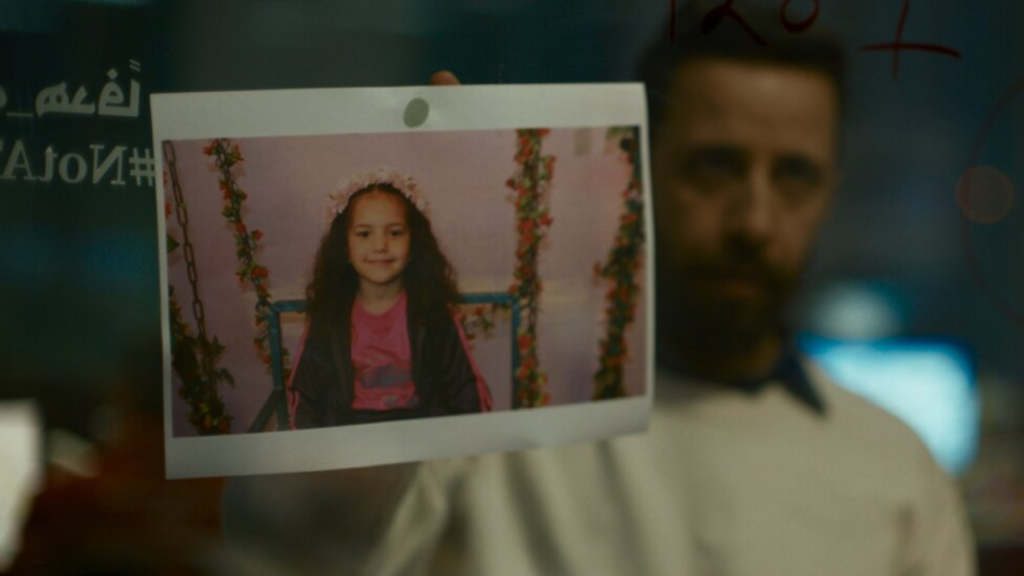
The latest flashpoint, The Voice of Hind Rajab, brings this tension into sharp focus. The critically acclaimed film, which has also emerged as an Oscar-nominated title, is centered on a real-life tragedy unfolding from the Gaza conflict, and has reportedly been denied clearance by the Central Board of Film Certification. The reasoning, widely understood to be tied to India’s diplomatic relationship with Israel, signals something deeper than routine certification. It suggests that cinema is now being evaluated not only on content, but on how that content aligns with geopolitical sensitivities.
In many ways, this marks the emergence of a new era of geopolitical censorship — one where storytelling intersects directly with foreign policy, and where the boundaries of creative expression are shaped by considerations far beyond the screen.
This is where the shift becomes evident. The Central Board of Film Certification was established as a certifying authority — a body meant to classify films for audiences. But over time, its function appears to have expanded into something far more influential. Today, certification can often determine not just how a film is viewed, but whether it is viewed at all.
The shift is not just perceptual — it is structural. Amendments to the Cinematograph Act in 2023 have introduced provisions that allow the Central Government to re-examine films even after certification. In effect, this extends the life of censorship beyond the board itself, reinforcing a system where approval is no longer final, and creative certainty becomes increasingly fragile.
The recent trajectory of Indian cinema reinforces this pattern. Films that engage directly with social or political realities are increasingly encountering resistance, often in ways that go beyond simple classification.
Santosh, for instance, received international recognition and critical acclaim, yet faced significant hurdles in India for its portrayal of police brutality, caste hierarchies, and systemic bias. The issue was not one of cinematic merit, but of thematic discomfort. Similarly, Phule, a film rooted in the lives of social reformers Jyotirao and Savitribai Phule, encountered objections linked to caste sensitivities — demonstrating that even historical narratives are not immune from scrutiny.
A similar tension continues to surround Jana Nayagan, where certification issues have translated into prolonged uncertainty. Despite progressing through stages of approval, the film became entangled in delays and additional reviews, reportedly influenced by its political context. What makes this instance particularly significant is that Jana Nayagan is still awaiting a proper release, underscoring how the certification process itself can act as a barrier.
This challenge is compounded by the absence of a clear appeals mechanism. The Film Certification Appellate Tribunal, which once allowed filmmakers to contest Central Board of Film Certification decisions, was abolished in 2021. Today, the only recourse lies in approaching High Courts — a process that is both time-consuming and financially demanding. In such a framework, delay becomes indistinguishable from denial, reinforcing how procedural barriers can function as a form of censorship.
But to view this as a recent development would be to ignore its deeper roots. The relationship between Indian cinema and censorship has always been complex, shaped by both institutional authority and external pressure.
During the Emergency, political satire Kissa Kursi Ka faced one of the most extreme responses in the history of Indian cinema, with its prints reportedly destroyed. Around the same time, Aandhi, believed to mirror real political figures, was pulled from circulation. These were overt acts — censorship in its most direct form.
In the decades that followed, the methods became more procedural, but the friction remained. Bandit Queen faced prolonged resistance over its depiction of violence and sexuality before eventually being released. Fire triggered protests and was temporarily withdrawn after theatres were attacked, revealing how public sentiment could override institutional approval. Black Friday was delayed due to ongoing legal proceedings, while Final Solution, a documentary on the Gujarat riots, was initially denied clearance.
More recently, Udta Punjab became a defining example of institutional overreach, with extensive cuts demanded before judicial intervention ensured its release. Lipstick Under My Burkha was initially rejected with reasoning that many saw as reflective of deeper biases, while documentaries like India’s Daughter were blocked in the interest of maintaining public order.
Across these cases, one pattern becomes increasingly clear — films that engage with politics, society, religion, or identity are subjected to far greater scrutiny than those that avoid such themes.
However, censorship in India today is no longer driven by institutions alone. A parallel force has emerged — one that operates outside formal structures but exerts significant influence over them. This is where a new form of control takes shape: a “veto by street,” amplified by digital platforms and collective sentiment.
Films are now frequently contested before they are even released. Trailers, promotional material, or even speculation can trigger backlash. Organized groups mobilize quickly, raising objections based on perceived misrepresentation, cultural offense, or ideological disagreement. These reactions are rapidly amplified through social media, creating a wave of pressure that builds long before the film reaches certification.
This creates a cycle. A film is announced or previewed. Objections are raised. Media amplification intensifies the issue. Concerns around law and order emerge. And eventually, certification decisions begin to reflect that pressure. The result is not always a direct ban, but a series of cuts, delays, or refusals that achieve the same outcome.
Examples of this pattern are visible across decades. Fire faced violent protests over its themes, while more recent films have encountered boycott campaigns and organized online outrage, often forcing creators to defend their work even before release. In such an environment, certification is no longer the starting point of scrutiny — it is often the final step in a process shaped by sentiment.
For a brief period, streaming platforms appeared to offer an alternative — a space where stories could bypass traditional certification barriers. But that space, too, is narrowing. With increasing regulatory scrutiny, self-classification codes, and legal challenges, digital platforms are beginning to mirror the caution of theatrical distribution. What was once seen as a creative escape is now gradually aligning with the same structures of control.
The impact of this environment extends beyond individual films. Over time, it shapes the kind of stories that get told. When filmmakers anticipate resistance — whether from institutions or public sentiment — self-censorship becomes inevitable. Narratives are softened, themes are diluted, and certain subjects are avoided altogether. The result is not always visible, but it is significant. Cinema becomes safer, but also less reflective of the complexities it is meant to capture.
At the same time, a striking contrast emerges when these films are viewed in a global context. Projects that face resistance in India often receive recognition and appreciation internationally. This divergence raises important questions about access — about whether Indian audiences are being denied the opportunity to engage with stories that the rest of the world is already discussing.
The cumulative effect is a system where censorship is no longer defined by a single authority. It is the result of overlapping forces — institutional caution, political sensitivity, legal structures, and public pressure — all converging on the same outcome. From Kissa Kursi Ka to The Voice of Hind Rajab, the methods may have evolved, but the underlying tension remains unchanged. Earlier, films were stopped through direct bans. Today, they are slowed down, reshaped, or quietly held back.
Indian cinema continues to produce stories that challenge, question, and provoke. But the path those stories must travel has become increasingly complex. Because censorship in Indian cinema is no longer a single decision — it is a system, a sentiment, and a structure working in parallel.
Read More: