
Some books can be difficult to adapt because their stories are too complicated. Others can be difficult because what makes them special exists mostly in the reader’s imagination.
Life of Pi (2012) is a film that belongs to the second kind.
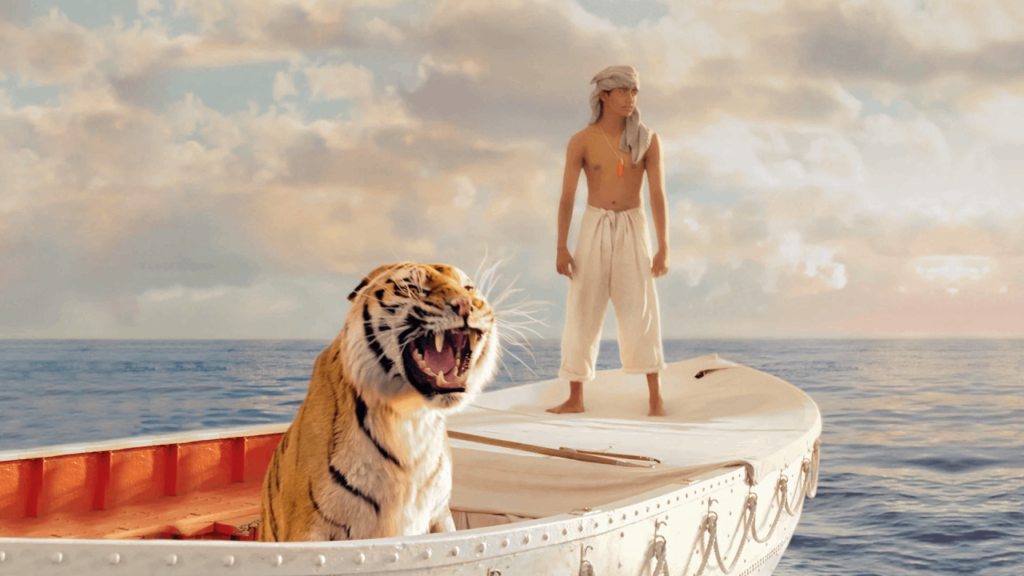
Published in 2001, Yann Martel’s novel tells the story of Pi Patel, a teenage Indian boy who survives a shipwreck and finds himself stranded in the Pacific Ocean on a lifeboat. But Pi is not alone. A Bengal tiger named Richard Parker is on the boat with him.
For a story that spends most of its time with one boy, one tiger, and an endless ocean, making a film out of it seemed almost impossible.
The book had already become a major literary success, winning the Man Booker Prize and selling millions of copies around the world. But its success as a novel only made the question of adapting it more complicated.
How could filmmakers show a story that was so dependent on Pi’s thoughts, his faith, and his imagination?
The answer took more than a decade to find.
20th Century Fox acquired the film rights in 2003, and the project went through several filmmakers. M. Night Shyamalan was attached to direct it first. His connection to the story was especially interesting because he had grown up in Pondicherry, where Pi also grows up. But Shyamalan eventually left the project. Alfonso Cuarón was later rumored to have been considered before moving on to make Children of Men (2006).
Then came Jean-Pierre Jeunet, the director of Amélie (2001). Jeunet spent around two years developing the film with screenwriter Guillaume Laurant. He worked on the script, built miniatures of the lifeboat and even began scouting locations in India.
But the same problem kept stopping the film. The budget.
A movie about an Indian boy and a Bengal tiger stranded in the middle of the ocean was going to be expensive. There was no obvious star to sell the film, no franchise behind it and no easy way to make the story sound like a conventional studio movie.
Eventually, the project was left without a director again. By then, Life of Pi had developed a reputation as an unfilmable novel.
2009 is when Ang Lee came on board.
Lee had already moved between making very different kinds of films, from Sense and Sensibility (1995) and Crouching Tiger, Hidden Dragon (2000) to The Hulk (2003) and Brokeback Mountain (2005). What made Life of Pi different was that its biggest challenges were not just about scale. They were about translating something internal into something visual. Pi’s story is not only about surviving at sea. Before the shipwreck, he grows up in his family’s zoo in Pondicherry and becomes interested in Hinduism, Christianity, and Islam. His understanding of faith becomes an important part of how he sees the world.
Then the ship sinks, his family is gone and the story becomes a long period of isolation.
A novel can stay inside a character’s mind. A film has to find another way. This became one of the biggest challenges for screenwriter David Magee, who was personally brought onto the project by Lee. The two worked closely together for years, going through around 170 drafts of the screenplay.
The opening was especially difficult because it had to introduce Pi’s childhood, his family, the zoo, and his relationship with religion without making the film feel like a history lesson. The solution was not to remove these parts of the story, but to find a cinematic way to move through them.
The same approach was needed once Pi reached the ocean.
The filmmakers had to make the audience believe that this boy was genuinely alone on a lifeboat with a tiger. And that meant Richard Parker had to feel real. Real tigers were used as references during production, but most of Richard Parker was created through visual effects. The digital work had to go beyond making the animal look convincing. The tiger needed to have a presence of his own.
Pi fears Richard Parker, but he also needs him. The tiger keeps Pi alert and forces him to understand that survival will require constant attention. Their relationship becomes one of the most integral parts of the film. If the tiger did not feel alive, the entire story would lose its centre.
Then there was the ocean.

Lee did not want Pi to spend the film surrounded by computer-generated water. Much of the production was therefore filmed in enormous water tanks in Taiwan, including one that held around 1.7 million gallons of water. The water could be controlled. The ocean could not. Waves, storms and rain had to be created around Pi, while the cameras also had to operate in those conditions. The film was being shot in 3-D, making the process even more complicated.
During one storm sequence, the camera lenses repeatedly fogged. The crew spent around 12 hours trying to solve the problem, while an entire day of production effectively came to a halt.
Even the actor at the centre of all of this was facing his own challenge. Suraj Sharma had never acted in a film before. He had accompanied his brother to an audition and ended up auditioning himself. After around 3,000 young actors were considered, Lee chose Sharma to play Pi.
There was just one problem. He did not know how to swim. Lee and the team had to teach him, and Sharma eventually had to perform physically demanding sequences in the water, including an underwater scene inside the sinking ship.
The production was becoming as difficult as the story itself. But the filmmakers still had to make the world outside the lifeboat believable.
The opening sequences in Pondicherry were filmed across 18 locations, with thousands of local people involved as background actors. The zoo was created from the town’s Botanical Gardens, while the production also returned to nature when creating the strange carnivorous island Pi discovers later in the story. The island was filmed partly around real banyan trees in Taiwan and then expanded through visual effects. The filmmakers needed something real underneath the digital creation because the island had to feel like a place that could actually exist.
This became the approach to the entire film. Technology was used, but it was not meant to announce itself.
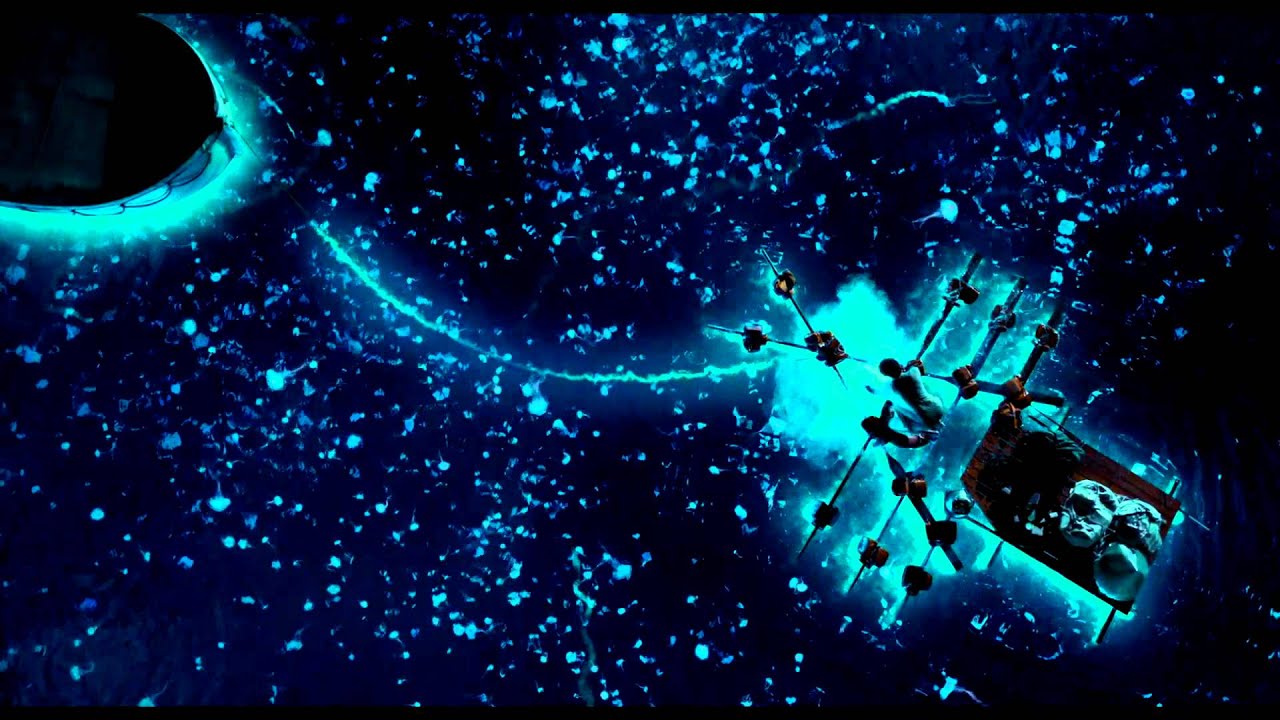
The whale that rises through the glowing ocean, the flying fish, the bioluminescent water, and the meerkats on the island all had to feel like parts of Pi’s world rather than effects added simply to make the film look grand and spectacular.
Even the ocean had to become more than a background. It is dangerous, enormous, and unpredictable, but it is also where Pi experiences some of the most beautiful moments of his life. The film needed both sides of it to exist and do justice at the same time.
And while all of this was being figured out, the film was still in danger of never being made.
In 2010, 20th Century Fox decided to withdraw its funding because of the cost. The project had already survived a number of directors, years of development, and repeated concerns over its budget. Now it could disappear completely. Lee was given the option to take the film elsewhere. Instead, he went to Los Angeles to speak with Elizabeth Gabler, 20th Century Fox Pictures Executive. He brought with him Suraj Sharma’s audition tape and the pre-visualisation of the shipwreck sequence. The footage gave the studio something that the script alone could not, a sense of what this impossible movie could actually look like. Lee was also willing to work with a reduced budget. The studio eventually cut tens of millions from the proposed cost, with parts of the production being filmed in Taiwan.
The film moved forward again. This time, the challenge was no longer whether Life of Pi could be made. It was about whether all these difficult pieces could come together. A first-time actor had to carry most of the film. A digital tiger had to become a believable character. An enormous tank had to become the Pacific Ocean. A story about religion, survival, and belief had to be turned into a visual experience without losing its mystery. And a novel that had been deemed unfilmable had to become a film without feeling like it had simply been reduced to its plot.
And when released, the film did not just make the impossible feel possible, but made it feel as though it had always been written for the screen.
When Life of Pi was released in 2012, it received 11 Academy Award nominations and won four, including Best Director for Ang Lee. The film also became a commercial success, earning more than $600 million worldwide.
The achievement of Life of Pi includes the fact that Ang Lee understood what could not be carried over literally. A tiger could not be placed beside Pi, so it had to be created. The ocean could not simply be captured, so it had to be built. Pi’s inner world could not be shown exactly as it existed on the page, so the filmmakers had to find images, performances, and moments that could make the audience feel it.
The book had given readers a world to imagine. The film had to give that imagination a physical form without taking away what made it mysterious.
That is what made Life of Pi such a difficult adaptation, but also what made Ang Lee’s achievement so special.