
The latest quarterly filing from IMAX Corporation reveals a paradox at the heart of the theatrical business: even with high-profile titles on screens, timing can determine performance as much as content. In Q1 2026, IMAX reported $81.3 million in revenue, down roughly 6% year-over-year, with net income falling 26% to $6.2 million. On the surface, it appears that big films failed to deliver. A closer look suggests something more specific — they simply arrived too late.
The quarter began on a relatively soft note. Early 2026 releases did not provide the kind of scale IMAX typically relies on to drive premium-format revenues. Mercy, which opened in late January, delivered only modest theatrical business and contributed minimally to IMAX screens. Similarly, The Bride! — despite being IMAX-certified and carrying some visual ambition — did not perform strongly enough to generate sustained premium demand.
This lack of a major breakout title in January and February created a gap that the company could not fully bridge within the quarter. Unlike standard exhibitors, IMAX’s business model is heavily dependent on a handful of large-scale films that actively leverage its format. Without those, even a steady stream of releases struggles to move the needle.
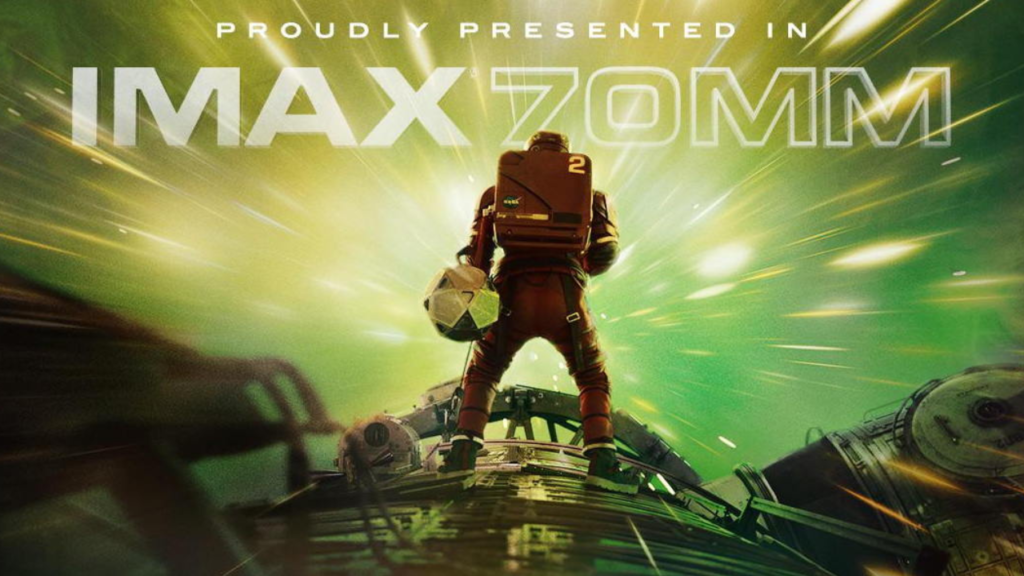
The narrative shifts dramatically in March. Project Hail Mary, one of the most anticipated films of the year, arrived on March 20 — leaving it with just 11 days of contribution within the Q1 window. Even within that limited timeframe, the film demonstrated the kind of performance IMAX is built around. Globally, it has already generated approximately $92 million on IMAX screens, accounting for around 18% of its total box office, a strong indicator of premium-format pull.
However, because most of its theatrical run falls outside the January–March reporting period, its full financial impact will only be visible in Q2 results. In other words, one of IMAX’s biggest success stories of the year is largely absent from the quarter in which it debuted.
A similar dynamic applies to Avatar: Fire and Ash, which contributed to Q1 numbers but primarily as a carryover from its late-2025 holiday release. While the film continued to generate revenue on IMAX screens, it was no longer in its peak earning phase, limiting its ability to drive quarter-over-quarter growth.
This timing imbalance becomes even more significant when compared to Q1 2025. That period benefited from the extraordinary performance of Ne Zha 2, which delivered a historic global run exceeding $2 billion and contributed heavily to IMAX’s earnings. The absence of a comparable phenomenon in early 2026 created a difficult benchmark to match.
Despite these challenges, IMAX still managed to outperform analyst expectations on profitability. Adjusted earnings per share came in at $0.17, beating forecasts and improving significantly from a loss in the same period last year. This suggests that while revenue dipped, the company maintained operational discipline, controlling costs and improving efficiency.
Other financial indicators reinforce this mixed but stable picture. Adjusted EBITDA stood at $26.8 million, with margins under pressure, while operating margin declined to 12.2% from nearly 20% a year ago. At the same time, free cash flow turned positive, indicating healthier cash management compared to the previous year.
Globally, IMAX generated $260 million in box office revenue during the quarter, down about 13% year-over-year. Once again, the comparison is shaped less by current weakness and more by the absence of an outlier success like Ne Zha 2. The quarter’s top contributors included Project Hail Mary, Avatar: Fire and Ash, Pegasus 3 and Scream 7 — a solid slate, but not one anchored by a single record-breaking title.
What emerges from these numbers is not a decline in demand, but a calendar-driven fluctuation. IMAX’s business is uniquely sensitive to release timing, and Q1 2026 demonstrates how even a strong film can have limited impact if it arrives late in the reporting cycle.
This sets up a potentially stronger outlook for the next quarter. With Project Hail Mary expected to play through a full reporting period, and with additional tentpole releases scheduled, Q2 could better reflect the underlying demand for premium theatrical experiences.
The broader takeaway is clear: IMAX remains a platform that thrives when films are designed for it — and when they arrive at the right moment. In Q1 2026, the films were there, but the timing wasn’t. If the upcoming slate aligns more effectively with the calendar, the company’s next earnings report could tell a very different story.
Read More: