
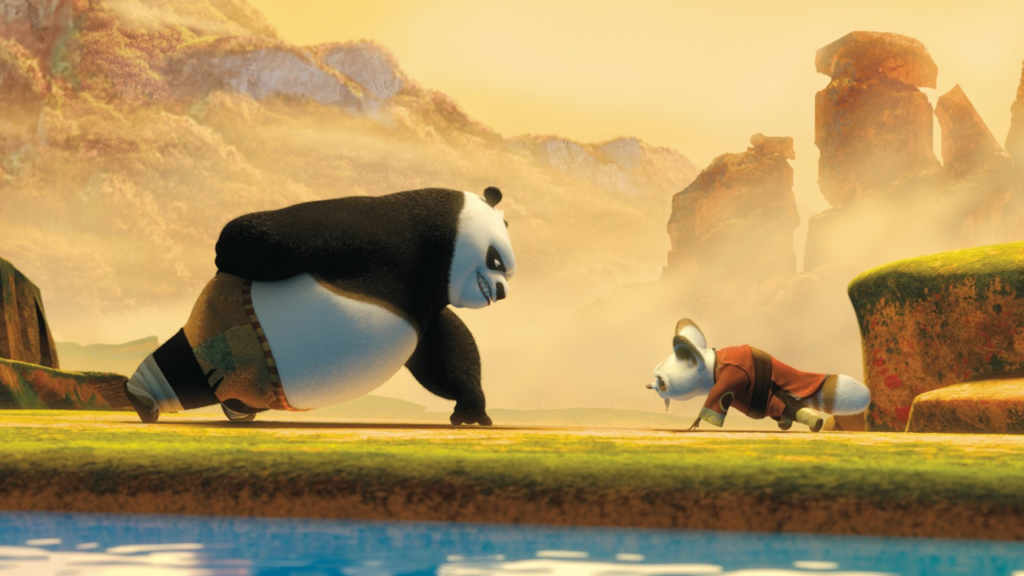
Let’s dive into the world of Po.
On the surface, it is the story of an unconventional hero who becomes a kung fu master. But beneath all of that lies something far more profound. Kung Fu Panda (2008), directed by Mark Osborne and John Stevenson, is a fun animated martial arts film filled with humour, action, and memorable characters.
At the start of the film, Po is merely a child, not in age terms, but mentally. He is a dreamer. Like many children, he dreams without concern for logic, practicality, or probability. His aspirations are not grounded in whether they can happen, they simply exist because they come from the heart. Po dreams of kung fu. And not just kung fu, he dreams of being a part of that world. A world that, on paper, has nothing to do with him.
As we walk through the film, what unfolds is nothing short of a miracle.
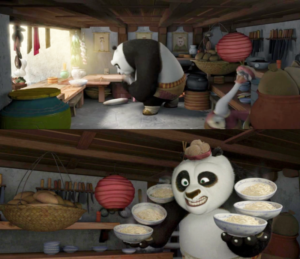
Here is a young panda who has always lived in isolation from the real kung fu world. He has never experienced the glories of battle, the discipline of training, or the responsibility of protecting others. Instead, he grows up believing that his place is in his father’s noodle shop. That this is what he was meant for.
And to be fair, everything around him seems to support that belief.
Because of the family he belongs to, because of the life he has lived, and because of the personality he has developed, cooking appears to be the natural path. His love and need for food only adds on to that idea. It makes perfect sense for him to inherit the restaurant and continue the family tradition.
But his aspirations beg to differ. They tell him that perhaps he can do more. Perhaps he can be more.
What makes Po such a compelling protagonist is that he never denies reality. He knows his truth. He knows his size, his background, his limitations, and how the world perceives him. He is fully aware that he does not look like a kung fu warrior. Yet, he never buries his wishes. He never silences that voice within him that continues to dream.
The ceremony to select the Dragon Warrior serves as the perfect example of this. Po is not the fittest candidate. He is not the strongest, the fastest, or the most skilled. But he is, without a doubt, the most determined.
He climbs countless steps simply to witness the selection. Not to participate. Not to compete. Just to be there. Just to experience a world he loves. And after all that effort, the doors close right in his face. For most people, that would be enough to lose hope. But not our Po.
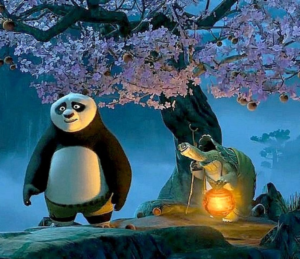
After a brief moment of disappointment, he keeps going. He tries everything he can think of just to catch a glimpse of what is happening beyond those doors. It is here that the idea that “the universe helps those who help themselves” feels particularly fitting. Po does not wait for opportunity to come to him, he relentlessly moves towards it. And somehow, in doing so, he lands exactly where he is meant to be.
This brings us to Master Oogway, perhaps the film’s greatest philosophical voice.
Throughout the film, Oogway repeatedly teaches lessons about acceptance and belief. One of his most famous quotes is “Yesterday is history, tomorrow is a mystery, but today is a gift. That is why it is called the present.”
The line may seem simple, but it captures the film’s larger meaning. Oogway understands that growth cannot happen when we remain trapped by the past or consumed by the future. True growth begins when we accept where we are and work with what we have right now. Not yesterday. Not tomorrow. But now.
Another important lesson comes when Po is selected as the Dragon Warrior, and Oogway tells Shifu, “There are no accidents.” While the statement initially seems impossible to believe, the film gradually reveals its true meaning. Oogway understands that destiny is not always about who externally appears most qualified. Sometimes it is about who is willing to become what they need to be.
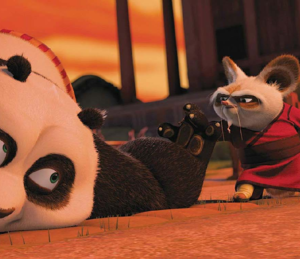
Master Shifu is another character who contributes to Po’s journey. At the beginning, he’s reluctant to accept Master Oogway’s claim of Po being the Dragon Warrior. However, after Oogway is gone and there seems to be no way out, he remembers Oogway’s last words, “You must believe.” When he decides to mentor Po, he realizes something different, something unexpected. He realizes that he doesn’t necessarily need to “transform” Po. Rather, he needs to cater to Po’s unique strengths, which are already within him and simply require more nurturing and attention.
Some contribution is granted by Tai Lung as well, Po’s opponent, and the villain of the story. While Tai Lung seeks ultimate strength and power, his backstory makes one thing clear, beneath it all, he is searching for recognition, which later takes the shape of obsession and extremism. Like Tai Lung, Po also seeks recognition. What he later understands, however, is that it first needs to come from self, and one needs to be satisfied with that, because greed eventually leads to one’s downfall.
The film’s philosophy reaches its most important revelation through the story of the secret ingredient.
What I find particularly interesting is how Master Oogway and Po’s father, Mr. Ping, ultimately arrive at similar truths despite coming from completely different worlds.
For much of the film, Mr. Ping talks about his secret ingredient soup. The recipe is treated almost like a sacred family secret. Naturally, Po, along with the audience, expects there to be some extraordinary ingredient hidden behind its success. But when the truth is finally revealed, there is no secret ingredient. There never was. Mr. Ping explains, “To make something special, you just have to believe it’s special.” So the secret ingredient was never a ‘thing,’ it was ‘belief.’ And suddenly, the entire film comes into focus.
The Dragon Scroll contains no hidden technique. No secret power. No magical answer. Because there isn’t one. The greatness everyone is searching for cannot be found in a scroll, a recipe, a title, or a prophecy. It comes from belief. It comes from within oneself. From recognizing one’s own value.
For Po, this becomes the moment of self-acceptance.
For most of the film, he searches for something external that will transform him into the person he wants to be. But the scroll teaches him that there was never anything missing. The qualities he needed were already there. What he lacked, however, was belief in himself.
This is why Kung Fu Panda resonates with audiences of all ages.
To me, Po’s dream of becoming the Dragon Warrior feels similar to the dream of an aspiring actor with no connections to the film industry one day winning an Oscar. It reminds me of Olivia Colman’s acceptance speech when she won the Oscar for The Favourite (2018), where she said, “You never know.”
That line feels apt for Po’s journey perfectly.
You never know where your dreams might lead you. You never know what you are capable of becoming. You never know how far determination, belief, and persistence can take you. You never know any of it until you just follow them with your whole soul and body, giving it your everything and then some.
While the film follows a youthful protagonist, its philosophy extends far beyond childhood. A younger viewer may see a story about following dreams. An adult may see a story about overcoming self-doubt. Someone older may see a reminder that it is never too late to embrace who they truly are.
It is not simply a film about kung fu. It is not simply a story about becoming a hero. It is a story about accepting yourself before the world accepts you. About understanding that there is no secret ingredient waiting to transform you into someone else. About realizing that true growth happens when we stop chasing a fake ideal version of ourselves and start embracing who we already are.
The film teaches us that there is no magical formula for success or greatness.
There is only you, believing that you, alone, are enough.
Read More: