
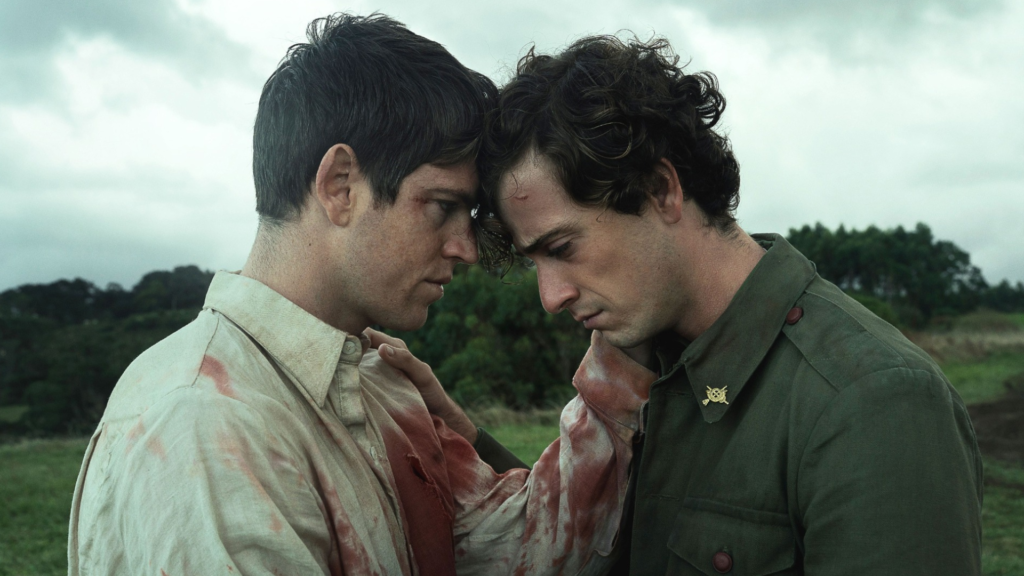
La bola negra, the Spanish queer historical drama directed by Javier Calvo and Javier Ambrossi, has added another major honour to its growing list of international achievements, winning the Audience Award for Best Feature Film at the 2026 BFI London Film Festival. The recognition comes after the film earned more than €36.7 million at the Spanish box office, became the country’s third highest-grossing film of all time and secured Spain’s official selection for the 2027 Academy Awards in the Best International Feature Film category. The filmmakers described the London recognition as particularly meaningful because it came directly from audiences, as the film prepares for a wider theatrical rollout.
Known professionally as Los Javis, the filmmaking duo have built the story around three generations of queer lives, connecting different periods of Spanish history through themes of identity, discrimination and forgotten memories. Rather than following a conventional historical narrative, the nearly three-hour film moves between 1932, 1937 and 2017. These timelines bring together individual experiences from different generations, examining how personal histories can disappear from public memory and how later generations attempt to recover them. The film uses this structure to explore the relationship between historical events and the lives of people whose experiences have often remained outside established historical narratives.
One of the most distinctive aspects of La bola negra is its literary inspiration. The story draws from four unfinished pages of a lost play by legendary Spanish poet and playwright Federico García Lorca, alongside La piedra oscura, a play by Alberto Conejero, who also co-wrote the screenplay. The combination of these influences gives the film a direct connection to Spain’s literary and theatrical heritage. By developing a feature around an incomplete work and another theatrical text, the filmmakers bring together different sources to construct a story that moves beyond a single historical period.
The film’s narrative unfolds across three separate eras. In 1932, a character is blackballed from a social club, an incident that gives the film its title. The story then moves to 1937, during the Spanish Civil War, before arriving in 2017, where a historian discovers connections between the lives and experiences of earlier generations. These different timelines are connected through the film’s exploration of queer heritage, discrimination and the consequences of historical erasure. The structure allows the filmmakers to examine how experiences from the past continue to shape the understanding and identity of people living in the present.
The London victory adds another achievement to the film’s festival journey, which has been marked by strong audience responses across several international events. It previously received the People’s Choice Award at the Toronto International Film Festival, along with audience prizes at San Sebastián, Busan, Sydney and Middleburg. The film also topped the unofficial audience poll at Telluride. Taken together, these responses indicate that the film has connected with audiences across different territories and festival settings, extending its reception beyond its home market in Spain.
Its commercial performance in Spain has been equally significant. With more than €36.7 million (approximately $43.4 million) in Spanish box-office earnings, La bola negra ranks as the third highest-grossing Spanish film of all time. Only Spanish Affair (Ocho apellidos vascos) and The Impossible (Lo imposible) have earned more among the titles in the ranking. It is also Spain’s highest-grossing domestic release of 2026. The achievement places the film among the most successful Spanish productions in the country’s box-office history, giving its international festival recognition an additional commercial dimension.
The ensemble includes international performers Penélope Cruz and Glenn Close, whose appearances add further star power to the production. Cruz has revealed that she appears in the film for approximately 12 minutes but considers the experience one of the best of her life. Their involvement adds to the film’s international profile, while the central narrative remains focused on the experiences of three generations and the historical connections that bring their stories together.
Calvo and Ambrossi wrote, directed and produced the ambitious production, which was filmed on 35mm. Their collaboration also continued professionally despite the end of their 13-year romantic relationship during the film’s production. The circumstances surrounding the project add another dimension to the film’s development, with the two filmmakers completing their work together while navigating a significant personal change.
Earlier in 2026, the duo received the Best Director award at the Cannes Film Festival. Spain’s subsequent selection of La bola negra for the 2027 Academy Awards gives the film another important international platform, placing it within the country’s campaign for recognition in the Best International Feature Film category. Alongside its festival awards and domestic box-office performance, the Academy Awards selection represents another stage in the film’s international journey.
With its Audience Award at the BFI London Film Festival, La bola negra continues to build on a journey that brings together literary inspiration, Spanish history and contemporary cinema. Its reception across festivals and its performance in the domestic market have established it as a significant Spanish release. At the centre of the film is an attempt to give space to lives and experiences that history has often left unexplored, connecting different generations through questions of identity, memory and belonging. As the film moves towards a wider theatrical rollout, its growing international reception suggests that these stories have found an audience well beyond Spain.