
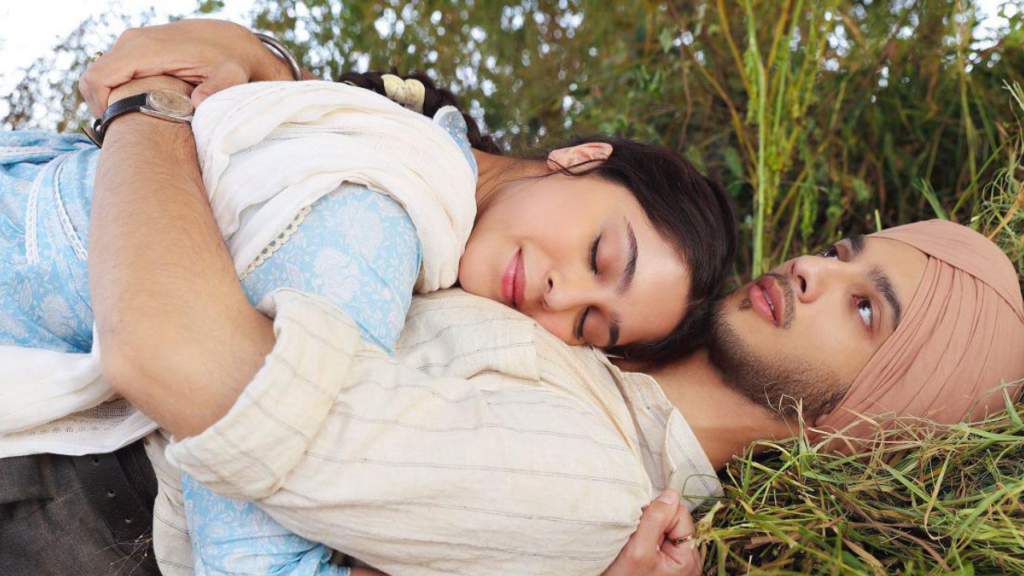
Main Vaapas Aaunga reviews are largely positive, with critics praising Imtiaz Ali’s emotional storytelling, Naseeruddin Shah’s powerful performance, and the film’s thoughtful exploration of memory, loss, and Partition-era trauma. After revisiting music and ambition in Amar Singh Chamkila, Ali returns with a story that uses history as the backdrop for a deeply personal meditation on belonging, longing, and the idea of home. The filmmaker, known for exploring love, longing, and self-discovery through films such as Rockstar and Tamasha, turns his attention toward one of the most painful chapters in the subcontinent’s history. But rather than making a conventional Partition drama, Ali uses history as the backdrop for a deeply personal story about memory, loss, belonging, and the enduring power of love.
Most reviewers have praised the film’s emotional ambition, Naseeruddin Shah‘s performance, and its thoughtful treatment of Partition-era trauma. While some critics feel the film struggles with pacing and an uneven screenplay, many agree that Main Vaapas Aaunga succeeds in transforming historical tragedy into an intimate and moving human story.
At the heart of the film is an elderly man haunted by memories that refuse to fade. As the narrative unfolds across multiple timelines, audiences are introduced to stories of love separated by history, families uprooted by Partition, and younger generations attempting to understand wounds they never personally experienced. The film moves between the past and present, weaving together a Partition-era romance, a contemporary relationship, and an old man’s search for closure. Rather than focusing on political events, Main Vaapas Aaunga explores how memory survives across decades and how the idea of “home” can continue to shape lives long after it has been lost.
One of the strongest points of agreement among critics is that this may be Imtiaz Ali‘s most mature thematic work in years. Several reviewers note that while romance remains central to the story, the film is ultimately about much more than relationships. Through its exploration of displacement, longing, and inherited trauma, the film examines the emotional consequences of Partition in a way that feels deeply personal rather than overtly political. Critics have praised Ali for resisting easy sentimentality and instead focusing on the quiet emotional scars left behind by history.
If there is one performance that dominates nearly every review, it is Naseeruddin Shah’s. Critics across publications have singled him out as the emotional center of the film, bringing remarkable dignity, restraint, and depth to his character. Whether reflecting on lost love, confronting old memories, or simply carrying the weight of decades of regret, Shah’s performance has been described as the film’s greatest strength. Several reviewers suggest that despite the presence of younger stars and multiple storylines, Main Vaapas Aaunga ultimately belongs to him.
The supporting cast has also earned positive notices. Diljit Dosanjh continues his streak of strong dramatic performances, with critics praising the sincerity and emotional honesty he brings to his role. While some reviewers stop short of calling it one of his career-best performances, most agree that he fits naturally into the film’s emotional landscape. Sharvari and Vedang Raina have also been praised for bringing warmth and authenticity to the contemporary portions of the story. Although neither performance dominates the critical conversation in the way Naseeruddin Shah’s does, reviewers generally feel the younger cast helps maintain the emotional continuity between the film’s different timelines.
Beyond the performances, critics have been particularly moved by the film’s treatment of Partition. Unlike many films that focus primarily on violence, political conflict, or historical events, Main Vaapas Aaunga examines the emotional aftermath. Reviewers repeatedly return to themes of memory, displacement, identity, and belonging. The film’s most powerful moments often emerge not from large dramatic scenes but from quiet reflections on what it means to lose a home, a relationship, or a version of oneself that can never be recovered. Many critics describe the film as a moving meditation on the idea that the wounds of Partition continue to echo through generations.
A.R. Rahman’s music and the film’s overall atmosphere have also received widespread praise. Even reviewers who expressed reservations about the screenplay acknowledged the effectiveness of the score in enhancing the film’s emotional impact. Critics have highlighted the music’s ability to capture both nostalgia and heartbreak, while the cinematography and visual storytelling contribute to the film’s reflective tone. Together, these elements help create what several reviewers describe as an immersive emotional experience.
Many critics believe the film resonates because it extends beyond its love story. While romance provides the narrative foundation, the larger themes concern memory itself. Several reviews suggest that Main Vaapas Aaunga is ultimately about the act of remembering — how people preserve connections to places, people, and histories that have disappeared. In that sense, the film’s title becomes more than a promise of physical return. It becomes a reflection of how memory allows people to revisit moments and relationships long after they have vanished.
Not every critic was completely convinced. The most common criticism concerns the film’s pacing. Several reviewers argue that the narrative takes too long to build momentum and occasionally becomes overextended. Others feel the screenplay struggles to balance its multiple timelines, resulting in a film that sometimes loses focus. A recurring observation is that the Partition-era storyline is considerably more compelling than the contemporary narrative, leading some critics to feel that the modern sections never achieve the same emotional power.
Among major publications, India Today offered the strongest dissenting opinion, describing the film as one of Imtiaz Ali’s weaker efforts. The review argues that while the themes are compelling, the screenplay fails to fully develop them, and the film’s emotional ambitions ultimately exceed its execution. Although this remains a minority view within the broader critical landscape, it highlights the concerns shared by several reviewers regarding pacing and narrative structure.
What makes Main Vaapas Aaunga particularly significant is its approach to history. At a time when stories about Partition often focus on politics, violence, or national identity, the film chooses a more intimate path. Critics appreciate its focus on ordinary lives disrupted by extraordinary events and its willingness to explore the emotional legacy of displacement across generations. In doing so, the film reminds audiences that historical tragedies do not end when the headlines disappear; they continue to live on through memory, family stories, and the longing for places that can never fully be reclaimed.
Planet of Films Perspective
Imtiaz Ali has always been interested in characters searching for something — love, identity, purpose, or belonging. With Main Vaapas Aaunga, that search becomes intertwined with history itself. The film may not be universally regarded as one of his finest works, but critics largely agree that its sincerity, emotional depth, and humanistic approach leave a lasting impression. Even where the screenplay stumbles, the film’s compassion and understanding of loss continue to resonate.

Film Details
Genre: Drama, Romance, Historical
Director: Imtiaz Ali
Cast: Naseeruddin Shah, Diljit Dosanjh, Sharvari, Vedang Raina
Music: A.R. Rahman
Release Date: June 12, 2026
Production: Window Seat Films, Reliance Entertainment
Read More Review Roundups on POF