
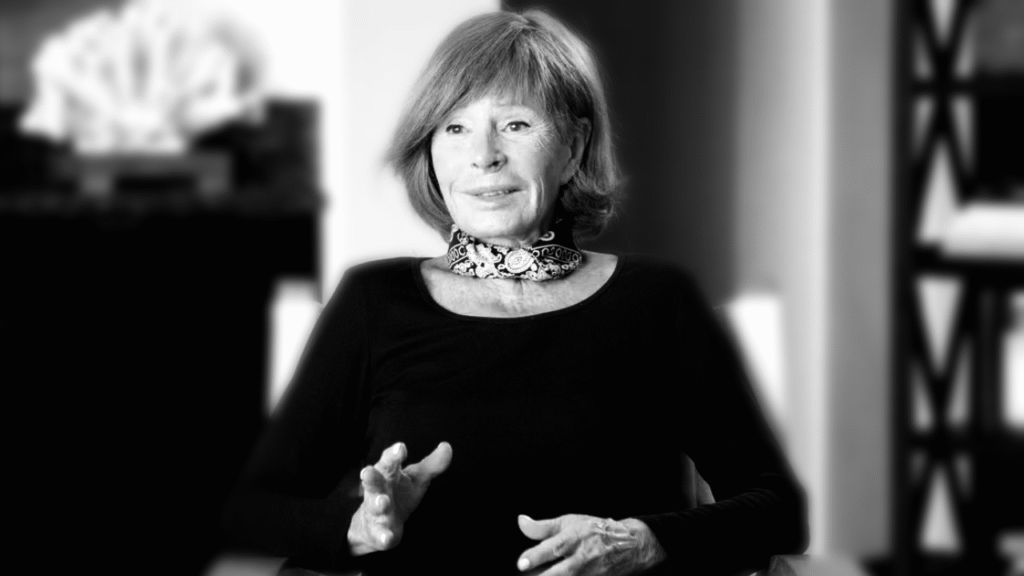
Marcia Lucas, the Oscar-winning editor whose work helped shape some of the most influential films of the New Hollywood era, including Star Wars, American Graffiti, and Taxi Driver, has died at the age of 80.
Lucas died on May 27 at her vacation home in Rancho Mirage, California, following metastatic cancer. The news was confirmed by family attorney Deidre Von Rock.
Though often publicly associated with her former husband George Lucas and the Star Wars franchise, Marcia Lucas built one of the most respected editing careers of the 1970s, collaborating with filmmakers including Martin Scorsese and Francis Ford Coppola during one of the most creatively transformative periods in American cinema.
Everyone at Lucasfilm was deeply saddened to learn of the passing of Marcia Lucas. One of three Oscar-winning editors who worked on Star Wars: A New Hope, she also contributed to American Graffiti, among other early Lucasfilm productions. We join the global filmmaking community… pic.twitter.com/FA7jOCN3h6
— Star Wars (@starwars) May 30, 2026
Over time, her contributions to the original Star Wars trilogy became increasingly recognized by film historians, critics, and fans, many of whom viewed her as one of the emotional architects behind the franchise’s storytelling rhythm and humanity.
Lucas won the Academy Award for Best Film Editing for Star Wars alongside editors Paul Hirsch and Richard Chew. Before that, she earned an Oscar nomination for editing American Graffiti and later received a BAFTA nomination for her work on Taxi Driver.
Her influence on Star Wars extended far beyond technical editing. During production and post-production of the original 1977 film, Lucas reportedly played a crucial role in helping shape the emotional structure of the movie during a difficult editing process.
One of her most famous creative suggestions involved the fate of Obi-Wan Kenobi. Earlier drafts reportedly allowed the Jedi master to survive his duel with Darth Vader, but Marcia Lucas encouraged George Lucas to let the character die and continue guiding Luke Skywalker spiritually, a decision that eventually became foundational to the mythology of the franchise.
She was also heavily involved in editing the climactic Battle of Yavin sequence during the Death Star assault finale, one of the most iconic action climaxes in blockbuster history. George Lucas later recalled that she spent nearly eight weeks constructing the sequence from thousands of feet of complicated footage and dialogue material.
Perhaps her most quoted observation from the editing room came while shaping Han Solo’s dramatic last-minute return in the Millennium Falcon. According to George Lucas, Marcia warned him: “If the audience doesn’t cheer when Han Solo comes in at the last second… the picture doesn’t work.”
That instinct for emotional payoff and audience connection became one of the defining characteristics of her career. Born Marcia Lou Griffin on October 4, 1945, in Modesto, California, Lucas entered the film industry through the Motion Picture Editors Guild apprenticeship system after initially working in office jobs and studying chemistry courses in Los Angeles. She eventually found work cataloging film memorabilia before moving into assistant editing and trailer work during the 1960s.
Her early Hollywood years coincided with the rise of the New Hollywood movement, where young filmmakers were reshaping American cinema with more personal and experimental storytelling styles. Lucas worked under legendary editor Verna Fields and met George Lucas while both were apprentice editors on the documentary Journey to the Pacific. The couple married in 1969.
As her career developed, Lucas became part of an extraordinary generation of filmmakers and collaborators that included George Lucas, Coppola, Scorsese, Steven Spielberg, Walter Murch, and John Milius.
Her editing work extended across several landmark films of the era, including THX 1138, Alice Doesn’t Live Here Anymore, New York, New York, and Return of the Jedi. Scorsese specifically brought her onto Alice Doesn’t Live Here Anymore, while collaborators later noted that she often did not receive the level of recognition her contributions deserved during that era.
Filmmaker John Milius once described her as one of the best editors he had ever known, while actor Mark Hamill publicly credited her importance to Star Wars. Modern retrospectives increasingly re-evaluated her contributions to the franchise, with some critics even referring to her as the “secret weapon” behind the emotional effectiveness of the original trilogy.
Following the success of Star Wars, Lucas stepped away from active editing for periods of time to focus on family life. She and George Lucas adopted daughter Amanda in 1981, though the marriage eventually ended in divorce after the release of Return of the Jedi.
She later married Tom Rodrigues and continued working occasionally in production during the 1990s, including producing credits on smaller projects. Her final credited film work came as executive producer on No Easy Way in 1996.
In later years, Lucas became known for her candid criticism of later Star Wars installments. She openly expressed disappointment with aspects of both the prequel and sequel trilogies, particularly the treatment of characters such as Han Solo and Luke Skywalker.
Still, her legacy remained inseparable from the original films that helped redefine blockbuster cinema forever.
While George Lucas may have imagined the galaxy far, far away, Marcia Lucas helped audiences emotionally believe in it. Her work shaped not only how some of Hollywood’s greatest films looked and moved, but also how they felt.
Read More:
- The Evolution of Indian Cinema
- Harry Potter and the Question Every Reboot Must Answer
- Good Films Are Often Bad Experiences
- Top 10 Sequels That Elevated Cinema: When Hollywood Got Better the Second Time
- How much does responsibility seep into filmmaking? Or does it at all?
- Top 10 Visually Stunning Films Ever Made, Ranked by PoF