
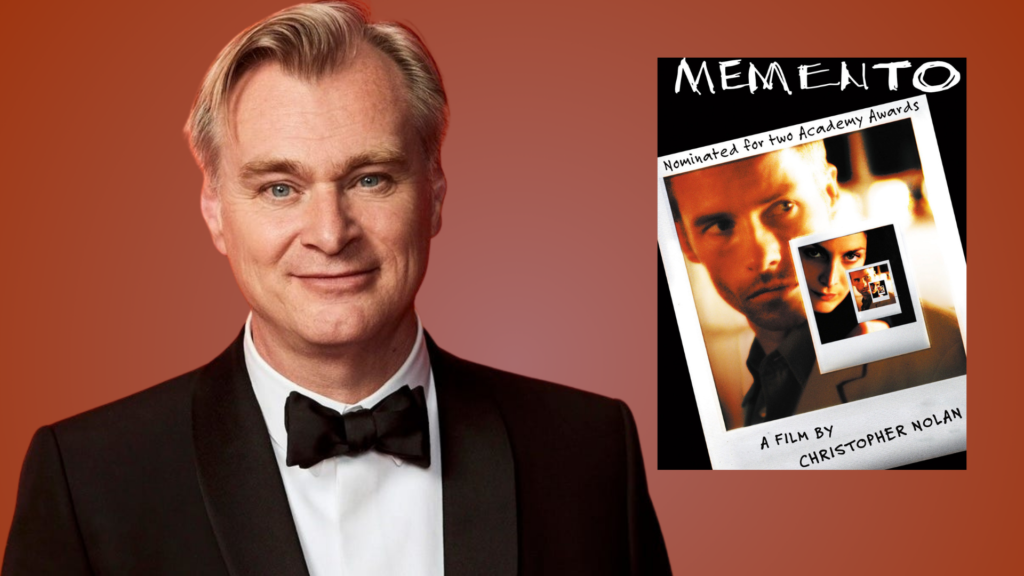
Christopher Nolan’s Memento will return to the Sundance Film Festival in January 2027, but this screening will ask audiences to do more than simply watch. As part of the festival’s Legacy program in Boulder, Colorado, the film will be presented over two sessions through Cinema Interruptus, a tradition that allows viewers to call “stop” to pause the action, raise questions or point out details. Critic and author Josh Larsen will lead the discussions, which will accompany a director-approved 4K restoration.
The screening carries particular significance because Sundance’s first festival in Boulder is scheduled to run from January 21 to 31, 2027. The event will revisit the festival where Memento made its US festival premiere in 2001. Screened in the US Dramatic Competition, the film won the Waldo Salt Screenwriting Award, recognising Nolan’s inventive storytelling. Its return places a film built around fractured memory within a format designed to encourage viewers to question and reconsider what they have seen.
Cinema Interruptus began in 1975 at the University of Colorado Boulder’s Conference on World Affairs. Film critic Roger Ebert established the event with Howard Higman, the conference’s founder and a sociology professor. During a screening, anyone in the audience can call “stop,” prompting a pause in the film so viewers can discuss a shot, challenge an interpretation or ask about a detail before the story continues. The aim is to complete the film over two sessions, making conversation an integral part of the viewing experience rather than reserving discussion for afterward.
Memento is particularly suited to this format. The film follows Leonard Shelby, played by Guy Pearce, an insurance investigator who cannot form new long-term memories and attempts to find his wife’s killer using notes, photographs and tattoos. Small details can alter the way a scene is understood, so pausing the film may encourage viewers to reconsider an assumption or notice a clue they initially missed. Larsen, who hosted Cinema Interruptus at the university from 2017 to 2024, will moderate the event.
The screening will feature a 4K restoration produced by Australia’s Umbrella Entertainment using the film’s original interpositive materials, with Nolan’s approval.
Memento tells its story through two interwoven strands. Its colour sequences move backward through events, while its black-and-white scenes progress forward. The strands converge near the end, making the film’s structure an essential part of its mystery. Viewers must assemble information alongside Leonard, whose memory cannot reliably hold the pieces together. The editing places the audience inside the uncertainty at the heart of his condition.
Nolan developed the story with his brother, Jonathan Nolan, whose short story Memento Mori explored a related premise. The film’s distinctive structure helped establish Nolan as a filmmaker willing to challenge audiences to work towards an answer, a quality that would continue through his later films. Pearce’s performance grounds the mystery in Leonard’s daily struggle, while the notes and tattoos he relies on become clues whose meanings can shift as new information emerges.
Cinema Interruptus offers another way to appreciate the film’s craft by examining how individual scenes shape what viewers believe. The format allows audiences to scrutinise the information presented on screen, compare interpretations and consider how the film’s editing influences their understanding of the story. Claims that every major Hollywood studio rejected the project because it was too confusing have circulated widely, but they should not be treated as established fact without reliable sourcing.
When Memento returns to Sundance, the film’s past and present will meet. The festival that recognised Nolan’s screenplay in 2001 will host the film again in Boulder, where audiences can pause the story, test their theories and look more closely at its construction. For a film about the limits of memory, one of the most revealing aspects of the experience may be discovering how much a roomful of viewers can remember together.