
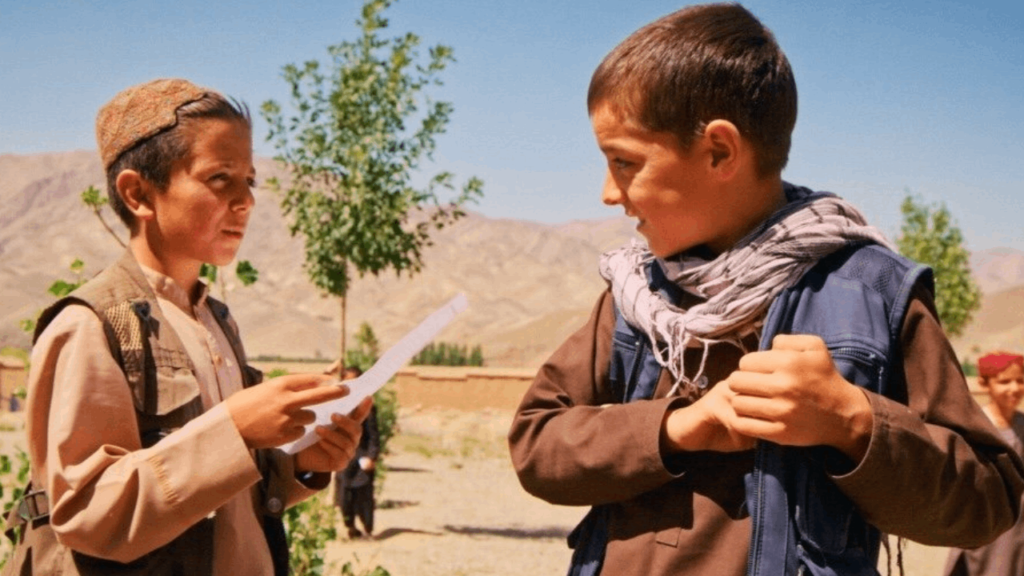
A documentary about a 12-year-old Afghan boy has won the top prize at the 2026 Ji.hlava International Documentary Film Festival. Mohabat, directed and produced by Oscar-nominated filmmaker James Longley, alongside producers Mohammad Sharif Hotak and Oscar-winning filmmaker Alex Gibney, has received the prestigious Opus Bonum Main Award. Following a boy whose father was killed in a US drone strike, the film explores his childhood, family relationships and life in Afghanistan under Taliban rule. After its world premiere at Ji.hlava, the documentary is scheduled to make its North American premiere at DOC NYC on November 15, with a screening at New York’s IFC Center.
The award places Mohabat among the winners of the festival’s international documentary competition. The jury praised the film for being meticulously researched and exquisitely crafted, noting how its patient observation creates a complex and sympathetic portrait of an individual, a family and a community. It also recognised the documentary for moving beyond familiar media clichés and allowing viewers to encounter Afghan life through the experiences of the people who live there.
At the heart of the documentary is Mohabat, a boy whose childhood is transformed after his father is killed in an American drone strike. Left without parental care, Mohabat and his two older brothers face an uncertain future. He is taken to a city orphanage, where he meets other children who have also lost family members in the war. The boys form friendships and find some comfort in one another, even as they undergo a strict religious education alongside other sons of those regarded as martyrs.
After experiencing a mental breakdown, Mohabat returns to his family’s mountain village. There, he attends school, helps with the harvest and visits his brother Aja. His older brother Mawladdin, who had once been his closest protector, eventually leaves for Europe via Iran. With that support gone, Mohabat must begin finding his own way. Through its attention to daily routines, family relationships and the surrounding landscape, the film gradually widens its portrait beyond the immediate experience of loss.
The documentary’s journey to the screen is almost as unexpected as its subject. James Longley initially travelled to Afghanistan hoping to make a film about women employed by an international children’s organisation. The organisation eventually withdrew from the project, leaving the filmmaker to reconsider what he could make. In an interview with Business Doc Europe, Longley explained that he then looked for a subject the Taliban authorities would permit him to film, while ensuring that the people involved would not be put at risk. He and his team filmed Mohabat and several other boys over a period of two years before shaping the story around him.
That access gives the documentary a distinctive perspective. Rather than approaching Afghanistan primarily through headlines about war or accounts from people who have left the country, Mohabat stays close to a child growing up there. Longley, whose documentary Iraq in Fragments received an Academy Award nomination, brings a filmmaker’s attention to everyday detail, while Afghan producer Mohammad Sharif Hotak worked closely with him on the ground. Alex Gibney, an Academy Award-winning documentary filmmaker, is also part of the film’s producing team. Longley additionally handled the film’s cinematography.
The next stop for Mohabat is New York. Its North American premiere is scheduled for November 15 at 4:45 p.m. at the IFC Center as part of DOC NYC, followed by a question-and-answer session with Longley. The festival listing places the documentary in its US Competition. Presented in Pashto with English subtitles, the film will introduce North American audiences to a story that places one boy’s experience within a wider account of family, loss and life in Afghanistan.
By staying close to Mohabat’s everyday world, the documentary offers a personal perspective on a country too often viewed from a distance. Its recognition at Ji.hlava highlights the film’s approach to telling an intimate story while placing the experiences of one child and his family within the wider realities of contemporary Afghanistan.