
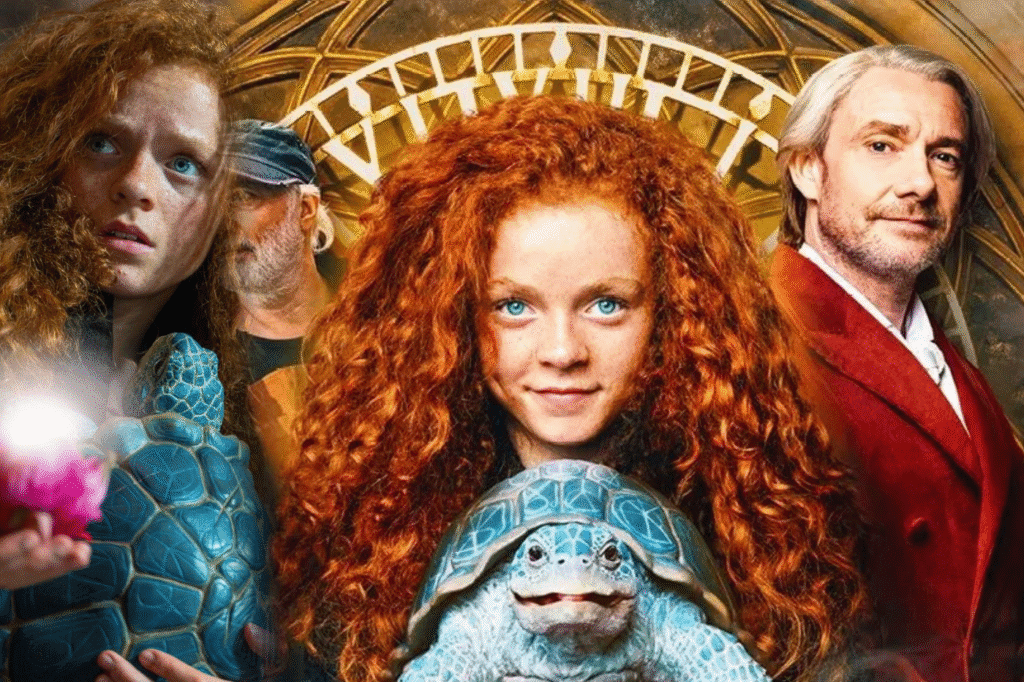
Almost 40 years after the first adaptation of Michael Ende’s beloved novel Momo, German filmmaker Christian Ditter brings the story into the 21st century with a fresh cinematic vision. This 2025 adaptation transforms Ende’s timeless narrative into a modern allegory for a world obsessed with productivity, technology, and social media, while still retaining the novel’s central themes of human connection and the value of time. With a mix of visual spectacle and a contemporary storyline, the film has attracted attention from critics and audiences alike.
Overview of the Momo
Set in a bustling European city, Momo follows the journey of an orphaned girl who possesses a unique gift: the ability to listen and truly understand people. Her empathy allows her to connect deeply with others, offering comfort and wisdom in a society increasingly dominated by the pressures of time and efficiency. As the narrative unfolds, Momo discovers a corporate force known as Grey, whose representatives—modern incarnations of Ende’s “grey men”—steal people’s time under the guise of productivity and optimization.
Momo’s fight against these time thieves is aided by the wise and enigmatic Master Hora (played by Martin Freeman), and guided by a mysterious turtle who serves as her mentor. The story examines themes of friendship, societal pressure, and the timeless value of genuine human connection, making it relevant for today’s audiences.
Critical Reception
A range of publications has shared their perspectives on the 2025 adaptation, offering a balanced look at the film’s strengths and weaknesses.
Variety praises the film for its timely themes, noting that it “offers a perceptive take on personal agency and independence in a moving, character-driven story.” The review highlights how Ditter adapts Ende’s philosophical narrative into a format that resonates with a contemporary, global audience.
OutNow provides a detailed critique, appreciating the film’s visual creativity and modern take on the classic tale, but noting that the fast pace and heavy reliance on spectacle sometimes reduce moments of reflective depth that were central to the original story.
High on Films emphasizes the character-driven approach of the narrative, stating that the modern adaptation maintains the story’s core messages while exploring the pressures of modern life, especially the impact of technology on personal time.
AOL Entertainment highlights the performances of Alexa Goodall as Momo and Martin Freeman as Master Hora, commenting on the emotional depth they bring to their roles. The review points out that the story’s themes—time management, social media pressures, and human connection—are highly relevant to contemporary audiences.
Across reviews, critics generally agree that while the film sacrifices some of the reflective and quiet charm of the original, it succeeds in creating an engaging, visually compelling adaptation that speaks to a modern audience.
Cast and Performances
The film’s cast is a blend of emerging talent and experienced performers.
Alexa Goodall brings authenticity and warmth to the role of Momo, portraying her empathy, courage, and determination in the face of corporate time thieves.
Araloyin Oshunremi plays Gino, Momo’s best friend, whose journey reflects the tension between youthful responsibility and societal pressures. His performance adds depth to the depiction of how technology and social influence affect personal relationships.
Martin Freeman as Master Hora provides gravitas and charm, lending the character wisdom and a touch of humor. Freeman’s portrayal grounds the story’s fantastical elements, balancing spectacle with emotional resonance.
Cultural and Social Relevance
As a German production, the film offers a European lens on universal issues. Its English-language presentation and international setting make it accessible to global audiences, but the cultural perspective is rooted in thoughtful storytelling traditions, emphasizing reflection, morality, and social commentary.
The modern “grey men” represent contemporary corporate and social pressures, from social media to lifestyle technology, offering a critique of today’s obsession with productivity at the cost of human connection. The film encourages viewers to reflect on how they spend their time and the value of meaningful interactions in an increasingly digital world.
Comparing Momo 2025 to the Original Adaptation
The 1986 version of Momo was slower-paced, emphasizing philosophical reflection and a quieter exploration of human connection. Ditter’s 2025 adaptation amplifies visual spectacle, employs faster editing, and introduces modernized characters to resonate with today’s audiences.
While some critics note that moments of introspection are reduced, the adaptation succeeds in conveying the essence of Ende’s story—highlighting the importance of time, empathy, and human relationships—through contemporary storytelling techniques. The shift to a tech-driven allegory positions Momo as a cautionary tale about the pressures of the modern world.
Audience Reactions
Early audience reactions echo critical opinions. Viewers have praised the performances, visual design, and relevant social commentary. Many note that the film introduces Ende’s story to a new generation in a way that feels immediate and culturally resonant. Some traditionalists, however, miss the slower, contemplative tone of the original film. Social media responses reflect curiosity and excitement, particularly around the modernized portrayal of the grey men and Momo’s fight to reclaim stolen time.



Momo (2025) is a visually stunning and thematically relevant adaptation of Michael Ende’s classic. While it may lack some of the quiet charm and reflective depth of the 1986 version, its modern storytelling, strong performances, and insightful commentary on technology and time make it a film worth watching. As a German production with international appeal, it bridges the gap between classic literature and contemporary cinema, inviting audiences to reflect on how they live, interact, and value their time.
For those looking to explore a story that balances adventure, social commentary, and timeless themes, Momo (2025) offers an engaging cinematic experience, solidifying its place as a modern classic in its own right.
Read More: