
Mortal Kombat II arrives with a promise that the 2021 reboot never fully delivered — the actual tournament itself. After years of complaints from fans that the previous film spent more time setting up lore than delivering meaningful combat, the sequel finally throws Earthrealm and Outworld into full-scale battle. But if the early reactions are anything to go by, the Mortal Kombat II Review Roundup suggests that while the sequel improves on fan service, action, and character focus, critics remain divided on whether spectacle alone is enough to make it a satisfying movie.
Directed once again by Simon McQuoid and written by Jeremy Slater, the sequel shifts attention away from Lewis Tan’s Cole Young and instead centers on fan-favorite characters like Johnny Cage and Kitana. Set after the events of the 2021 film, the story finally stages the Mortal Kombat tournament that determines the fate of Earthrealm. Shao Kahn seeks domination across realms while Earthrealm’s fighters attempt to stop him before humanity collapses. Alongside returning faces like Scorpion, Liu Kang, Sonya Blade, and Kano, the sequel introduces Karl Urban as washed-up Hollywood action star Johnny Cage, whose reluctant entry into the tournament becomes one of the film’s key storylines.
One area where critics almost universally agree is that the sequel feels more in line with what audiences actually wanted from a Mortal Kombat movie. Amon Warmann of Empire writes that the first film felt like “a prologue to the main event,” while Mortal Kombat II finally delivers the tournament structure fans expected from the beginning. Warmann argues that the sequel offers “more to chew on” than its predecessor, even if it remains “largely nutrition-free.” He particularly praises the shift toward Kitana and Johnny Cage as central characters, saying the sequel immediately benefits from stronger personalities and clearer fan-service appeal.
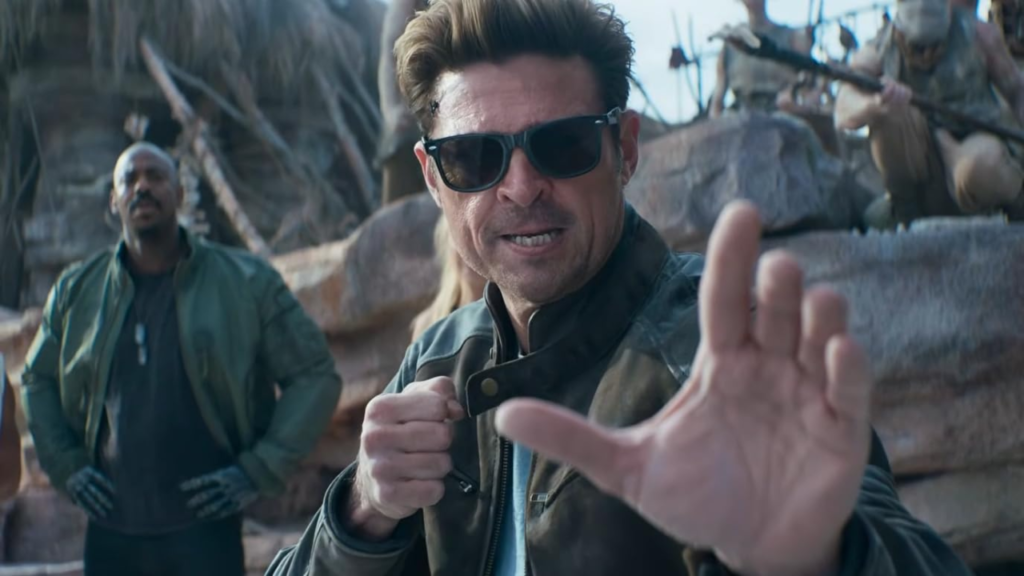
The film’s biggest critical winner appears to be Karl Urban. Critics repeatedly single out Johnny Cage as the sequel’s most entertaining addition. Frank Scheck of The Hollywood Reporter notes that Urban injects much-needed comic energy into the film, bringing self-awareness and charisma that the previous movie lacked. Similarly, Owen Gleiberman of Variety says Urban’s performance occasionally lifts the movie out of what he describes as its “sludgy excuse for a story,” giving the film brief flashes of personality amid the nonstop chaos. IGN’s review also praises Cage’s inclusion, arguing that the character helps balance the movie’s relentless violence with humor and playful absurdity.
Action and gore, unsurprisingly, remain the film’s main attraction. Amon Warmann praises the “pleasingly gory” fatalities and notes that the tournament structure gives the sequel a much stronger rhythm than the 2021 film. Bill Bria of /Film goes even further, calling the movie “a mostly flawless victory for video game and martial arts fans.” Bria argues that the sequel finally understands the appeal of Mortal Kombat, embracing both the ridiculous fantasy mythology and the brutal fight choreography without hesitation. According to him, several combat sequences work because they are staged with emotional momentum rather than simply existing as random violence.
Warmann also highlights one fight in particular — Liu Kang battling Kung Lao — as the movie’s standout set piece, praising its combination of choreography, effects work, and visual creativity. Several critics agree that the sequel improves significantly whenever it focuses on straightforward tournament combat rather than drowning itself in exposition.
But that doesn’t mean critics are fully convinced. Benjamin Lee of The Guardian delivers one of the harshest reviews, calling the sequel “junky” and criticizing it for offering “more of the same.” Lee argues that despite finally delivering the tournament, the film remains trapped under wafer-thin storytelling, overloaded mythology, and repetitive action. He criticizes the constant references to magical amulets, realms, and combat lore, suggesting that what works as simple background flavor in a video game becomes exhausting when expanded into movie plotting. According to Lee, the fights themselves also become increasingly difficult to care about because the film fails to establish meaningful emotional stakes.
That criticism about emotional emptiness appears repeatedly across reviews. Owen Gleiberman of Variety describes the film as “dependable action, sludgy story in an old-school mediocre video-game bash,” arguing that while the combat sequences occasionally entertain, the endless mythology and resurrection mechanics make it difficult to feel invested in the outcomes. Characters survive impossible injuries, return from death, or exist in a universe where consequences rarely matter, weakening tension across the film.
The sequel’s lore-heavy storytelling also becomes a major sticking point. Frank Scheck notes that the sheer number of characters and subplots may leave newcomers overwhelmed, joking that audiences may need “a spreadsheet” to track everyone involved. The movie introduces multiple realms, magical objects, side conflicts, and returning characters while still trying to push forward the tournament narrative, creating a structure that several critics found overcrowded and uneven.
A similar point is made by Alex Harrison of ScreenRant, who argues that the film repeatedly interrupts its strongest element — the tournament itself — with unnecessary diversions into lore-heavy side quests and mythology exposition. Harrison writes that while the fights are occasionally exciting, the film still struggles to trust its own simplicity, constantly overcomplicating what should have been a straightforward martial-arts fantasy.
The Rotten Tomatoes reactions further reflect this divide between fan satisfaction and cinematic quality. Matt Singer of ScreenCrush argues that death becomes effectively meaningless in the franchise because the movie constantly revives characters or bypasses consequences. Aidan Kelly of Collider, meanwhile, calls the sequel “a bloody good time,” praising its willingness to fully embrace the franchise’s absurdity even if the pacing becomes messy. Julian Roman of MovieWeb says the sequel finally gives fans the Mortal Kombat movie they expected back in 2021, while Matt Konopka of Dread Central describes it as “far from a flawless victory” despite enjoying the action. Simon Abrams of RogerEbert.com praises the brutality and energy of the combat sequences but criticizes the film’s stiff dialogue and shallow characterization.
What becomes increasingly clear across the review roundup is that critics see Mortal Kombat II less as a standalone blockbuster and more as a fan-focused event film. The sequel understands the games better than the previous movie did. It delivers the tournament, the fatalities, the iconic characters, and the exaggerated violence fans expect from the franchise. But many critics argue that understanding the games does not automatically translate into compelling cinema.
For longtime fans, that may not matter much. The movie appears fully committed to delivering spectacle, nostalgia, and chaotic entertainment. For everyone else, critics suggest the sequel remains another example of a video game adaptation that gets closer to capturing the spirit of its source material without fully mastering storytelling beyond it.
Ultimately, Mortal Kombat II seems destined to divide audiences in exactly the way critics are divided now. It is louder, bloodier, more self-aware, and more confident than the 2021 reboot. Johnny Cage brings personality, the fights are bigger, and the tournament finally exists. But beneath the gore and fan service, many reviewers still see the same old problems — weak narrative structure, overcrowded mythology, and emotional stakes that rarely land.
For fans of the franchise, it may feel like an upgrade. For critics, it remains another flashy but flawed video game adaptation trying to finish the fight without fully figuring out how to win it.
Film Info
Mortal Kombat II (2026)
Release Date: May 8, 2026
Director: Simon McQuoid
Writer: Jeremy Slater
Cast:
Karl Urban,
Adeline Rudolph,
Jessica McNamee,
Josh Lawson,
Ludi Lin,
Lewis Tan,
Joe Taslim,
Hiroyuki Sanada
Studios: New Line Cinema, Atomic Monster, Warner Bros. Pictures
Genre: Action, Fantasy, Martial Arts
Runtime: 116 minutes

Read More Review Roundups on POF