
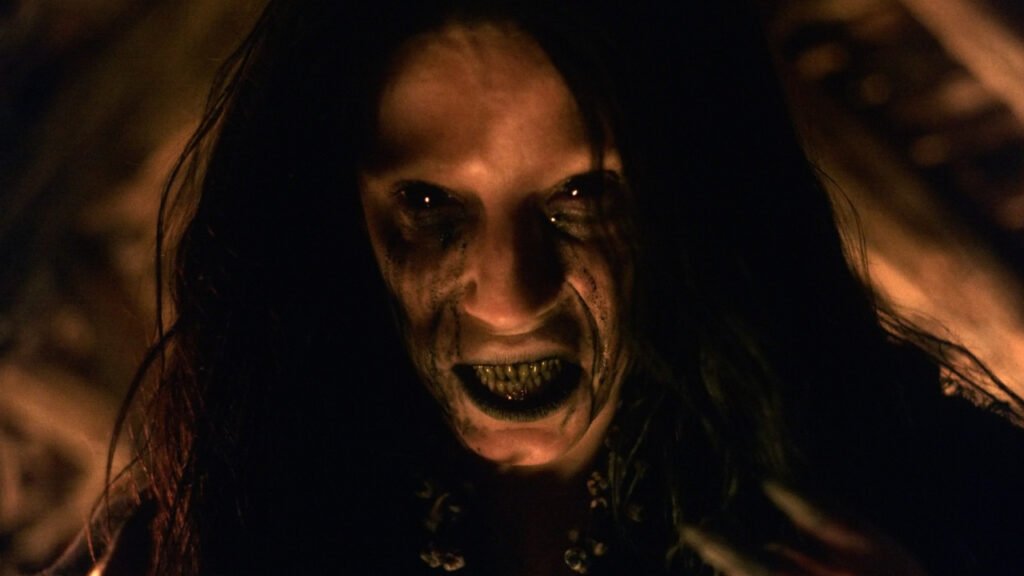
Cypriot folk horror Motherwitch, also known as Dodekameron, has secured a North American distribution deal with Dark Star Pictures ahead of its screening at the Sitges Film Festival in Spain. Directed by Minos Papas, the film combines an unsettling story of maternal grief with the folklore, language and landscapes of Cyprus. Following its world premiere at the International Film Festival Rotterdam, the €1.7 million production has screened at more than 20 international film festivals and is now taking another step towards reaching a wider audience.
Set in Cyprus in 1882, Motherwitch follows Eleni, a painter who loses all three of her children in a tragic accident. Overwhelmed by grief, she becomes isolated from the villagers, who begin to regard her as a source of misfortune. Desperate to bring her children back, Eleni turns to a ritual involving paintings, hoping that art can achieve what ordinary life cannot. She finds help in Michalakis, a young boy with an artistic gift who suffers abuse at the hands of his father. However, the ritual unleashes something far more dangerous, turning Eleni’s search for her children into a struggle against forces beyond her control.
One of the film’s distinguishing features is its use of supernatural elements drawn from Cypriot folklore rather than an invented mythology. The story features the Kalikantzari, also known in some local traditions as galiganjari. These goblin-like creatures are associated with the twelve days of Christmas and are often described as having animal features, including pig-like snouts and donkey ears. Some traditional beliefs link them to the spirits of unbaptised or stillborn children who return to trouble the living. By bringing these figures to the screen, Papas draws on a cultural tradition far less familiar to international horror audiences than the legends of Western Europe.
The setting is as important as the folklore. Motherwitch was filmed entirely in Cyprus, using a remote, uninhabited 15th-century stone village to recreate the atmosphere of its 19th-century setting. The old buildings and isolated surroundings give the story a strong sense of place. The village serves not merely as a backdrop but also helps establish the distance between the characters and the world beyond their community.
Papas also wanted the dialogue to reflect the period. He worked with a linguist to develop an older form of Greek-Cypriot speech inspired by the language of the late Ottoman era. This attention to dialect strengthens the characters’ connection to the history and culture behind the story, extending the film’s historical detail beyond its architecture and costumes.
The same attention to detail informed the visual effects. Rather than relying primarily on computer-generated imagery for its supernatural sequences, the production used practical effects, vintage camera lenses and physical cloud tanks. The team also explored organic eye effects inspired by Blade Runner, creating a visual style that feels tactile rather than digitally polished. These choices complement a story rooted in traditional beliefs, allowing the unexplained to feel as though it belongs to the physical world.
The film’s emotional foundation also draws on real-life experiences. Papas has held discussions with bereaved parents, war veterans and traditional healers while developing the story. Their experiences helped inform its treatment of grief, faith and the human desire to reverse an irreversible loss, giving the horror a purpose beyond frightening its audience.
Produced through a collaboration involving Cyprus, North Macedonia, Canada and the United States, Motherwitch brings together filmmakers from different backgrounds while remaining firmly connected to its Cypriot roots. Its international festival run has helped introduce this perspective to audiences beyond the island.
The North American distribution deal marks another milestone for Motherwitch, but the film’s significance extends beyond its commercial prospects. By building its horror around local legends, a historical dialect and an authentic Cypriot setting, Papas has given the film a distinct cultural identity. Its international journey demonstrates how stories grounded in a specific place can reach audiences far beyond it.