
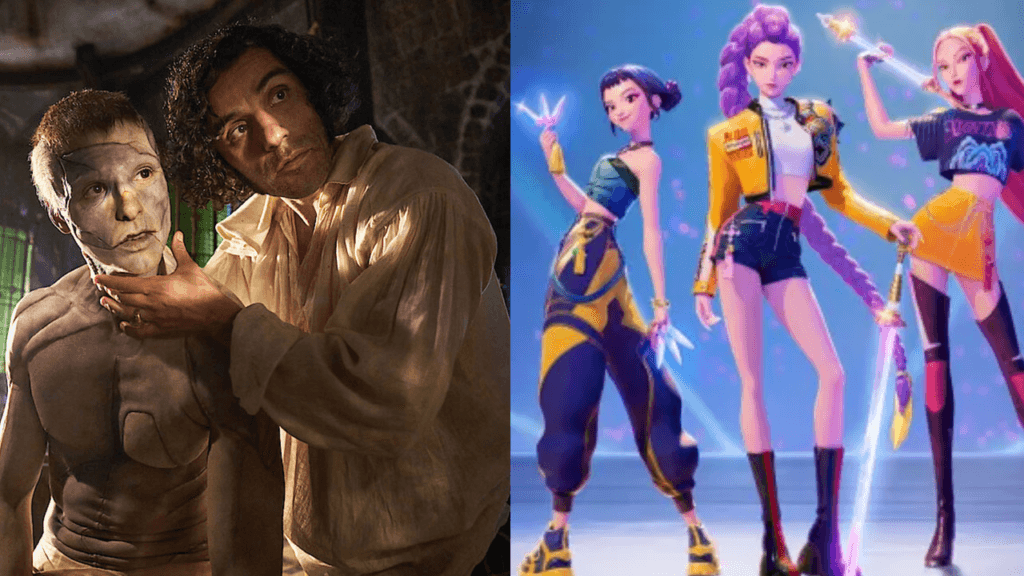
The addition of Frankenstein and KPop Demon Hunters to the Criterion Collection is more than a boutique physical-media announcement. It is an act of canonization.
Both films are Netflix-backed releases. Both were among the most critically discussed and widely viewed films of 2025. And now, both are entering what many cinephiles informally refer to as the “Criterion Canon” — a curated body of films preserved not simply for consumption, but for cultural permanence.
To understand why this matters, one must understand what the Criterion Collection represents.
Founded in 1984, Criterion has built its reputation on restoring and preserving films considered culturally, historically or aesthetically significant. Its releases are known for scholarly essays, filmmaker interviews, archival materials and technical restorations that elevate titles beyond commercial entertainment. For decades, inclusion meant alignment with global masters — Akira Kurosawa, Ingmar Bergman, Federico Fellini — alongside American auteurs like Martin Scorsese and Stanley Kubrick.
While “Criterion Canon” is not an official term, it has become industry shorthand for films that move from contemporary relevance into long-term cinematic discourse. When a film joins Criterion, it is no longer merely a hit or awards contender. It becomes part of the archive.
That is the context in which Netflix’s two titles now sit.
Guillermo del Toro’s Frankenstein may be the more traditionally canonical of the pair. The director labored for decades to bring his reimagining of Mary Shelley’s novel to the screen, mounting and abandoning the project multiple times before Netflix revived it. The finished film reflects del Toro’s signature gothic romanticism — ornate production design, melancholic atmosphere and a deeply empathetic view of monstrosity.
Like many of his works, the creature here is not a villain but a mirror reflecting human cruelty. The film earned multiple Academy Award nominations, including Best Picture, and has been widely praised for its visual ambition and emotional gravity.
Del Toro already has a presence within Criterion’s catalog, but Frankenstein strengthens his institutional positioning as one of contemporary cinema’s most formally assured storytellers. Its inclusion feels like a natural extension of Criterion’s long-standing appreciation for literary adaptations and philosophical genre cinema.
The more revealing inclusion, however, may be KPop Demon Hunters.
Directed by Maggie Kang and Chris Appelhans, the animated feature became a viral cultural phenomenon upon release. Blending supernatural action with K-pop spectacle, the film dominated Netflix viewership metrics and extended its reach into music charts and awards circuits. It received nominations in the animated and original song categories at major awards bodies.
Historically, animation has faced an uphill battle for inclusion within traditional cinematic canons, particularly when rooted in contemporary pop culture. Criterion’s embrace of KPop Demon Hunters suggests a deliberate expansion of what qualifies as enduring cinema.
The film is not simply a commercial streaming success. It represents a specific moment in global cultural synthesis — where Korean pop aesthetics, Western animation techniques and digital-first distribution converge. By preserving it within the Criterion framework, the label effectively acknowledges that streaming-era pop mythology is part of cinema’s evolving language.
The Netflix angle is equally significant.
Streaming films were once dismissed as disposable “content,” lacking the theatrical gravitas that traditionally fed canon formation. Concerns about longevity, preservation and physical media absence shadowed the early years of platform-produced cinema. But over the past decade, Netflix has steadily moved into prestige territory with titles like Roma, The Irishman, Marriage Story and The Power of the Dog — all of which have received Criterion editions.
With Frankenstein and KPop Demon Hunters, Netflix’s relationship with cinematic permanence deepens.
Criterion releases are not algorithm-dependent. They exist in physical form, curated and contextualized. They are placed in libraries, classrooms and collectors’ shelves. They are written about, analyzed and restored. For streaming originals, this transition marks a movement from platform-cycle visibility into archival legitimacy.
It also signals that the boundaries of canon are shifting.
The traditional canon favored mid-20th-century European modernism and director-driven American cinema. The contemporary canon now appears to include genre hybrids, global animation and streaming-backed productions.
If Frankenstein represents classical literary prestige entering the streaming age, KPop Demon Hunters represents something equally important: the recognition that modern pop-infused animation can be both commercially explosive and culturally durable.
Read More: