
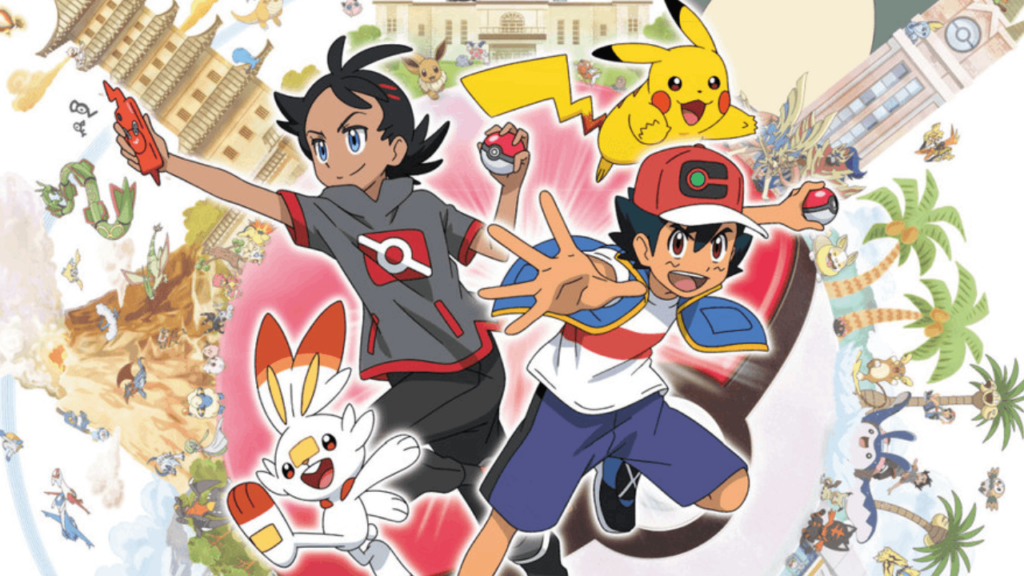
Japanese animation studio OLM, best known for producing the Pokémon anime series and films, has developed an AI-assisted colouring tool that can learn a production’s visual style from just three hand-painted frames. The technology is designed to reduce repetitive work in anime production while keeping artists involved in the creative process. OLM Digital board director Yotsukura Tatsuo presented the tool at the Taiwan Creative Content Fest (TCCF) in Taipei, explaining how the system could help streamline colouring without disrupting established animation workflows.
The tool was developed through ANIMINS, a 15-month research project led by Yotsukura under GENIAC, a generative AI initiative overseen by Japan’s Ministry of Economy, Trade and Industry. The project explored the potential applications of artificial intelligence in anime production and concluded in February 2026. Its findings reflect OLM’s efforts to identify production tasks where AI could reduce repetitive workloads while allowing artists to retain control over the creative decisions that define a show’s visual identity.
Unlike AI systems that depend on large training datasets, OLM’s colouring tool learns from frames prepared specifically for an individual production. The process begins with an artist manually colouring three frames. The system then studies the line work and colour palette in those examples to understand the visual style it needs to follow. According to Yotsukura, this initial learning process takes approximately 90 seconds. Once the system has analysed the reference frames, it can colour each remaining frame in around 15 seconds. Providing additional hand-painted examples can further improve the tool’s accuracy.
Yotsukura clarified that, strictly speaking, the technology is not generative AI. Rather than creating images based on broad training data or open-ended prompts, the system uses the production’s own frames as references and is designed to follow the visual style established by its artists. This distinction is important in professional anime production, where maintaining consistency across hundreds or thousands of frames is essential. OLM’s approach focuses on making the technology compatible with existing production methods rather than requiring studios to change their creative processes around an AI system.
At the proof-of-concept stage, Yotsukura estimated that the tool had reduced the painting workload by approximately 30%. However, the technology does not eliminate the need for human supervision. Checkers must still review every coloured frame and correct errors before the work can proceed. Yotsukura acknowledged that the amount of checking work had increased, highlighting an important limitation: faster automated colouring does not necessarily translate into an equivalent reduction in the overall workload. The quality-control process remains essential, particularly when a production requires precise colour matching and consistency.
The project also reflects OLM’s wider interest in applying AI to different stages of animation production. The studio is experimenting with AI-assisted in-betweening, a process that involves creating the frames between key poses to make movement appear smoother. In-betweening is an important part of traditional animation production, and the use of AI in this area could help reduce some of the repetitive work involved in producing continuous movement.
OLM is also exploring anime-specific AI agents with a startup partner from the GENIAC project. These tools could assist directors and production managers working on long-running series by helping them retrieve earlier creative decisions. For example, production teams could use such systems to locate the reasoning behind a particular scene or recover information about decisions made during an earlier stage of production. The studio is also exploring ways to support approvals and licensing for secondary uses of its titles. These applications indicate that OLM’s interest in AI extends beyond image production to the organisation and management of information across a long-running animation property.
OLM is not the only company developing AI-assisted tools for animation. Canadian animation software company Toon Boom Animation is also working on colouring and in-betweening technologies through its AI suite, Ember. The company’s product marketing director, Harry Ravelomanantsoa, said the colouring tool’s beta phase was nearing completion, while the in-betweening feature was expected to enter beta within weeks.
Ravelomanantsoa also shared an example involving a Manila-based animation studio that had tested the colouring tool. According to the example, the studio reduced the time required to paint a scene lasting between 90 seconds and two minutes from approximately 15 hours to around two or three hours. The reported reduction illustrates the potential time savings that AI-assisted colouring could offer animation studios, although the results will depend on the production requirements and the amount of human correction needed.
Despite these developments, Yotsukura stressed that AI still faces significant challenges before it can become a reliable part of professional animation production. He compared the gap between AI demonstrations and production-ready results to a gacha machine. A system may produce an outcome that is around 80% accurate, but improving it to 90% or 100% can require considerable additional work. In a professional production environment, that final level of accuracy is particularly important because even small inconsistencies can become noticeable when images are viewed in sequence.
Precision is especially important in anime, where colour consistency is a fundamental part of the visual language. Yotsukura noted that AI image-editing tools can sometimes alter RGB colour values even when the resulting image appears visually acceptable. Such changes can create problems for artists and production teams that need exact colour specifications to be maintained across different frames. Professional tools must therefore do more than produce images that look correct. They must follow instructions consistently and allow artists to make precise corrections whenever necessary.
Yotsukura also compared the arrival of AI in animation with the introduction of 3DCG, which took approximately 20 years to become widely accepted in anime production. He believes AI could be adopted more quickly, although its integration will depend on how effectively the technology addresses the practical demands of professional studios. The comparison also reflects the broader challenge of introducing new production methods into an industry where established workflows, artistic standards and technical precision remain important.
For OLM, the objective is not to replace artists or automate the creative process entirely. Instead, the studio wants to use AI to handle mechanical and repetitive tasks, giving artists more time to concentrate on the creative work. Yotsukura maintained that original ideas and the images that connect with audiences must continue to come from people. The development of the three-frame colouring tool reflects that approach: AI can assist with execution, but artistic direction and creative judgement remain human responsibilities.
As animation studios continue to explore AI-assisted production, OLM’s experiment offers an example of how specialised tools could be integrated into existing workflows. Its ability to learn a production’s visual style from just three hand-painted frames is a notable technical development, while the reported 30% reduction in painting workload provides an early indication of its potential. However, the continued need for frame-by-frame checking and precise colour correction shows that the technology is still evolving. For OLM, the long-term value of AI will depend on whether it can reduce repetitive work without compromising the consistency and creative standards expected of professional animation.