
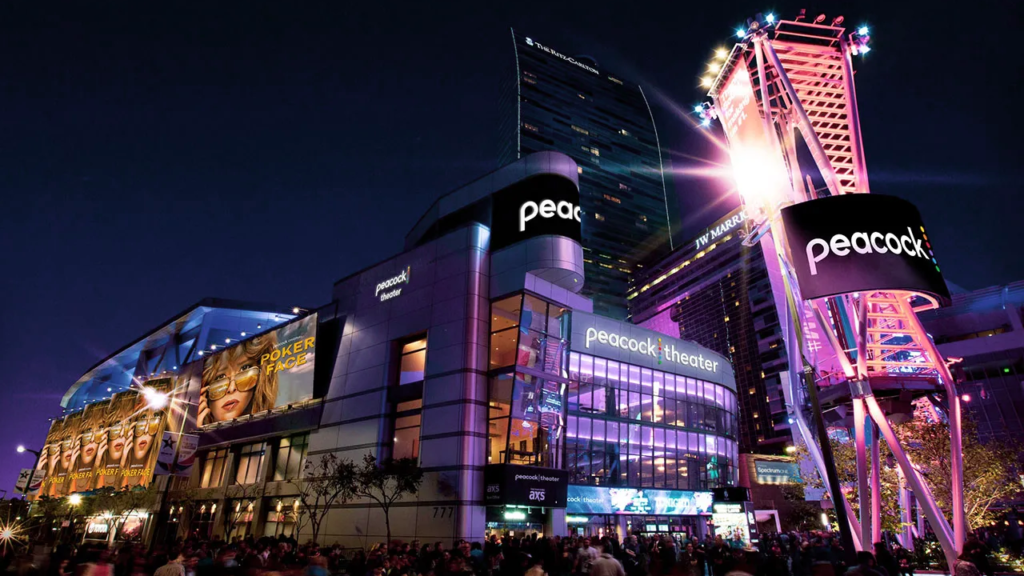
Hollywood’s biggest night is preparing for one of the most significant transformations in its history. Beginning in 2029, the Academy Awards will move from the Dolby Theatre to the Peacock Theater, marking the end of a more than two-decade association with one of the most iconic venues in modern awards history. The shift will coincide with another major change — the ceremony’s transition from traditional television on ABC to a global streaming platform on YouTube.
Taken together, these moves signal more than just logistical adjustments. They represent a deliberate attempt to redefine how the Oscars are staged, distributed, and ultimately experienced by audiences around the world.
The 2029 ceremony, which will mark the 101st Academy Awards, carries symbolic weight. It closes one chapter while opening another. Since 2002, the Dolby Theatre has served as the Oscars’ primary home, becoming synonymous with the modern identity of the awards. Its stage has hosted some of the most memorable moments in contemporary film history, from landmark wins to cultural flashpoints. Apart from the 2021 ceremony — which was relocated to Union Station due to the pandemic — the Dolby era has been one of consistency, tradition, and visual familiarity.
The move to the Peacock Theater reflects a broader ambition to expand the scale and flexibility of the event. Located within the L.A. Live complex, the venue offers a larger seating capacity and a more adaptable infrastructure, allowing for a reimagined presentation that can better accommodate the demands of a modern global broadcast. It is a space already familiar with major live events, but the Oscars’ arrival will elevate its profile into something far more culturally central.
Yet, the venue change is only one part of the story. The more profound shift lies in the Oscars’ departure from traditional television. After decades on ABC, the ceremony’s move to YouTube marks a decisive step into a digital-first future. This transition reflects a growing recognition within the industry that audience habits have fundamentally changed. Linear television no longer commands the same attention it once did, particularly among younger viewers, while streaming platforms have become the primary gateway for global content consumption.
On one hand, a platform like YouTube offers unprecedented global reach. The Oscars, long positioned as an international celebration of cinema, can now be accessed more directly by audiences across regions without the constraints of traditional broadcast distribution. This opens the door to a broader, more diverse viewership, potentially revitalizing engagement with a show that has struggled with declining ratings in recent years.
On the other hand, the move raises questions about identity. The Oscars have historically been associated with a sense of prestige that is closely tied to their presentation — the formality of the venue, the exclusivity of the broadcast, and the aura of a singular live television event. Transitioning to a digital platform inevitably alters that perception, shifting the ceremony into a space where it must compete not just with other live broadcasts, but with an entire ecosystem of online content.
This dual transformation — of place and platform — reflects a larger reality facing the film industry. The Oscars are no longer just an awards show; they are a global media event operating within a rapidly changing entertainment landscape. The rise of streaming, the fragmentation of audiences, and the increasing influence of social media have all reshaped how cultural moments are created and consumed.
In that context, the decision to move to the Peacock Theater and to YouTube can be seen as a proactive step rather than a reactive one. It acknowledges that the traditional model, while historically successful, may no longer be sufficient to sustain relevance in the years ahead.
There is also a symbolic dimension to this shift. Venue changes in the Oscars’ history have often coincided with broader industry transitions, reflecting shifts in scale, technology, and audience expectations. This latest move continues that pattern, signaling a new phase in the evolution of the ceremony — one that is defined not by where it has been, but by where it is heading.
As the 100th Oscars approach in 2028, the Dolby Theatre will host its final ceremony as the awards’ home, closing a chapter that helped define the modern era of Hollywood recognition. What follows in 2029 will not simply be a continuation in a new location, but the beginning of a reimagined format. Because in an industry built on storytelling, even its most enduring institutions must eventually rewrite their own narrative. And with this move, the Oscars are doing exactly that — not just changing their stage, but redefining how the world watches it.
Read More: