
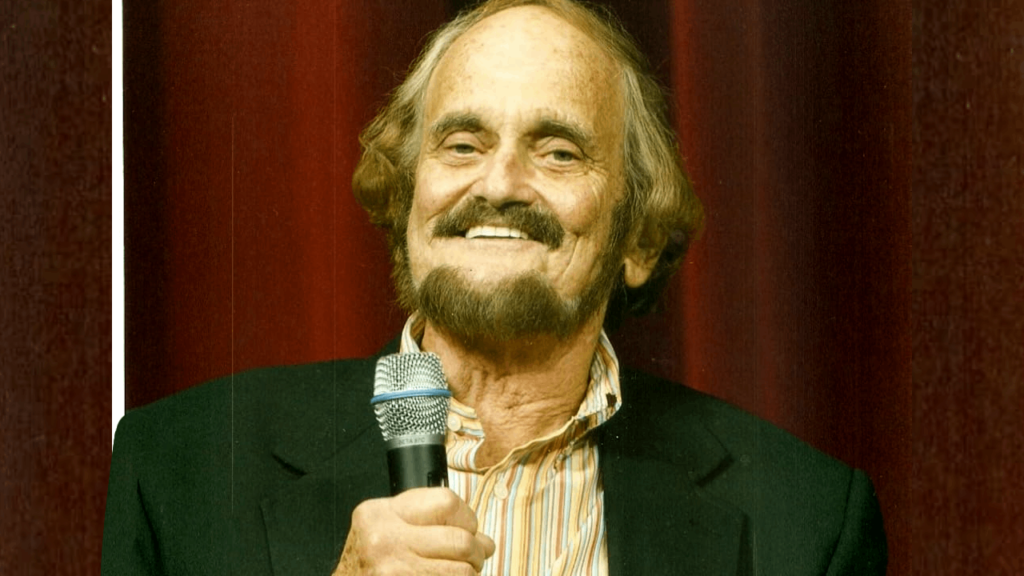
Philip Rosenberg, the Oscar-winning production designer and art director whose film credits included All That Jazz, Network, Moonstruck and The Hurricane, has died at the age of 91. His death was announced by his nephew, Alan Rosenberg. He died on October 28 in West Palm Beach, Florida. No cause of death has been disclosed.
Over a career spanning several decades, Rosenberg worked with some of American cinema’s most recognised filmmakers, including Sidney Lumet, Norman Jewison and Bob Fosse. He won an Academy Award for his contribution to the art direction of Fosse’s All That Jazz (1979) and received an earlier nomination for The Wiz (1978). His work helped shape the visual identity of several influential films across different genres and periods of American filmmaking.
Raised in Brooklyn’s Prospect Park South neighbourhood, Rosenberg studied scenic design at Yale University under Donald Oenslager. His professional journey began in theatre and opera before he moved into cinema. After completing his studies, he worked as an assistant at the Metropolitan Opera, where he gained experience alongside designers Ita Maximovna and Eugene Berman. He also assisted artist Marcel Vertès on the murals at New York’s Café Carlyle. These early experiences provided a foundation in visual composition and spatial design that would inform his subsequent work in film.
Rosenberg entered the film industry in 1968 as a design assistant on The Sea Gull. One of his early prominent assignments came in 1970, when he served as art director on Herbert Ross’s The Owl and the Pussycat, starring Barbra Streisand and George Segal. He subsequently moved into production design, working on James Toback’s The Gambler. His career gained wider recognition with Sidney Lumet’s Network (1976), which became one of the defining films of American cinema in the 1970s.
Rosenberg was associated with the realistic approach to production design that distinguished many films of that period. His work on Network helped establish a grounded visual world for the film, supporting its characters and story without drawing attention away from them. The production demonstrated his ability to create convincing contemporary settings and contributed to the film’s distinctive visual identity.
His association with Lumet continued through several projects, including Daniel (1983), Garbo Talks (1984) and Running on Empty (1988). Their collaborations reflected Rosenberg’s continued presence in the work of a filmmaker whose cinema placed considerable emphasis on character, performance and the environments in which stories unfolded.
He also maintained a long-running professional relationship with director Norman Jewison. Their collaborations included Moonstruck (1987), Other People’s Money (1991) and The Hurricane (1999). Rosenberg also worked on The January Man (1989), which Jewison produced. These projects demonstrated the range of his work across different genres, from romantic comedy and drama to crime and sports-related stories.
One of the defining achievements of Rosenberg’s career came through his work on Bob Fosse’s All That Jazz (1979). Starring Roy Scheider, the film received nine Academy Award nominations and won four, including the award for Art Direction. Rosenberg and Tony Walton received the award for Art Direction, while Edward Stewart and Gary Brink were recognised for Set Decoration. All four were credited for the film’s winning achievement at the 1980 Academy Awards.
Rosenberg had received an Academy Award nomination the previous year for his work on The Wiz (1978), alongside Tony Walton for Art Direction and Edward Stewart and Robert Drumheller for Set Decoration. Although the film did not win in the category, the nomination marked another significant recognition of his work. Together, the two Academy Award honours established his place among the production design professionals recognised for shaping the visual worlds of major American films.
His filmography extended beyond these award-recognised projects. Other credits included Next Stop Greenwich Village, The Sentinel and Night Falls on Manhattan. His final film credit was Andrew Davis’s Collateral Damage (2002), starring Arnold Schwarzenegger. By then, Rosenberg had worked across a wide range of productions, collaborating with directors and creative teams on films that occupied different corners of American cinema.
Rosenberg was married to Siv Sandstrom, who also worked in film art departments and assisted him on productions including Moonstruck and Running on Empty. Sandstrom had worked as a hostess in the Swedish pavilion at the 1964 World’s Fair in New York. She died in 2024. According to published reports, Rosenberg is survived by his brothers, Stanley Rosenberg and David Rosenberg, and six nieces and nephews.
Across his career, Rosenberg contributed to films that remain significant parts of American cinema, working behind the scenes to shape their settings and visual environments. From the newsroom and corporate spaces of Network to the theatrical world of All That Jazz, his work formed part of the creative foundation of these productions. His Oscar-winning achievement, collaborations with major directors and decades of work in film design leave behind a substantial contribution to the history of American cinema.