
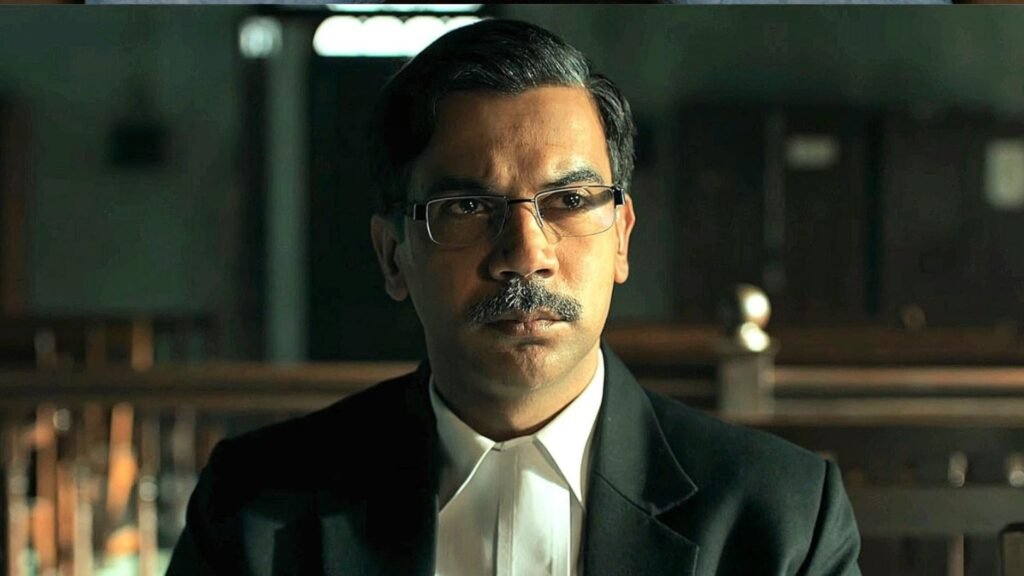
Critics have given Prahaar: The Untold Story of Ujjwal Nikam a mixed but largely respectful response. Starring Rajkummar Rao as special public prosecutor Ujjwal Nikam, the courtroom drama revisits the trial of Ajmal Kasab, the terrorist captured alive after the 26/11 Mumbai attacks. Early reviews range from describing the film as “engaging” to finding it “stodgy.” While critics largely agree that the performances are its strongest asset, particularly Lalit Prabhakar’s portrayal of Kasab, they differ on whether the film succeeds as a measured legal drama or leans too heavily on familiar patriotic storytelling.
Aishani Biswas of Outlook India awarded the film 3 out of 5, while Shubhra Gupta of The Indian Express gave it 2.5 stars. Anuj Kumar of The Hindu praised its respect for legal procedure, whereas Rahul Desai’s review for The Hollywood Reporter took a broader view, questioning not only how the film was made but also why a film of this kind was being made.
Directed by Avinash Arun and written by Sumit Roy, the Hindi film follows Nikam’s demanding courtroom battle to secure Kasab’s conviction. The narrative intercuts the high-profile trial with Nikam’s home life, where his long working hours and obsessive commitment to the case strain his relationship with his wife, played by Wamiqa Gabbi, and his son, played by Ritvik Sahore. Jaideep Ahlawat plays Zulfiqar, a Pakistani prosecutor who travels to India for the case, while Sikandar Kher portrays Kasab’s defence lawyer, Abbas Kazmi. Ashish Vidyarthi appears as the judge.
Lalit Prabhakar’s performance as Kasab emerges as the most widely praised element of the film. Anuj Kumar of The Hindu describes his work as “stunning, unpredictable,” noting how the character speaks in distinct tones as his indoctrinated worldview begins to unravel. Anuj Kumar, however, finds the dialect less convincing in places.
Shubhra Gupta of The Indian Express appreciates the range Lalit Prabhakar brings to Kasab, moving between sly cruelty, deception and moments of growing awareness of his crimes. Shubhra Gupta considers him a believable villain who gives the film much of its interest. Aishani Biswas of Outlook India similarly praises Lalit Prabhakar for conveying menace without reducing Kasab to a one-dimensional antagonist.
Rahul Desai of The Hollywood Reporter offers another perspective on the performance, describing Kasab as a monster “slowly disintegrating into a man.” Rahul Desai finds the portrayal of a brainwashed pawn betrayed by the people who trained him an interesting choice, particularly because mainstream cinema rarely approaches evil through this lens.
Rajkummar Rao receives a generally positive, though more measured, response as Nikam. Shubhra Gupta of The Indian Express says Rajkummar Rao brings “a dogged sincerity” to the role, while Rahul Desai of The Hollywood Reporter believes the actor does a decent job of avoiding a performance built around imitation and allows his work to speak for itself. Aishani Biswas of Outlook India praises Rajkummar Rao’s intelligence and obsessive drive, also finding his Marathi accent convincing.
Anuj Kumar of The Hindu is more reserved in his assessment. Anuj Kumar acknowledges that Rajkummar Rao captures Nikam’s gait, manner of walking and vocal pitch, but argues that the “raw, intuitive vulnerability” associated with the actor’s earlier portrayal of lawyer Shahid Azmi has given way to technical polish. The criticism suggests that Rajkummar Rao is effective in his transformation into Nikam, even if the performance does not reach the same emotional depth.
Some of the film’s most thoughtful moments emerge from Nikam’s exchanges with Jaideep Ahlawat’s Zulfiqar. Anuj Kumar of The Hindu describes Zulfiqar as a “narrative bridge” who prevents Pakistan from being represented solely through “faceless bigoted handlers.” Anuj Kumar also praises Jaideep Ahlawat’s measured performance. Shubhra Gupta of The Indian Express believes the exchanges provide “sorely-needed nuance” and credits the film with refusing “to take refuge in jingoism.” The courtroom conflict, in these moments, is framed as a response to a crime against humanity rather than as a religious divide. Rahul Desai of The Hollywood Reporter compares the pair’s two scenes to the contrast between opposing systems in Bridge of Spies.
Anuj Kumar of The Hindu considers the film’s respect for legal procedure one of its principal strengths. Anuj Kumar praises Sumit Roy’s screenplay for refusing to turn the courtroom drama into a jingoistic spectacle and for respecting due process, human rights and the judiciary. The testimony of young eyewitness Komal, played by Dior Ranju Varghese, becomes an “emotional dagger,” according to Anuj Kumar. Anuj Kumar also appreciates the restrained portrayal of defence lawyer Abbas Kazmi, whose presence reinforces the importance of constitutional integrity and exposes what the critic calls the “paradox of fairness.” Shubhra Gupta of The Indian Express similarly praises Ashish Vidyarthi’s judge for presiding over the proceedings with “precision and empathy.”
The criticism becomes sharper when the reviews turn to the film’s family drama and familiar narrative devices. Shubhra Gupta of The Indian Express finds both the reenactments and courtroom scenes “by-the-numbers,” arguing that the father-son conflict is “conveniently resolved.” Aishani Biswas of Outlook India believes the film takes too long to establish its rhythm and does not develop the father-son relationship sufficiently. Aishani Biswas also argues that the supporting women deserved more depth.
Anuj Kumar of The Hindu sees the film as caught between two competing ambitions: a balanced legal procedural and “an emotionally satisfying, patriotic mass spectacle.” Anuj Kumar believes the clash between its commercial ambitions and artistic execution leaves the result “a tad blunted.” Rahul Desai of The Hollywood Reporter identifies similarly familiar devices, including a training montage, smirking reaction shots and hallucinatory breakdowns. Rahul Desai also argues that Sikandar Kher’s early portrayal of the defence lawyer risks falling into stereotype before the character receives a redemption arc.
Rahul Desai’s review, titled “The Courtroom Drama We Deserve, Not The One We Need,” moves beyond conventional assessments of filmmaking. Rahul Desai argues that films of this kind can no longer be viewed and reviewed solely on the basis of how they are made; audiences must also consider why they are made. His questions concern whether the film offers sincere storytelling or efficient whitewashing, as well as the timing of its release and Nikam’s political affiliations.
Anuj Kumar of The Hindu notes that the film avoids addressing Nikam’s political history, including his unsuccessful election campaign as a Bharatiya Janata Party candidate and his subsequent Rajya Sabha nomination. This omission becomes part of the wider debate over the film’s framing and the questions it chooses to leave outside its courtroom narrative.
Shubhra Gupta’s verdict for The Indian Express captures the divided response in two words: “worthy, but stodgy.” Aishani Biswas of Outlook India finds the film “an engaging watch, anchored by committed performances,” while stopping short of calling it a definitive courtroom drama. Rahul Desai of The Hollywood Reporter describes it as “predictably effective.” Across the reviews, the performances—especially Lalit Prabhakar’s portrayal of Kasab—remain a point of agreement. The disagreement lies in whether the film earns its patriotic perspective through its attention to legal process or relies too heavily on familiar emotional and commercial conventions.
Watch Trailer:

Film Details: Prahaar: The Untold Story of Ujjwal Nikam
- Release: 16 October 2026
- Language: Hindi
- Director: Avinash Arun
- Screenwriter: Sumit Roy
- Cast: Rajkummar Rao, Wamiqa Gabbi, Jaideep Ahlawat, Lalit Prabhakar, Sikandar Kher, Ritvik Sahore, Ashish Vidyarthi and Ajinkya Deo
- Runtime: 140 minutes