
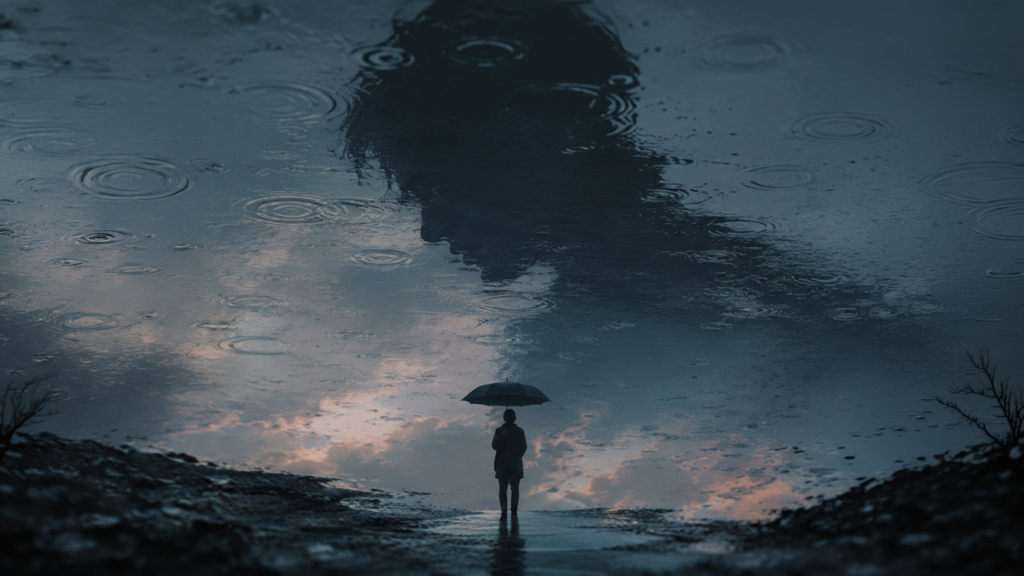
Sometimes when you lose someone, it’s devastating to say the least. Your whole world turns upside down. You feel empty, hollow. Like someone shot you right in the heart, and according to that logic, you should be dead, but you just aren’t. Then there’s this strange numbness later where you don’t even know what you’re supposed to feel anymore. And then suddenly, it rains.
There’s this saying people often use, “the world cried with me.” As if the sky itself couldn’t hold it in anymore. And practically speaking, rain is just weather. Just precipitation. Clouds releasing water because of pressure and temperature and all those scientific explanations. But emotionally, rain has never really meant “just rain.”
And cinema understands that better than most things.
Across films, across countries, across languages, rain is rarely used as simple weather happening in the background. It becomes emotion made visible. Sometimes rain represents grief, sometimes fear, sometimes rebirth, sometimes survival. But almost never just climate. In many ways, rain in cinema behaves like another character altogether.
 Take Se7en (1995) for instance, directed by American filmmaker David Fincher. It follows two detectives trying to catch a serial killer in a city consumed by violence and corruption. The city itself feels diseased. Cramped apartments, flickering lights, crowded streets and endless darkness create a world where hope already feels dead before the murders even happen. And then there’s the rain. It barely stops raining throughout the film. Streets remain soaked. Windows drip constantly. Police sirens cut through storms. The weather creates this suffocating atmosphere where the city feels somewhat rotten. It traps both the characters and the audience inside a world that feels impossible to escape.
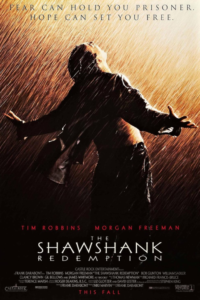 Completely opposite to that is The Shawshank Redemption (1994) directed by Frank Darabont. Based on a Stephen King realist novella, the film is set inside an American prison and follows Andy Dufresne, a man sentenced to life imprisonment for a crime he did not commit. For most of the film, Andy exists in emotional confinement, like a man trapped inside his own head. The prison crushes his individuality further and hope itself becomes dangerous. But then comes the escape sequence. After crawling through sewage pipes to finally break free, Andy emerges outside during a thunderstorm and stands under pouring rain with his arms spread towards the sky. The rain here feels liberation, cleansing, almost spiritual. It washes away years of humiliation, imprisonment and suffering from his body. Without the rain, the scene would still communicate freedom. But with it, the moment becomes rebirth. The sky itself feels like it conspired in freeing him.
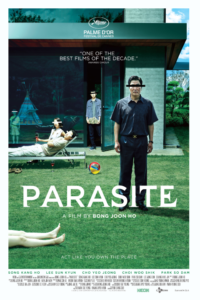 Then there’s Parasite (2019) by South Korean director Bong Joon-ho. The film follows two families from completely different economic worlds, the wealthy Park family living in a luxurious modern home built high above the city, and the poor Kim family living in a cramped semi-basement apartment below street level. That setting is important. Because when heavy rain arrives in the film, the same storm affects both families in completely different ways. For the luxurious modern home, rain is something beautiful to look at through giant glass windows. But for the Kim family, the rain becomes a catastrophe. Their basement home floods with sewage water. Personal belongings float away. Survival itself becomes uncertain. The genius of the scene is that Bong Joon-ho uses weather to expose inequality. The rain is physically the same for everyone, but socially it means completely different things depending on where you stand in society. For one family, it’s aesthetic. For another, it’s destruction.
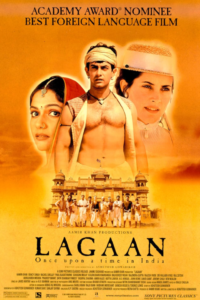 Indian cinema has also used rain symbolically for decades, one such huge example is Lagaan (2001), directed by Ashutosh Gowariker, which was also an Academy Award nominee for Best Foreign Language Film at the 74th Academy Awards. It’s a film that centres around rain. Set in colonial India during the late 19th century under British rule, the film revolves around a farming village suffering through drought. In many parts of rural India during that period, rainfall was directly connected to survival. No rain meant failed crops, hunger, debt and starvation. That context makes the absence of rain in Lagaan extremely powerful. Throughout the film, villagers constantly look towards the sky hoping for relief. Rain stops being weather and becomes life itself. Their desperation is tied not just to comfort, but survival. And when rain finally arrives after the climactic cricket match victory, the moment feels overwhelming, and hugely celebratory. The rain becomes freedom from oppression, hunger and fear.
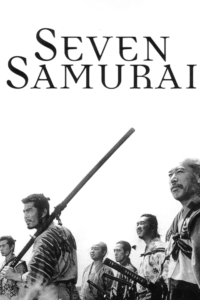 Japanese filmmaker Akira Kurosawa has often used weather to intensify human struggle. His film Seven Samurai (1954) is about a group of samurai defending poor farming villagers from violent bandits. The final battle takes place in heavy mud and rain. Without the storm, the battle could have looked heroic and clean. But Kurosawa uses rain to remove glamour from violence entirely. The fighters struggle to move through mud. Bodies are seen collapsing in dirty water. It all feels exhausting and tragic instead of exciting.
Using rain as an emotional quotient has always worked because somewhere deep down, people already associate rain with emotion. It could be because rain physically changes the world around us. Empty streets, changes in sound, light is different, everything slows down. Or maybe humans naturally project feelings onto nature itself, and have done so long before this was incorporated in films.
And cinema understands that instinct perfectly. So, when it rains in films, it rarely means, “the forecast says precipitation.” More often than not, it means someone is breaking internally. Someone is being reborn. Society is collapsing. Hope is arriving. All is lost. More is found. Or grief has become too large to stay inside a person anymore.
It could mean a million different things, but it is one’s own to define, in films and otherwise.
Read More: