
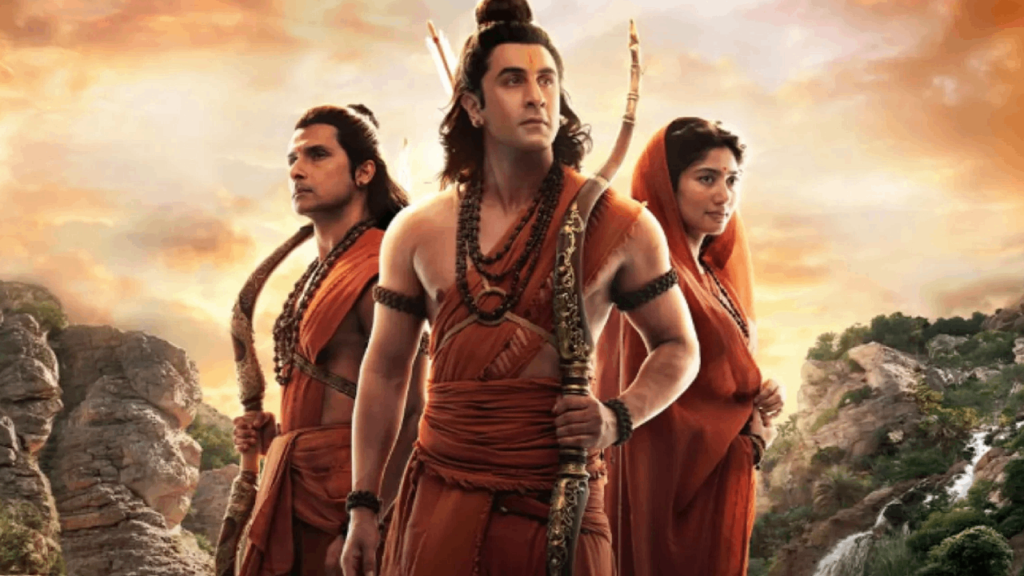
For a film built around legendary battles and a story shared across generations, Ramayana: Rise of a Legend, officially promoted as Ramayana: Part One, is scheduled to arrive in Indian cinemas on November 5, 2026, including IMAX 3D screenings, before taking a different route into homes. Producer Namit Malhotra’s Prime Focus Studios has partnered with JioHotstar to offer the film through a pay-per-view model after its exclusive theatrical run. Viewers will have to purchase access separately, even if they already subscribe to the platform. The decision makes the film’s release strategy a story in its own right.
The key difference is straightforward: this will not be a standard streaming premiere included in a monthly subscription. Under the announced arrangement, Indian audiences will be able to purchase on-demand access to the film on JioHotstar after its theatrical window. The price and digital release date have not yet been announced. If the model succeeds, it could give a major film another paid viewing window without requiring audiences to sign up for a subscription they might not otherwise need.
Namit Malhotra has explained the thinking behind the move. Although Ramayana is designed for the biggest possible theatrical experience, including IMAX 3D, India’s cinema infrastructure cannot reach everyone who holds the epic close. The pay-per-view plan is intended to bridge that gap. Families living far from premium cinemas, as well as viewers unable to visit a theatre, could still watch the film at home after its exclusive theatrical run.
The strategy seeks to balance two objectives: protecting the value of a theatrical release and extending access beyond cinema halls. The film will open in cinemas first, with the home-viewing option following later. The central question is whether audiences will be willing to pay individually for a film rather than wait for it to become part of a regular streaming catalogue.
The ambition begins with the story and the people bringing it to life. Directed by Nitesh Tiwari, Ramayana: Part One stars Ranbir Kapoor as Lord Rama, Sai Pallavi as Sita and Yash as Ravana. Sunny Deol plays Hanuman, while Ravie Dubey appears as Lakshmana. The film is produced by Namit Malhotra’s Prime Focus Studios in association with DNEG and Yash’s Monster Mind Creations.
Its musical partnership is another major draw. Oscar-winning composers Hans Zimmer and A. R. Rahman have joined forces for the score, bringing together two distinct musical traditions for a story with a deep cultural legacy. DNEG, the visual effects company led by Malhotra, is creating the film’s large-scale imagery, spanning settings from Ayodhya to the kingdom of Lanka. Reports describe a post-production process lasting around 600 days, reflecting the work involved in building a world of this scale.
The production’s international ambitions extend to its distribution plans. Sony Pictures is handling distribution outside India, while Dharma Productions is responsible for the Hindi-speaking markets of North India. The film is scheduled to release in Hindi, Tamil, Telugu, Kannada, Malayalam and English. Reports of a wide global theatrical rollout underline the team’s aim to reach audiences beyond its home market, although final screen counts and additional language plans should not be treated as confirmed.
The financial figures surrounding Ramayana have attracted almost as much attention as the scale of the production. Earlier reports discussed a figure of ₹450 crore in connection with rights negotiations, but described different packages and targets. That figure should not be presented as a confirmed digital-and-satellite deal with Star Group without official confirmation. The JioHotstar arrangement is a separate development, and its financial terms have not been disclosed.
A pay-per-view release could generate revenue from viewers who want to watch the film but do not want to pay for another monthly subscription. It could also help the makers reach audiences who might otherwise be excluded by a cinema-only strategy. The model offers an additional way to monetise a film after its theatrical run while giving viewers another route to access it.
However, the approach remains an experiment rather than an established industry standard. Its impact will depend on the price of access, the length of the theatrical window and whether audiences believe the film offers enough value to justify a separate payment. The timing of the digital release will also matter, particularly for viewers deciding whether to watch the film in cinemas or wait to see it at home.
For the makers of Ramayana, the arrangement offers an opportunity to extend the film’s reach beyond cinema halls while creating a potential additional revenue stream from one of India’s most ambitious film productions. If the approach proves successful, it could encourage other big-budget filmmakers to reconsider how their films reach audiences after their theatrical releases. Whether pay-per-view becomes a viable alternative to subscription-based streaming will ultimately depend on audience response to this first major test.