
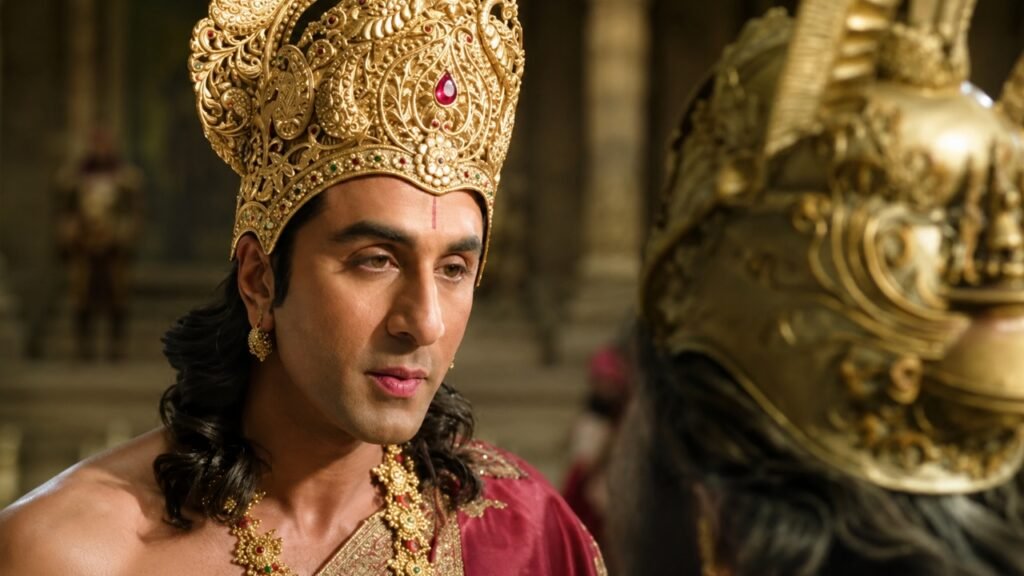
Nitesh Tiwari’s Ramayana has locked in its November 2026 theatrical plan, with Sony Pictures announcing that the first part of the two-film epic will release internationally on November 6. Led by Ranbir Kapoor as Rama, Sai Pallavi as Sita and Yash as Ravana, the film is being produced by Namit Malhotra and is designed to take one of India’s oldest stories to global audiences.
In India, Ramayana is being targeted for November 8, around the Diwali period, following its international release. Sony Pictures is handling international distribution, while Dharma Productions is associated with distribution in North India’s Hindi-speaking markets.
The release plan puts the film’s global strategy at the centre of its theatrical journey. Instead of treating overseas markets as an afterthought, the production has been developed with international audiences in mind. That approach is reflected in Sony Pictures’ involvement, while Prime Focus Studios and Monster Mind Creations are behind the production.
The cast is one of the film’s strongest talking points. Ranbir Kapoor takes on Rama, Sai Pallavi plays Sita and Yash portrays Ravana, placing three major Indian stars at the heart of the central conflict. Sunny Deol plays Hanuman, while Ravie Dubey appears as Lakshmana. The wider ensemble includes actors such as Arun Govil, Lara Dutta and Vivek Oberoi in important roles, giving the adaptation a broad dramatic canvas.
The production’s visual ambitions are equally significant. DNEG has confirmed that Ramayana is being filmed for IMAX, meaning the filmmakers are planning its imagery for large-format theatrical presentation. DNEG and ReDefine are handling the visual effects, which will help create the film’s settings, characters and large-scale sequences. The technology is therefore not simply an added feature; it is central to bringing the mythological world to the screen.
Another major element is the music. Hans Zimmer and A.R. Rahman are collaborating on Ramayana, marking their first film partnership. The combination brings together two composers with distinct and internationally recognised bodies of work. Their involvement also fits the film’s wider attempt to connect an Indian story with a worldwide cinematic audience.
The financial scale has attracted similar attention. Reports have placed the combined budget for the two planned films at around ₹4,000 crore, although the figure has been discussed as covering the broader project, including areas beyond straightforward production costs. It should therefore be treated as a reported estimate rather than a confirmed standalone budget for the first film.
The filmmakers are also working with a large international technical team. Alongside DNEG’s visual-effects work, the production has brought in specialists for action and production design, helping build a cinematic world that can support both the human drama and the larger mythological elements. The approach gives the project a scale closer to contemporary international event filmmaking while keeping its story rooted in Indian mythology.
At its centre, however, the film remains a story about Rama, Sita and Ravana. The first chapter is expected to establish the relationships and events that drive the larger conflict, while the planned continuation will expand that journey in 2027. Keeping the narrative at the centre will be important as the production balances spectacle with the emotional and cultural weight of the source material.
With Sony Pictures taking the film to international theatres on November 6 and the Indian release being targeted for November 8, Ramayana now has a clear path toward its theatrical debut. Its cast, IMAX-focused filmmaking, visual-effects work and international distribution give the adaptation a distinctive cinema profile. Audiences will ultimately decide whether Nitesh Tiwari’s interpretation can turn that enormous production effort into a compelling big-screen experience for audiences in India and overseas.