
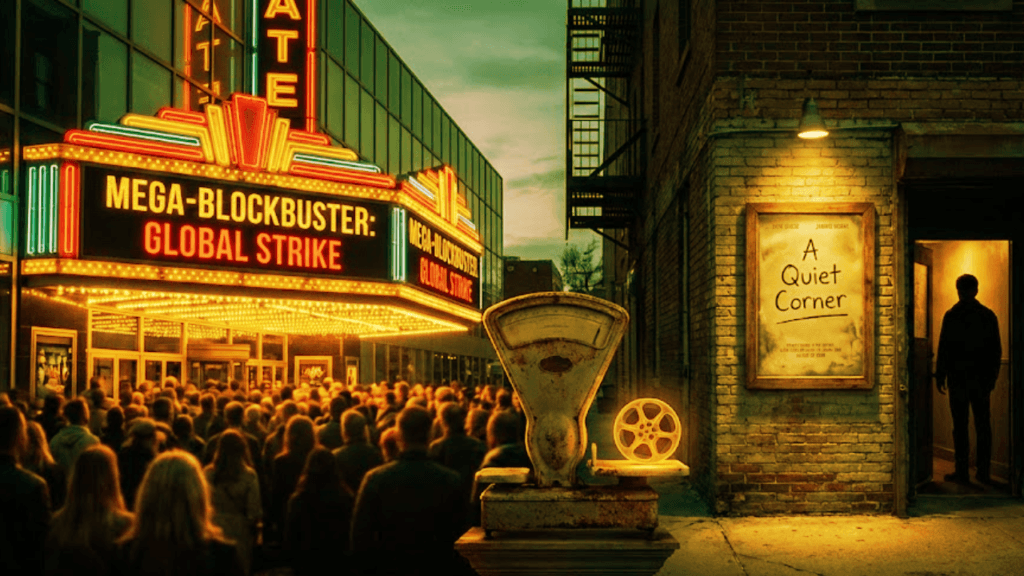
In 2025, the global film industry finds itself at a crossroads. As studios double down on big-budget franchises, sequels, remakes, and formula-driven spectacle, box offices still light up. Yet alongside rising revenues lies a deeper worry: what we gain in financial security, we may be losing in creative variety — and with that, the very soul of cinema may be quietly slipping away.
Success Guaranteed, Risk Avoided
The concept of the blockbuster — a high-cost, wide-release film backed by heavy marketing — was cemented decades ago by landmark releases such as Jaws (1975). That film changed how studios viewed risk, profitability and mass appeal, shifting the business model toward grand spectacles designed to draw massive audiences quickly.
Today’s studios treat blockbusters almost as safe financial instruments. Big franchises, reboots of beloved IPs, and tentpole releases dominate release calendars, their global reach and predictable audience pull make them appealing investments. As one recent industry analysis argues, the economics of studios have become “narrower,” with fewer but more calculated, high-budget films rather than a broad portfolio of diverse projects.
When the financial bottom line becomes the driving force, many films greenlit are those that check familiar boxes: a known brand, global marketability, merchandising potential, and formulaic appeal. The result: fewer risks, fewer surprises, fewer original stories.
Original Voices Silenced
This business logic — while profitable — comes with a significant creative trade-off. As one critique puts it, blockbuster franchises increasingly “kill Hollywood’s originality.”
When studios prioritise market-tested formulas, it becomes harder for unique, daring, auteur-driven films to secure backing. Fresh writers, untested directors, unconventional narratives — these often lose out. Creative committees push for safest choices. Stories become standardized. Cinema starts to feel like a factory of repeatable products, rather than an art form exploring human emotion, culture, nuance.
In many cases, even when smaller or original films do manage to get made, their routes to audiences shrink. Theatrical space, marketing budgets, distribution — all favor blockbusters. The average filmgoer rarely gets to see the “other side” of cinema: subtle dramas, experimental storytelling, bold thematic risks, or cultural specificity beyond global appeal. The system ends up privileging what’s safe over what’s artistically valuable.
The Emerging Audience Disquiet — Blockbuster Fatigue
Interestingly, as blockbusters pile up, a new fatigue is creeping in. Some long-running franchises — once considered invincible — are now faltering. Critics and audiences alike are growing weary of repetitive plots, CGI bombast, and predictable arcs.
This fatigue isn’t just about quality; it’s about hunger for something different. Increasingly, viewers — especially younger, globally connected audiences — express appetite for fresh stories, authenticity, and emotional depth. For them, cinema isn’t just escapist spectacle: it’s identity, introspection, resonance. When blockbusters dominate, those voices struggle to surface.
Is There Still Room for Risk — For Art?
Yes — but only if the industry and audiences remember what cinema can be. Independent and mid-budget films, global and regional cinema, auteur-driven projects — these still exist. Sometimes they emerge as sleeper hits or cult favourites.
Streaming platforms, festival circuits, and global distribution channels offer new possibilities. They can provide space for stories that may not draw a multiplex crowd but can resonate deeply with niche or underserved audiences. The challenge is to protect and nurture such spaces — build systems that value variety, not just volume.
The Stakes Are High: Diversity, Culture, and Artistic Courage
Cinema is more than entertainment — it’s a collective mirror, a cultural memory, a space for imagination, dissent, empathy. When we prioritize only what sells globally, we risk losing the small, intimate stories: voices from lesser-known communities, narratives rooted in local contexts, films that challenge norms or provoke thought.
Too much focus on safe blockbusters might make cinema richer financially, but poorer creatively.
If the balance ever tips completely toward profits over passion, we may look back and see not just fewer films — but a film industry that forgot how to dream.