
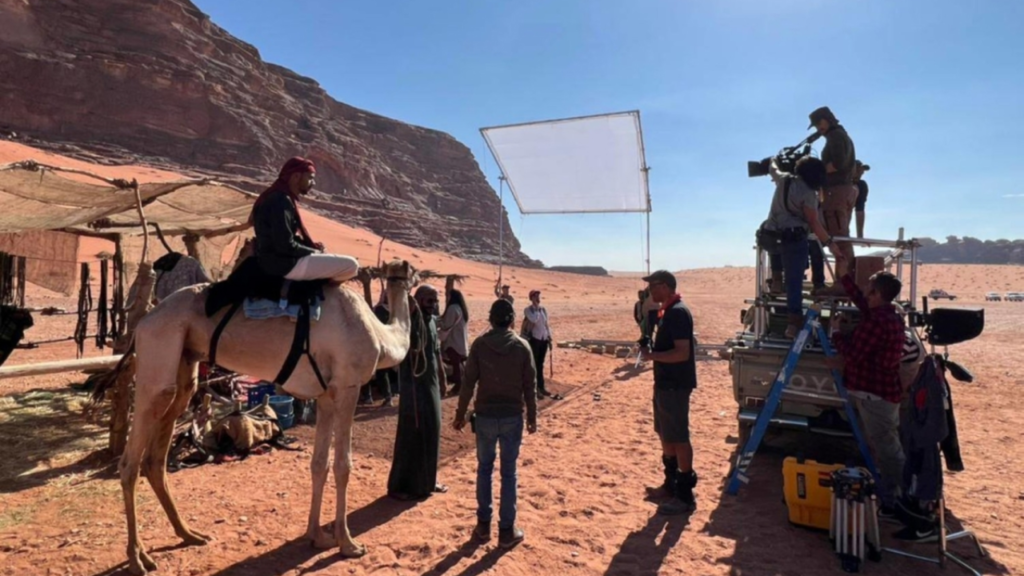
Saudi Arabia’s film ambition is no longer a small experiment. It is now a clear part of the Kingdom’s larger Vision 2030 plan, where cinema, entertainment, tourism and culture are being used to build new industries beyond oil. Over the past few years, the country has reopened cinemas, expanded its theatre market, built production infrastructure, hosted the Red Sea International Film Festival and tried to position itself as a serious destination for international film and television shoots.
The ambition is backed by money and policy. Saudi Arabia has raised its film and TV production rebate to up to 60% of eligible spending, one of the strongest incentives currently being offered to global producers. It has also moved deeper into the regional media business through the Public Investment Fund’s acquisition of a 54% stake in MBC Group, a deal worth nearly $1.99 billion (SAR 7.469 billion). Together, these moves show that the Kingdom does not only want to be a market where films are watched. It wants to become a place where films are financed, produced, distributed and exported.
However, the failure of Desert Warrior has made that dream look more difficult. The Anthony Mackie and Ben Kingsley-led historical epic was supposed to be an early example of Saudi Arabia’s production power. Instead, it has become a high-profile reminder that money, rebates and international names cannot automatically create a successful film industry.
A Film Industry Built Into Vision 2030
Saudi Arabia’s film push is part of a much larger national change. Under Vision 2030, the Kingdom is trying to reduce its dependence on oil and build new sectors around tourism, sport, culture and entertainment. Cinema fits naturally into that plan because it can create jobs, bring global attention, support tourism and build a new creative economy.
Since cinemas reopened in Saudi Arabia in 2018, the country has moved quickly. Multiplexes have expanded, international films have entered the market and local audiences have become part of a growing theatrical base. At the same time, the Red Sea International Film Festival has helped Saudi Arabia bring global filmmakers, actors, producers and sales companies into its orbit.
This is why the Saudi film push should not be seen as a short-term publicity move. The country is building policy, infrastructure and investment around cinema. The incentive has fast become one of the main parts of the country’s production strategy. It is a clear invitation to global studios: bring your films here, spend locally and Saudi Arabia will make the economics attractive.
The 60% Rebate Is Powerful, But It Comes With a Practical Test
A production rebate of up to 60% is a major financial tool. For international producers, incentives can often decide where a film or series is shot. If Saudi Arabia can offer large landscapes, modern facilities, regional authenticity and a high rebate, it will naturally become part of global location conversations.
The policy can be especially useful for projects that need desert terrain, historical settings, Middle Eastern locations or large-scale outdoor production. It can also help the Kingdom bring in international crews, vendors and technical knowledge. If used well, the rebate can create jobs, train Saudi professionals and encourage more productions to return.
But a rebate cannot solve every production problem. Producers still need reliable permits, experienced line producers, trained local crews, equipment access, post-production support, clear rules and smooth planning. If those systems are weak, even a generous rebate may not be enough to make Saudi Arabia a trusted long-term hub.
Saudi Arabia Is Also Buying Into the Content Pipeline
Saudi Arabia’s strategy is not limited to locations and incentives. The Kingdom is also investing in the wider media ecosystem. The Public Investment Fund’s majority stake in MBC Group is important because MBC is one of the most influential media companies in the Middle East and North Africa, with television channels, streaming platform Shahid and production arm MBC Studios.
This gives Saudi Arabia a stronger position across the content chain. It can support production, control distribution, build Arabic originals and develop projects for regional and global audiences. In theory, this is exactly what a new film hub needs: not only places to shoot, but also companies that can finance, produce, market and release content.
The challenge is execution. Owning or backing media assets does not automatically create strong films. A real industry needs development discipline, creative confidence, audience knowledge and production systems that can survive pressure. That is where Desert Warrior becomes such an important case study.
Desert Warrior: The Showcase That Became a Warning
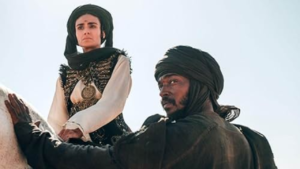
Desert Warrior was positioned as one of the most visible early tests of Saudi Arabia’s film ambition. Directed by Rupert Wyatt, known for Rise of the Planet of the Apes, the film starred Anthony Mackie, Aiysha Hart, Ben Kingsley and Sharlto Copley. Set in seventh-century Arabia, the story follows Princess Hind, played by Hart, as she resists Emperor Kisra, played by Kingsley, and joins forces with a bandit played by Mackie.
Backed by MBC Studios and shot in Saudi Arabia, the film had the ingredients of a showcase project: a Hollywood director, international cast, large desert canvas and historical scale. It was the kind of film that could have shown that Saudi Arabia was ready to host major international productions.
The reported box office numbers, however, show how sharply the film missed its commercial target. Reports have placed the film’s budget at around $150 million. Deadline reported that Desert Warrior opened in North America with only around $472,000 in its opening weekend from more than 1,000 theatres. Reports also pointed to weak numbers in the Middle East, including Saudi Arabia itself, while some box office trackers placed the film’s worldwide return below $1 million.
The critical response also failed to create the kind of strong word of mouth that could have helped the film recover. As a result, Desert Warrior now serves as both a commercial failure and a strategic warning. The failure of Desert Warrior was not only about weak ticket sales. The deeper problem was positioning. The project did not seem to have a clear audience.
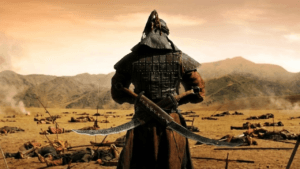
Was it designed for Western audiences who respond to historical action epics? Was it meant for Arab audiences looking for regional stories? Was it built for global action fans? Was it a prestige project? Or was it mainly intended to prove that Saudi Arabia could mount a large-scale production?
Saudi needs More Than One Showcase Project, the slate should include local dramas, thrillers, comedies, documentaries, animation, streaming series, festival films and controlled-budget historical projects. Large-scale epics can still be part of the plan, but they should not carry the full burden of proving the country’s film future.
This is why upcoming Saudi-backed projects will be watched carefully. Earlier announced projects like Alik Sakharov being attached to helm the Saudi epic Unbroken Sword shows that the Kingdom remains interested in ambitious storytelling.
Stories Before Spectacle
Saudi Arabia’s most important investment should be in development. Studios, rebates and festivals matter, but scripts decide whether films live or die. Before bigger sets, there must be better writing. Before more global stars, there must be stronger characters. Before another expensive epic, there must be clarity about why the story matters and who it is meant to reach.
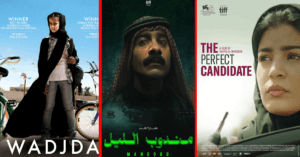
Saudi Arabia has many stories that can travel. Its culture, family histories, desert life, social change, youth identity, humour, music, faith, sports and modern transformation can all become meaningful cinema. The country does not need to imitate Hollywood to become visible. It needs to build Saudi and Arab stories with global quality.
As Planet of Films has explored in its piece on the evolution of Saudi Arabian cinema, the industry is still young compared to older film cultures. That youth can be a weakness, but it can also be an advantage. Saudi cinema has the chance to shape its own voice instead of simply copying older models. The mistake would be to treat spectacle as a shortcut. Audiences can sense when a film is made mainly to prove scale. They respond more strongly when a film feels emotionally specific and culturally honest.
India Could Be a Natural Partner
Saudi Arabia should also look beyond Hollywood. India may be one of the most natural partners for the Kingdom’s film ambitions. There is a strong cultural connection between India and Saudi Arabia. A large Indian community lives and works in the Kingdom, and Indian films already have strong audiences across the Gulf. Both regions also share audience familiarity around family values, music, emotion, star culture and big-screen entertainment. This makes the cultural distance smaller than it is with many Western markets.
Hindi, Tamil, Telugu, Malayalam and other Indian film industries could use Saudi Arabia’s locations for action sequences, romance, travel stories, songs, desert visuals and large-format entertainment. More importantly, Indian producers are experienced in managing scale without always depending on Hollywood-level budgets.
That makes India a practical and culturally closer partner. Saudi Arabia can still work with Hollywood, Europe, Korea, Japan and the Arab world, but Indian collaborations could offer a faster learning curve because the audience sensibility is less distant and the production experience is deep.
A Smarter Path for Saudi Cinema
Saudi Arabia has the money, policy support and ambition to build a serious film industry, but the next phase needs to be more focused. The 60% rebate should not only bring foreign productions into the Kingdom; it should also help train Saudi crew members, support local vendors and create real experience across direction, camera, sound, production design, editing and post-production. If productions only shoot in Saudi Arabia and leave, the country may gain visibility but not enough long-term industry strength.
The Kingdom also needs stronger writing labs, film schools, development programs and co-production markets. The Red Sea Film Festival can play a bigger role here by becoming a year-round space where scripts are developed, producers meet partners and local talent gets access to the global industry. Saudi Arabia should also build credibility through smaller films, mid-budget projects and co-productions that can work with audiences, instead of depending too much on one expensive showcase film.
That is the main lesson from Desert Warrior. The film had Anthony Mackie, Ben Kingsley, Aiysha Hart, Sharlto Copley, Rupert Wyatt, Saudi backing and a reported $150 million budget, but it did not have enough audience pull to justify that scale. Saudi Arabia can become a major production hub, but it will need stronger scripts, trained crews, clear systems, creative trust and better audience understanding.
Read More: