
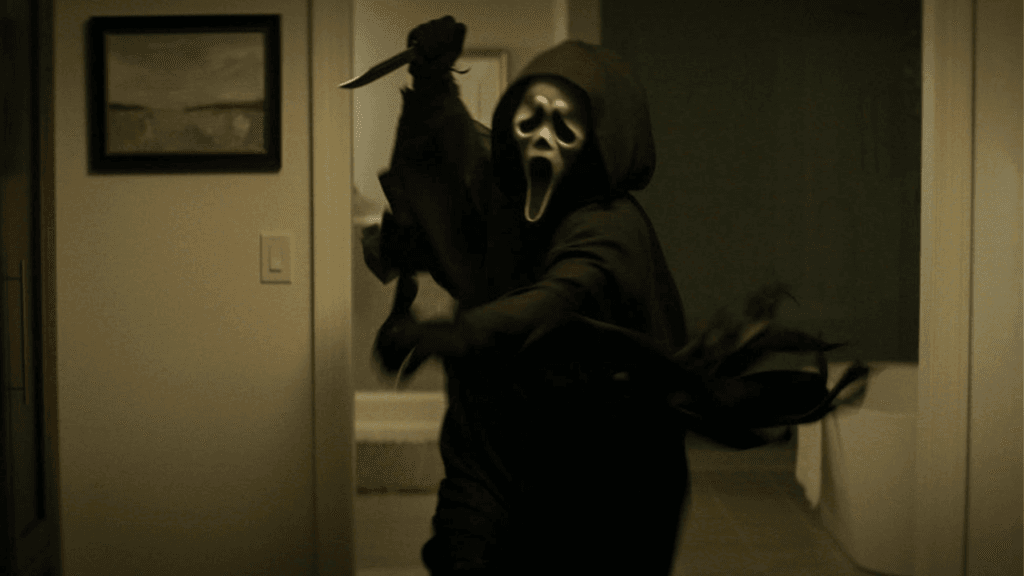
After months of behind-the-scenes upheaval, Scream 7 is heading into its theatrical debut with momentum that could deliver the biggest opening weekend in franchise history.
Industry tracking suggests a domestic launch in the $55 million to $65 million range, which would mark a new high-water mark for the long-running slasher series. For context, Scream VI opened to $44.4 million in North America on its way to becoming the franchise’s highest-grossing domestic entry with approximately $108.4 million. If projections hold, Scream 7 is positioned to surpass that debut record and potentially challenge the single-film domestic crown as well.
The strong outlook comes despite one of the most turbulent production cycles in the franchise’s history.
The sequel underwent a significant creative reshuffle after the firing of Melissa Barrera, followed by the departure of Jenna Ortega and director Christopher Landon. The project was retooled with original Scream architect Kevin Williamson stepping in to direct, reshaping the narrative focus. Adding further intrigue, franchise star Neve Campbell — who had skipped the previous installment over a salary dispute — returned to reprise her role as Sidney Prescott, giving the film a major legacy anchor.
While such instability can often dent audience confidence, early presales indicate that horror fans remain fully engaged. In fact, the controversy may have heightened curiosity around the film’s final form.
From a financial standpoint, the stakes are favorable. The film carries a reported production budget of roughly $45 million, modest by studio standards and well within the profitable range for modern horror releases. Even a solid opening within tracking estimates would place the film on a strong path toward profitability, especially when international revenue and ancillary markets are factored in.
The Scream franchise as a whole has been a steady performer since its 1996 launch. Prior to Scream 7, the six films had collectively grossed roughly $908 million worldwide. A robust global run could push the franchise closer to — or even past — the $1 billion lifetime milestone, depending on international strength.
Opening weekend, however, remains the immediate headline. If the film debuts north of $60 million domestically, it would become the largest opening in franchise history, surpassing Scream VI and reinforcing the brand’s resurgence in the post-pandemic theatrical landscape.
Early reactions following premiere screenings have been mixed but energetic — a tone that historically hasn’t hindered horror openings. Some critics have praised the film’s intensity and legacy character focus, while others have noted uneven narrative execution. On social media, fan responses appear largely positive, with many highlighting the return of familiar faces and heightened Ghostface set pieces. For box office purposes, the conversation itself is a positive indicator; strong genre films often thrive on opening-weekend urgency regardless of critical spread.
The February release corridor also works in the film’s favor. Horror has consistently proven resilient in early-year windows, where competition is lighter and younger audiences drive turnout. Previous Scream installments have demonstrated strong front-loaded openings, and similar patterns are expected here.
For distributors Paramount Pictures and Spyglass Media Group, the strategy appears straightforward: lean into legacy appeal, capitalize on brand recognition, and maintain disciplined cost control. The numbers suggest that approach is paying off.
Whether Scream 7 ultimately overtakes Scream VI’s final domestic total will depend on word-of-mouth and second-weekend holds. But even before its wide release, the film is poised to achieve something notable: transforming a production defined by controversy into a box office event.
If current tracking holds, Scream 7 will not only overcome its creative turbulence — it will deliver the biggest opening weekend in franchise history and reinforce the enduring commercial power of Ghostface nearly three decades after the series began.
Read More: