
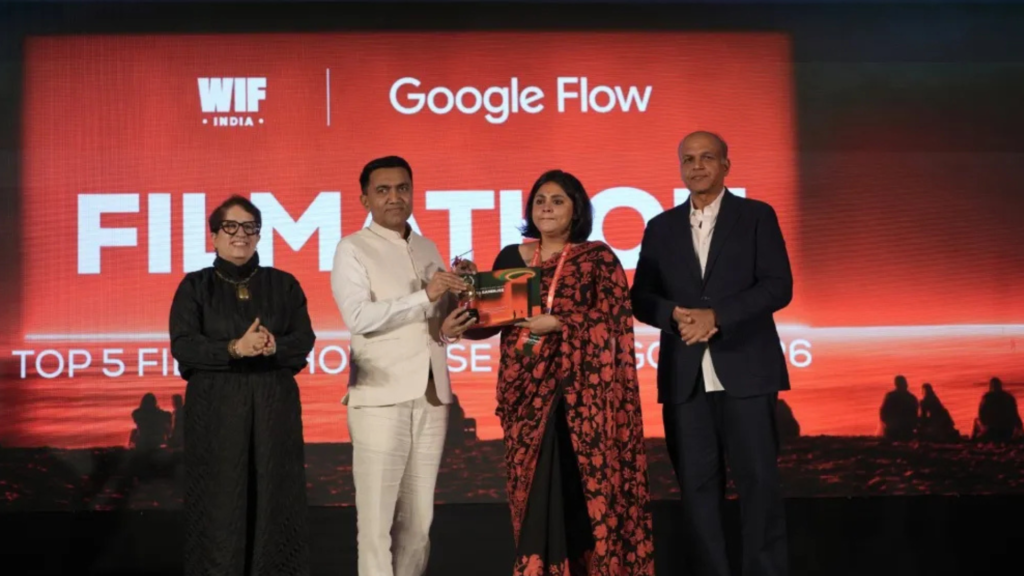
A man begins seeing his late sister. The visions bring back grief and guilt, but in Sikkal, they also lead towards a subject beyond the supernatural: the impact of sickle cell disease on tribal communities in India. Directed by Promita Banerjee, the folk-horror short has won the first prize of INR 1.2 million ($12,500) at the WIF India x Google Flow Filmathon. Made using Google’s AI creative workspace, Google Flow, the film was among five finalists showcased at the International Film Festival of India (IFFI) in Goa. Google officially announced the winners on November 24, 2026.
What makes Sikkal distinctive is the way it brings together folk horror, personal loss and a public health concern. Folk horror often draws on local beliefs, traditions and the fears that develop around them. In Banerjee’s film, that unease is connected to a family’s grief and to a health condition that has a serious impact on many lives, particularly in tribal communities. The story therefore moves beyond the familiar conventions of the genre, using supernatural elements to approach a real-world issue.
Sickle cell disease is an inherited condition that affects haemoglobin, the component of red blood cells responsible for carrying oxygen throughout the body. It can cause severe pain and other health complications. India has been working to address the disease, particularly among tribal populations, where its burden is significant. By bringing the subject into a horror film, Sikkal offers audiences an entry point into an issue they may know relatively little about. It also demonstrates how genre filmmaking can make space for realities that are often overlooked in mainstream cinema.
For Banerjee, the win also represents recognition for a filmmaker from Port Blair in the Andaman and Nicobar Islands. India’s film industry remains concentrated in a handful of major cities, and filmmakers working outside these established centres can face greater difficulties in accessing resources, professional networks and production opportunities. Banerjee sees artificial intelligence as a bridge towards filmmaking rather than a replacement for the person telling the story. Technology can make the process more accessible, but the creative decisions and the responsibility for shaping the narrative remain with the filmmaker.
That question of access is central to the Filmathon. Organised by Women in Film India in partnership with Google, the competition attracted more than 850 registrations and over 800 submissions. A seven-member jury selected five finalists for the IFFI showcase. The panel included filmmakers Shakun Batra and Pan Nalin, editor Nitin Baid, editor-director Deepa Bhatia, film executive Aparna Purohit, Google’s Prashant Paulose and Sten Saluveer. Three of the five selected films were directed by women, reflecting the range of voices represented in the final selection.
The other awards recognised films that approached storytelling from very different directions. Syam Manohar’s Kuli, a Tamil black comedy in which a stranger digging a mysterious hole sets off rumours in a quiet village, secured second place and received INR 800,000 ($8,300). Nikhil Shinde’s animated short Pedals of Joy placed third, winning INR 400,000 ($4,200). The film follows an older brother in Mumbai who sets out to fulfil a young boy’s dream.
The two remaining finalists further broadened the selection. Aswathi Naduthodi’s Bombay Mumbai – Vada Pav is a visual essay that traces Mumbai’s changing identity through people connected by the city’s popular street food. Srishti Chaudhary’s dialogue-free animation Nazar follows a schoolgirl confronting unwanted attention and reclaiming her hope and confidence. Together, the five films span horror, comedy, animation and visual storytelling, demonstrating how a single creative tool can support very different cinematic approaches and subjects.
For those unfamiliar with Google Flow, it is an AI creative workspace designed to help filmmakers turn ideas into visual material and build original worlds. Participants used the platform while developing and making their short films. The technology offers new ways to experiment with images, scenes and visual environments, but it does not determine what a film should mean. That comes from the filmmaker’s decisions: the subject they choose, the people they represent and the way they shape the story. Maintaining that distinction between technological access and creative authorship is an important part of the conversation surrounding AI-assisted filmmaking.
The Filmathon’s results are worth considering beyond the prize money. The competition has brought attention to filmmakers working in different parts of the country and to stories emerging from varied cultural and cinematic backgrounds. For Banerjee, Sikkal places a story from Port Blair on a major festival platform. More significantly, it uses the language of horror to bring grief and a real health concern into the same narrative.
As AI tools become increasingly accessible to filmmakers, competitions such as the WIF India x Google Flow Filmathon offer an opportunity to examine how these technologies can expand participation in filmmaking. Their value, however, will ultimately depend on the stories they help bring to the screen. Sikkal makes that distinction particularly relevant: new tools may change how films are made, but a story’s meaning still begins with what its filmmaker chooses to say.