
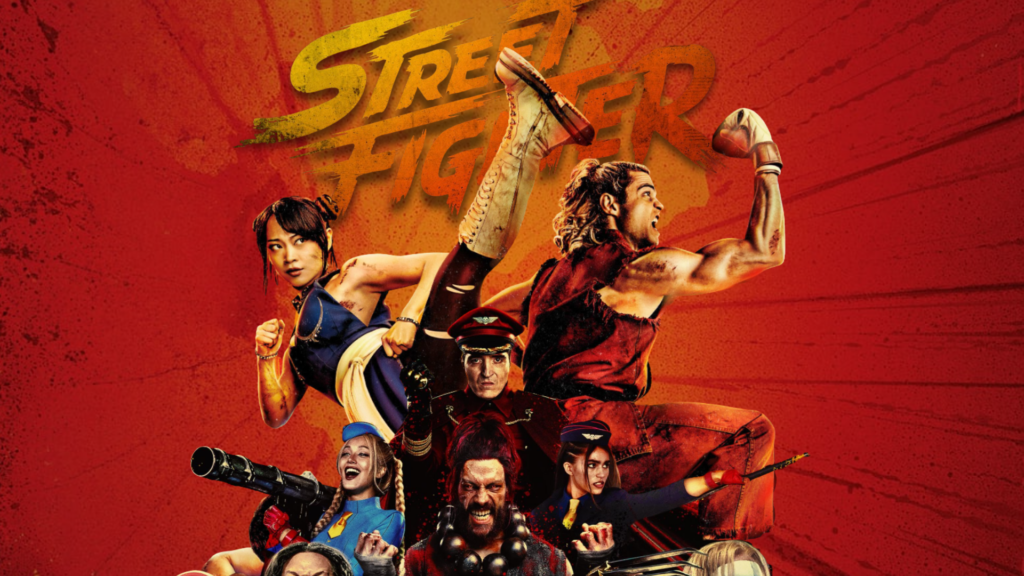
Street Fighter, the live-action adaptation of Capcom’s iconic fighting-game franchise, is targeting a $70 million global opening weekend as it arrives in theatres on October 16, 2026. Directed by Kitao Sakurai, the film has a reported production budget of $82 million and is projected to earn between $25 million and $35 million across 3,500 theatres in North America, alongside approximately $35 million from 65 international markets. Its release also marks an early milestone for Paramount Pictures’ new global distribution partnership with Legendary Pictures, bringing a recognisable video game franchise into the studio’s evolving theatrical business.
The film is among the first theatrical releases following Paramount’s merger with Warner Bros. Discovery under David Ellison’s Skydance leadership. Another title arriving in this period is the limited 4K re-release of Ken Russell’s The Devils (1971). The two releases represent very different sides of the theatrical business: a contemporary action adaptation built around a globally recognised gaming franchise and a restored work of British cinema. Together, they offer an early indication of the range of films reaching audiences as the newly combined studio business takes shape.
For Legendary Pictures, Street Fighter also marks the beginning of a new distribution arrangement. Legendary and Capcom jointly financed the production, while Paramount Pictures is handling its global theatrical distribution. The film is the first release under the companies’ three-year global distribution agreement, announced in September 2025. The project had previously been developed at Sony Pictures, but Legendary’s earlier distribution arrangement with Sony ended in 2024. Its move to Paramount gives the new partnership a recognisable franchise with which to begin its theatrical run.
The projected opening weekend will provide an early measure of the film’s commercial appeal. A North American debut of $25 million to $35 million, combined with the estimated overseas contribution of approximately $35 million, could bring its worldwide opening close to $70 million. However, the reported $82 million production budget represents only part of the film’s overall financial commitment, as marketing and distribution expenses add to the cost. Its performance beyond the opening weekend will therefore be important in determining the strength of its theatrical run.
The film’s PG-13 rating could also help it reach a broader audience. Unlike the R-rated Mortal Kombat films, which feature more restrictive levels of violence, Street Fighter can target a wider demographic while retaining its martial-arts action. The strategy also aligns with its planned release in IMAX and other premium large-format theatres, where tournament fights, familiar characters and elaborate combat sequences are designed to benefit from the theatrical experience. Whether these elements translate into strong ticket sales will become clearer once the film opens.
The setting is central to the adaptation’s identity. Set in 1993, the story returns to the period when Street Fighter II became a worldwide arcade sensation. Rather than using the decade merely as a visual reference, the film places its characters within the era that helped establish their popularity. Ryu and Ken Masters are drawn back into combat when Chun-Li recruits them for the next World Warrior Tournament, where a larger conspiracy complicates the competition.
The cast brings together film actors, musicians and combat sports personalities. Noah Centineo plays Ken Masters, Andrew Koji portrays Ryu and Callina Liang appears as Chun-Li. Jason Momoa plays Blanka, David Dastmalchian takes on M. Bison, and Curtis “50 Cent” Jackson portrays Balrog. Professional wrestling stars Cody Rhodes and Joe “Roman Reigns” Anoa’i also feature, alongside mixed martial arts champion Alexander Volkanovski. Their involvement reflects the physical spectacle associated with the franchise while giving the adaptation a cast with potential appeal beyond its established gaming audience.
Ultimately, Street Fighter brings together three commercial elements: a familiar franchise, a 1990s setting and a theatrical release aimed at a broad audience. Its opening weekend will indicate whether these elements can attract moviegoers in sufficient numbers to establish a strong start. For Paramount and Legendary, the film offers an early opportunity to build momentum for their distribution partnership while bringing one of gaming’s best-known fighting franchises to cinemas.