
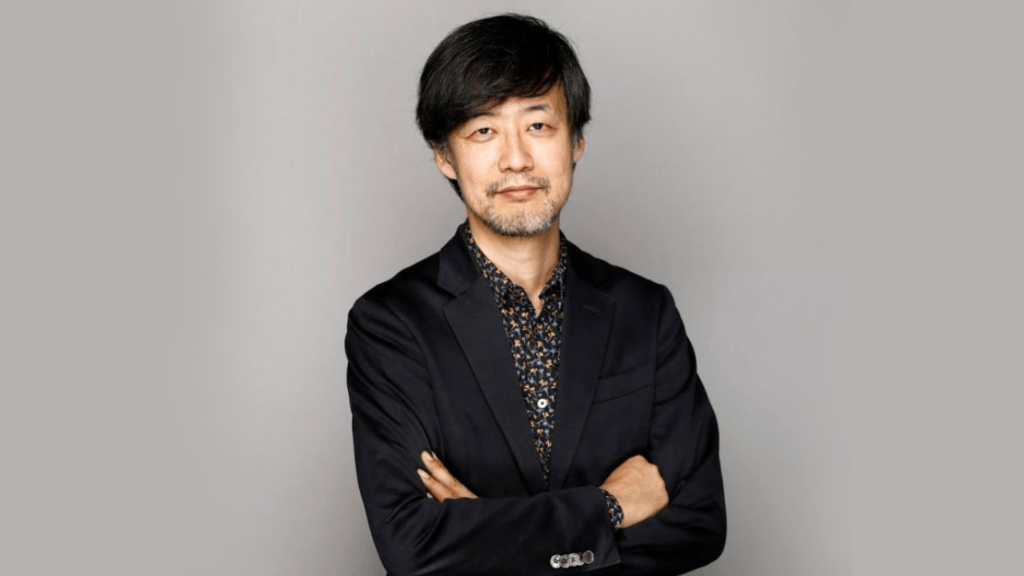
Some childhood disappointments fade with time. Others stay with us for so long that they eventually become the very thing we spend our lives trying to recreate. For Japanese filmmaker Takashi Yamazaki, that memory involved a three-headed monster, his hometown and a Godzilla film that did not quite deliver what a young boy had imagined. More than five decades later, that unfulfilled wish has found its way onto the big screen through Godzilla Minus Zero, giving the director an opportunity to create something he had wanted to see since childhood.
The story goes back to 1964, when Yamazaki was growing up in Matsumoto, Japan. As a young Godzilla enthusiast, he eagerly awaited the release of Ghidorah, the Three-Headed Monster, particularly because the film’s promotional material suggested that King Ghidorah, Godzilla’s formidable three-headed rival, would wreak havoc on his hometown. The prospect of seeing the creature unleash destruction on a familiar place was something the young filmmaker could hardly wait for. However, the actual experience left him disappointed. Matsumoto appeared only briefly in the monster’s path of destruction, falling short of the spectacle he had imagined.
For most children, such a disappointment might have remained an insignificant memory. For Yamazaki, it became a cinematic ambition that stayed with him for decades. What began as a young fan’s wish to see a particular monster sequence eventually became an idea that he would have the opportunity to realise as a filmmaker.
Reflecting on that experience in an interview with Reuters on November 5, Yamazaki explained how he eventually got the opportunity to bring his childhood vision to life. After 55 years, he introduced King Ghidorah into his own film, creating the footage he had once wished to see as a young boy. Describing the experience, the filmmaker said he finally had the chance to make the movie he had wanted to watch back then, almost as if he were showing his younger self exactly what he had been waiting for.
That personal connection gives Godzilla Minus Zero an unusual place in the franchise’s history. The film is not simply another opportunity to bring a legendary monster back to cinemas. It also represents a filmmaker revisiting an idea that began long before he had the resources, experience or creative control to realise it. The monster that once existed in his childhood imagination has now become part of his own filmmaking legacy.
However, Yamazaki’s latest project carries considerably more responsibility than fulfilling a personal ambition. His 2023 film, Godzilla Minus One, received international acclaim and won the Academy Award for Best Visual Effects, marking a historic achievement for a Japanese Godzilla production. The film demonstrated how a monster movie could deliver spectacular destruction while keeping its emotional focus firmly on the people struggling to survive it. Its international success also brought renewed attention to Toho’s long-running franchise and established considerable expectations for the next instalment.
The sequel continues the story of Kōichi Shikishima, played by Ryunosuke Kamiki, and Noriko Ōishi, portrayed by Minami Hamabe. Set in 1949, two years after the events of its predecessor, the story follows the family as post-war Japan attempts to rebuild its life. Their fragile recovery faces another devastating threat when King Ghidorah attacks Japan. Sae Nagatani also returns as Akiko, the adopted daughter of Kōichi and Noriko. The continuation of these characters’ lives gives the sequel a personal foundation alongside its larger monster conflict.
Interestingly, the expectations surrounding the sequel have not been lost on its director. Yamazaki has reportedly urged his cast and crew not to chase the success of Godzilla Minus One, but instead to concentrate on making the best possible Godzilla film. That distinction matters, particularly when a previous instalment has already established such a strong international reputation. Rather than treating the earlier film’s achievements as a formula to reproduce, the filmmaker appears focused on approaching the new chapter on its own terms.
The production itself marks another important milestone. Godzilla Minus Zero is the first Japanese production filmed for IMAX, using certified high-definition digital cameras and an image and sound presentation optimised for the format. Yamazaki once again brings together his responsibilities as director, screenwriter and visual effects lead, allowing him to shape both the film’s storytelling and its large-scale spectacle. The production format also reflects the scale of the project and the importance placed on presenting its monster sequences on the biggest possible screens.
Audiences in Japan have already responded enthusiastically. According to the official announcement from Toho and GKIDS, the film collected approximately ¥910 million (around $5.75 million) from more than 590,000 admissions on its opening day on November 3. The result established a new record for the highest opening-day box-office collection by a live-action film in Japan, surpassing the opening-day earnings of Godzilla Minus One by 201%.
There is something particularly fascinating about this achievement. A filmmaker who once imagined a monster destroying his hometown has now brought that long-held vision into a film that is itself making theatrical history. The box-office response adds another dimension to the project, but the personal story behind it remains distinct from the commercial expectations surrounding the sequel.
For Takashi Yamazaki, the significance of Godzilla Minus Zero reaches beyond opening-day collections, international recognition or the expectations attached to a successful franchise. It is also a reminder of how deeply childhood cinema can influence the people who eventually make movies themselves. The films that inspire young audiences can remain part of their imagination long after the credits have rolled, sometimes shaping the stories they later choose to tell.
The young boy from Matsumoto once left a theatre wishing he had seen more. Decades later, he became the filmmaker who could finally give himself that experience. And perhaps that is one of the most remarkable things about cinema: sometimes, the films we spend our lives making begin with the ones we wished had existed when we were children.