

Ever watched a film that felt like a puzzle, one where the story wasn’t handed to you in a neat, chronological order but instead demanded that you piece it together yourself? The kind of film that made you lean forward, completely engaged, because every new scene forced you to re-evaluate everything you thought you knew? That’s the power of nonlinear storytelling. It’s not just a stylistic choice; it’s a way of reshaping time, memory, and perception to create a cinematic journey that stays with you, reshaping how you think about storytelling and time itself.
If you’re a filmmaker or storyteller, mastering nonlinear storytelling can elevate your work from just another film to an unforgettable journey. But it’s not about throwing scenes in random order for the sake of being different, it’s about understanding why breaking linearity can serve your narrative. It’s about using structure as a tool, not a gimmick. When done right, it makes audiences feel the story rather than just watch it unfold.
So, why do some of the greatest filmmakers, from Christopher Nolan to Quentin Tarantino, from Alejandro González Iñárritu to Denis Villeneuve, repeatedly return to nonlinear narratives? Let’s break it down and see how time, perspective, and memory can be manipulated to craft stories that are not just told but experienced.
Why Do Filmmakers Break Chronology?
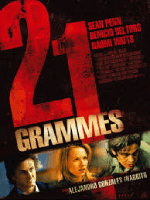
Time in cinema is not a fixed entity, it’s elastic. Unlike in real life, where we are bound by a linear progression of events, films have the freedom to warp time, shuffle moments, and juxtapose past and present to deepen their emotional and thematic impact. Sometimes, placing events out of order makes them hit harder. Imagine watching 21 Grams (2003) in a straight sequence. Would the raw pain of the characters feel as intense? The film’s fragmented timeline mirrors grief itself—disorienting, chaotic, and impossible to make sense of in the moment. By breaking linearity, the film forces you to feel the story rather than just follow it.
A shuffled timeline can also keep the audience actively engaged, making them work to piece together the narrative. Memento (2000) puts us inside the mind of its protagonist, who has short-term memory loss, by telling the story in reverse. We experience his confusion firsthand, making each revelation land with greater impact. Thematic depth is another reason filmmakers choose nonlinear storytelling. It allows them to explore ideas like memory, perception, and fate in ways that linear storytelling often cannot. Eternal Sunshine of the Spotless Mind (2004) uses a fragmented timeline to depict how memories are erased, reconstructed, and relived, making its structure an essential part of its storytelling.

Nonlinear narratives also offer multiple perspectives on the same event. Rashomon (1950) is a textbook example, presenting the same incident through different characters’ eyes, each with their own version of the truth. This technique makes the audience question not just the characters, but the very nature of perception itself.
Another compelling reason to break chronology is to immerse the audience in a character’s subjective reality. When a story unfolds in fragments, it can reflect the way a mind processes trauma, memory, or dreams. The Father (2020) places us inside the disoriented mind of an elderly man suffering from dementia, making us experience his confusion in real time.
The Architects of Nonlinear Storytelling
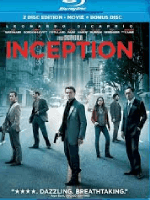
Some filmmakers have mastered nonlinear storytelling to the point where it has become a defining aspect of their style. Understanding their approach is essential if you want to craft a nonlinear narrative that resonates. Christopher Nolan doesn’t just use time tricks—he builds his entire narratives around them. Memento turns time into a puzzle, Inception (2010) layers timelines like a dream within a dream, and Dunkirk (2017) weaves three separate timelines together, each unfolding at a different speed before converging in a climactic moment. The beauty of Nolan’s approach is that his nonlinear structures aren’t just for show—they are deeply tied to the themes of his films.
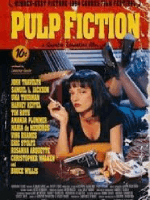
Quentin Tarantino takes a different approach. He doesn’t play with time in a way that alters reality, but he scrambles sequences to enhance character arcs and dramatic tension. Pulp Fiction (1994) is a perfect example—if the film had been told in order, the final scene with Jules would have had far less impact. By shuffling events, Tarantino transforms a crime story into something larger, a film that feels alive with unpredictability.
Alejandro González Iñárritu specializes in fractured narratives that immerse the audience in the chaos of human emotion. In 21 Grams, the fragmented structure makes you experience grief and loss in the same disoriented way as the characters. Babel (2006) interweaves multiple stories across different countries and timelines, ultimately revealing how they connect in unexpected ways. His approach to nonlinear storytelling is deeply emotional, making his films feel less like stories being told and more like experiences being lived.
How to Make Nonlinear Storytelling Work in Your Film
So, you’re excited about nonlinear storytelling. You want to break free from conventional structures and create something unique. But here’s the catch: if your audience gets lost, they stop caring.
The key is to guide them. Even in films where time is shuffled, there is always an underlying logic. Take The Prestige (2006)—it jumps between timelines, but each reveal is carefully placed to maximize impact. You never feel lost because the film gives you just enough information at the right moments.
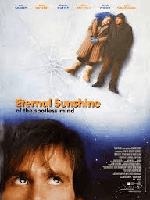
Visual and sound cues can also help orient the audience. Inception used different musical cues for different dream levels, while Eternal Sunshine of the Spotless Mind used shifts in lighting and color to indicate memories being erased. These subtle details create subconscious markers that help the audience navigate complex narratives.
And most importantly, always ask yourself: Does the nonlinear structure serve the story? If your film loses its impact when rearranged into chronological order, then you’ve used the technique effectively. But if it still works just fine linearly, then the nonlinear approach might be unnecessary.
Should You Use Nonlinear Storytelling?
Here’s the bottom line: nonlinear storytelling is a powerful tool, but like any tool, it has to be used with purpose. If breaking the timeline adds emotional weight, deepens your themes, or enhances engagement, then it can elevate your film. But if it’s just a gimmick, it risks alienating your audience.
So, if you’re thinking about telling a story out of order, ask yourself: What does this structure bring to the table? If the answer is compelling, then congratulations—you’re about to craft something truly unforgettable.
Read More:
Conclave: Faith and Power Collide Behind Closed Doors
Stop-Motion Animation and Guillermo del Toro’s Pinocchio
The Evolution of Indian Cinema: From Satyajit Ray to Anurag Kashyap
Extreme Actor Transformations: When Dedication Meets Obsession
How Cinema Helped Fight Racism: A Look at Films That Changed Society