
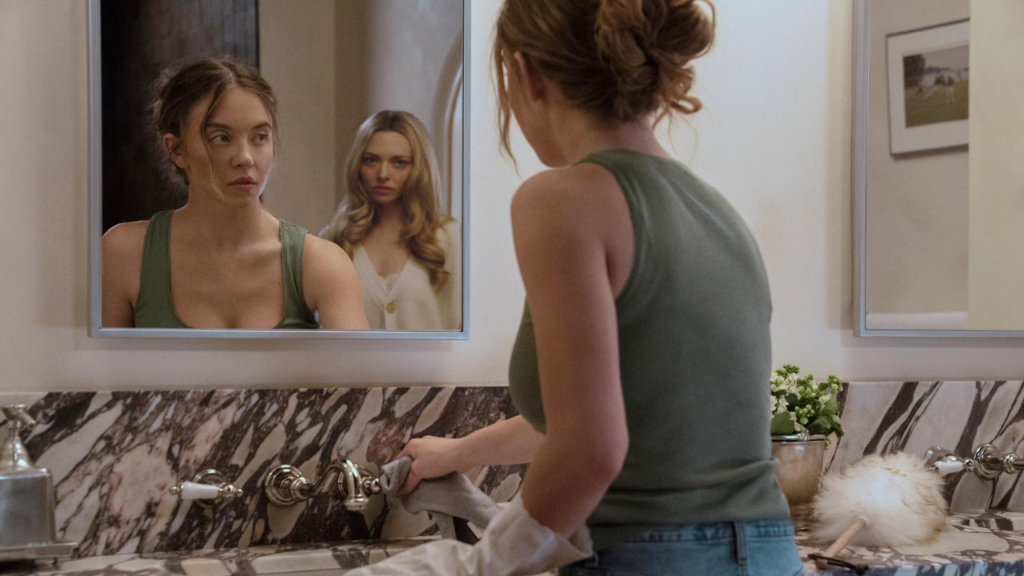
Lionsgate is returning to familiar territory with The Housemaid’s Secret, setting the sequel for a theatrical release on December 17, 2027. The date places the film directly in the middle of the highly competitive Christmas corridor, where it will open alongside major franchise titles like Avengers: Secret Wars and The Lord of the Rings: The Hunt for Gollum. The decision signals a clear continuation of the studio’s release strategy, positioning the film as counter-programming against large-scale, male-skewing blockbusters.
At the center of the franchise is Sydney Sweeney, whose performance in the original The Housemaid played a crucial role in driving its audience connection. Her presence brought both emotional intensity and commercial appeal to the film, helping it resonate beyond its genre. With The Housemaid’s Secret, her return becomes a key factor in maintaining continuity while also expanding the narrative. In a market where star power increasingly influences audience pull, Sweeney’s involvement positions the sequel with a strong foundation heading into a highly competitive release window.
The sequel follows the success of The Housemaid, which emerged as one of the more surprising box office performers of its year. Produced on a budget of approximately $35 million, the original film went on to collect close to $400 million worldwide. Despite opening to a modest $19 million, the film demonstrated strong staying power, benefiting from steady audience interest and sustained word-of-mouth during the holiday period. Its performance reinforced the viability of mid-budget thrillers in a market often dominated by high-cost franchise films.
With The Housemaid’s Secret, Lionsgate appears to be replicating that same release pattern. The December window, particularly the weeks leading into Christmas, has historically allowed films to build gradually through repeat viewings and extended holiday footfall. Unlike opening weekend-driven blockbusters, films in this space often rely on consistency over time, making the corridor an effective platform for projects that connect with audiences beyond initial hype.
The genre positioning of the sequel remains aligned with its predecessor. As an R-rated suspense thriller, The Housemaid’s Secret operates within a narrative space focused on psychological tension and character-driven storytelling. This places it in direct contrast to the large-scale action and spectacle associated with its competitors. While films like Avengers: Secret Wars and The Lord of the Rings: The Hunt for Gollum are expected to draw massive global audiences, they also cater to a specific demographic. The Housemaid sequel, by comparison, is aimed at viewers seeking a different cinematic experience during the same period.
The timing of the sequel also reflects a broader industry pattern. Releasing exactly two years after the original allows the film to capitalize on audience familiarity while the brand remains fresh. This window has become increasingly common for successful titles, offering a balance between maintaining momentum and allowing sufficient time for production and marketing buildup.
What remains central to the film’s prospects is its ability to replicate the performance trajectory of the original. The first film’s success was not defined by a massive opening, but by its ability to sustain audience interest over multiple weeks. That model is particularly relevant in the Christmas corridor, where films benefit from extended playability rather than front-loaded earnings.
The competitive landscape, however, adds a new dimension to the sequel’s release. Opening on the same day as two major franchise films introduces a level of direct comparison that the original did not face at the same scale. Yet, this also reinforces the studio’s intent. Rather than competing directly on spectacle, The Housemaid’s Secret is positioned to occupy a parallel space — one that targets audiences not necessarily drawn to large-scale franchise storytelling.
In recent years, the industry has seen multiple examples of films succeeding through this approach. Counter-programming has allowed smaller or mid-budget films to coexist alongside tentpole releases by offering contrast rather than competition. For Lionsgate, the strategy appears to be less about outperforming blockbusters and more about capturing a distinct segment of the audience.
As the film moves toward its 2027 release, its trajectory will likely depend on factors similar to those that defined the original — audience reception, word-of-mouth, and its ability to sustain interest beyond opening weekend. The foundation established by the first film provides a strong starting point, but the sequel will ultimately be judged on how effectively it builds on that success within a more crowded marketplace.
Read More: