
Christopher Nolan’s The Odyssey is still months away from reaching theaters, yet it is already generating the kind of demand most studios hope to see on opening weekend.
Moviegoers rushed to secure tickets for IMAX and other Premium Large Format screenings after sales opened on Thursday, creating overwhelming demand across major ticketing platforms. According to reports, AMC’s ticketing app briefly paused sales while Fandango users experienced lengthy virtual queues and significant delays as thousands of fans attempted to reserve seats simultaneously.
Some moviegoers reported wait times approaching an hour, while social media quickly filled with complaints from users struggling to complete transactions. The surge centered largely on IMAX screenings, reflecting both Nolan’s long-standing association with the format and the filmmaker’s insistence that The Odyssey be experienced on the biggest screens possible.
The extraordinary demand is the latest sign that Universal’s adaptation of Homer’s legendary epic is evolving beyond a major studio release and into one of the biggest theatrical events of 2026.
Interest in the project has been building steadily since the release of the film’s first teaser footage, which generated widespread discussion among Nolan fans and moviegoers alike.
However, the current ticket frenzy did not emerge overnight. In many ways, Thursday’s rush is simply a continuation of a trend that began nearly a year ago. Earlier IMAX 70mm screenings placed on sale well in advance of the film’s release sold out almost immediately across several locations. The move was unprecedented for a major Hollywood blockbuster, with theaters effectively selling tickets while the film was still in production.
Those early screenings reportedly generated approximately $1.5 million from a relatively limited number of showtimes, demonstrating remarkable audience demand more than a year before release. As happened during those earlier sales, scalpers quickly entered the market again, with tickets reportedly appearing on resale platforms at dramatically inflated prices.
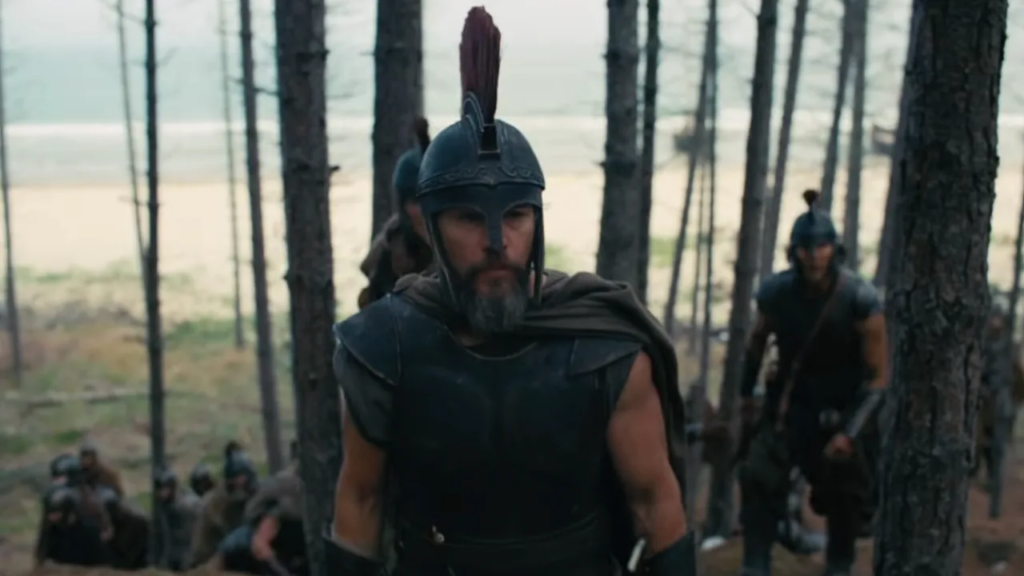
The enthusiasm surrounding the project is hardly surprising given the scale of the film itself. The Odyssey marks Christopher Nolan’s first adaptation of a literary classic after a career largely built on original blockbusters and historical dramas. Based on Homer’s ancient Greek epic poem, the film follows Odysseus and his perilous decade-long journey home following the Trojan War.
Universal has described the project as a mythic action epic, and with a reported budget of approximately $250 million, it is widely considered the most expensive production of Nolan’s career.
The film is led by Matt Damon as Odysseus and features one of the most star-studded ensembles assembled for a Nolan film. The cast includes Tom Holland, Anne Hathaway, Zendaya, Robert Pattinson, Lupita Nyong’o, Charlize Theron, Benny Safdie, Jon Bernthal, Mia Goth, and several other major names.
The project attracted enormous attention early in development, particularly after Tom Holland joined the cast, reinforcing the film’s appeal among younger audiences in addition to Nolan’s traditional fan base.
Beyond its cast and source material, much of the excitement stems from Nolan’s ambitious approach to filmmaking.
The Odyssey is being promoted as the first major feature shot entirely using upgraded IMAX film cameras, representing a significant technological milestone for both Nolan and the format itself. The filmmaker reportedly worked closely with IMAX to develop improved camera systems capable of handling the demands of large-scale narrative filmmaking while preserving the visual qualities associated with traditional IMAX film.
Reports suggest that more than two million feet of IMAX film stock were used during production, making it one of the most ambitious large-format productions ever attempted. The film was shot across multiple countries including Greece, Morocco, Italy, Scotland, Iceland, Malta, and Western Sahara, with Nolan once again emphasizing practical locations and real-world environments over heavy reliance on digital backdrops.
That commitment to the format helps explain why so many moviegoers immediately targeted IMAX screenings when tickets became available.
Nolan’s commitment to large-format exhibition has been central to the film’s marketing campaign from the beginning. The marketing itself has played a significant role in building anticipation. The excitement intensified further after audiences got their clearest look yet at Nolan’s adaptation through the film’s first full trailer. The footage showcased the scale of the production, the mythological setting, and the visual ambition of the project, helping transform The Odyssey from a highly anticipated Nolan film into one of the most discussed upcoming releases in Hollywood.
The ticketing frenzy is also reinforcing growing industry expectations surrounding the film’s commercial prospects.
Following the nearly $1 billion worldwide success of Oppenheimer, Nolan remains one of the few filmmakers capable of turning original or unconventional material into a genuine theatrical event. Industry observers increasingly view The Odyssey as a potential contender to become not only one of the biggest films of 2026 but possibly the highest-grossing release of Nolan’s career.
Premium-format screenings are expected to play an unusually important role in the film’s box office performance, particularly given the filmmaker’s close association with IMAX and the format’s contribution to the success of Oppenheimer.
For now, the strongest indicator of audience interest may simply be the reaction to ticket sales themselves.
Months before Odysseus begins his journey on the big screen, moviegoers are already battling virtual queues, app crashes, and sold-out premium screenings to secure seats. For Universal, IMAX, and Christopher Nolan, it is another sign that The Odyssey is shaping up to be far more than a blockbuster release—it is increasingly becoming a full-scale theatrical event.
Read More: