
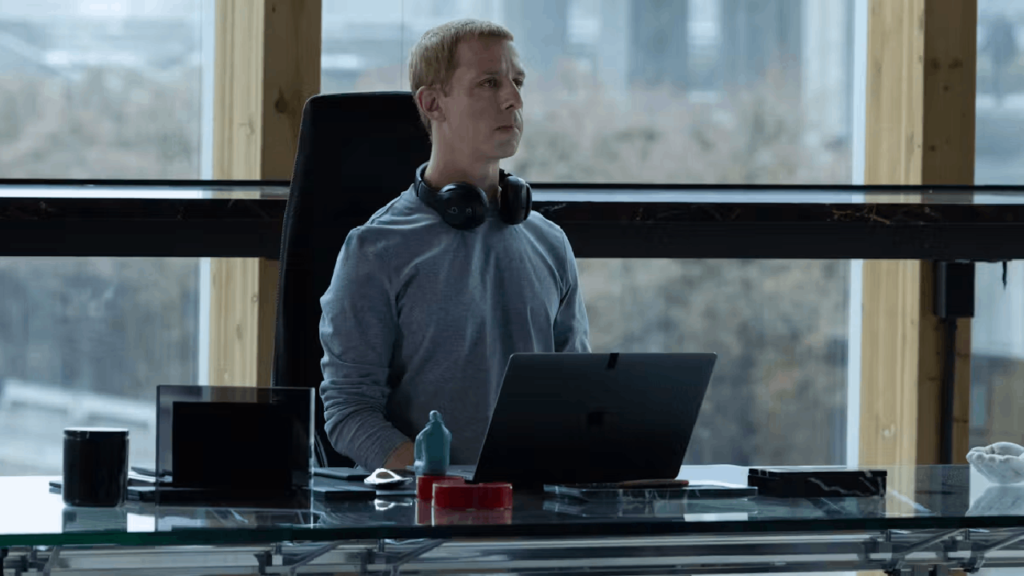
Aaron Sorkin’s The Social Reckoning, a companion piece to 2010’s The Social Network, has received a mixed response from critics. The film revisits Facebook’s role in spreading misinformation and the whistleblower investigation that brought the company’s internal practices under scrutiny. While some reviews praise its performances, fast-paced dialogue and focus on corporate accountability, others argue that its approach feels familiar and lacks the filmmaking impact of David Fincher’s original.
Written and directed by Sorkin, the drama follows Facebook engineer Frances Haugen, played by Mikey Madison, as she works with The Wall Street Journal reporter Jeff Horwitz, played by Jeremy Allen White, to expose the platform’s harmful effects. Jeremy Strong plays Mark Zuckerberg, while the supporting cast includes Wunmi Mosaku, Betty Gilpin and Bill Burr. The story moves between Haugen and Horwitz’s investigation and Zuckerberg’s preparations for congressional testimony in the period leading up to the January 6, 2021, Capitol riot.
Rahul Desai’s review for The Hollywood Reporter India describes The Social Reckoning as an efficient but overfamiliar whistleblower thriller. Desai acknowledges the appeal of Sorkin’s recognisable dialogue style, in which characters exchange rapid arguments and sharp remarks. However, he argues that the film’s familiar approach makes it feel functional rather than groundbreaking. In his view, Sorkin’s direction lacks the stillness and visual dimension that filmmakers such as Fincher brought to his earlier scripts.
The Guardian’s Peter Bradshaw is also critical of the film’s choices. His review, titled The Social Reckoning Review – Aaron Sorkin’s Jittery Sequel with All-New Evil Puppet Zuckerberg, argues that Jeremy Strong’s portrayal of the Facebook founder becomes more of a background presence than the centre of the story. Bradshaw also points to the film’s omission of Donald Trump’s name, questioning how it handles the political context surrounding Facebook’s influence. His assessment suggests that the film’s focus on the whistleblower story comes at the expense of a more direct engagement with the wider political landscape.
Variety’s review, The Social Reckoning Review: Aaron Sorkin’s Social Network Follow-Up Is Missing More Than Just David Fincher, similarly questions the film’s urgency. It recognises the appeal of following Haugen and Horwitz as they uncover evidence of Facebook’s role in recommending extremist content and contributing to harmful effects on young users. The review also highlights Madison and White’s performances and the film’s emphasis on investigative journalism.
However, Variety argues that the story feels dated when viewed against the continuing problems associated with social media and the rapid development of artificial intelligence. The film’s conclusion, centred on Haugen’s testimony, offers a moment of accountability, but the review questions whether that resolution feels sufficient given what has happened since the events depicted.
Matt Zoller Seitz’s review for RogerEbert.com offers a more positive assessment of the film’s effectiveness. Seitz describes it as an involving drama with considerable humour, much of it ironic, and praises the way Sorkin organises a complicated series of events into an accessible narrative. He sees the film as a whistleblower story about the importance of speaking up, even when doing so puts a person’s career and safety at risk.
Seitz also highlights the film’s argument that Facebook’s recommendation systems helped direct users towards increasingly extreme content. Rather than suggesting that Zuckerberg’s decisions were driven solely by personal ideology, the film presents business interests and the pursuit of engagement as central to the company’s choices. Although Seitz acknowledges the limitations of Sorkin’s directing style, he believes the drama’s clear structure and subject matter give it considerable value.
Maxance Vincent of The Cosmic Circus is much less convinced. In his review, Vincent argues that the film lacks the visual storytelling that made The Social Network so effective. He criticises the direction and editing, describing the presentation as flat and overly dependent on dialogue. Vincent also feels that the film does not offer enough new insight into Facebook’s practices, despite the importance of its subject. His review is particularly critical of Strong’s interpretation of Zuckerberg, which he considers too exaggerated to give the character much complexity.
The critical response reflects a clear divide between the importance of the story and the way it is presented. Seitz finds value in the film’s accessible account of a complicated investigation, while reviews from The Hollywood Reporter India, The Guardian, Variety and The Cosmic Circus raise concerns about its familiar storytelling, direction or limited sense of urgency.
The performances and Sorkin’s dialogue remain points of interest, but comparisons with The Social Network are difficult to avoid. Ultimately, The Social Reckoning has a relevant subject and a clear argument about corporate responsibility, even as critics disagree on whether it turns that material into a compelling film.
Watch Trailer:

Film Details: The Social Reckoning
- Director: Aaron Sorkin
- Writer: Aaron Sorkin
- Cast: Mikey Madison, Jeremy Allen White, Jeremy Strong, Wunmi Mosaku, Betty Gilpin, Billy Magnussen and Bill Burr
- Genre: Drama, Biography, Thriller
- Distributor: Columbia Pictures
- Release Date: October 9, 2026